Event @ Carleton: ‘For his failure to assent to the Natal Act’: South Africa, settler sovereignty and the Vancouver riot of 1907
January 13, 2017 at 1:00 PM to 2:30 PM
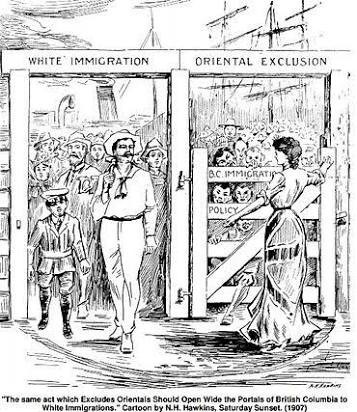 Please join us on January 13, 2016 for a lecture by Professor Jeremy Martens, Associate Professor in the History Department at the University of Western Australia. Jointly sponsored with the Institute of African Studies, the lecture is entitled: “‘For his failure to assent to the Natal Act’: South Africa, settler sovereignty and the Vancouver riot of 1907”. Please join us on January 13, 2016 for a lecture by Professor Jeremy Martens, Associate Professor in the History Department at the University of Western Australia. Jointly sponsored with the Institute of African Studies, the lecture is entitled: “‘For his failure to assent to the Natal Act’: South Africa, settler sovereignty and the Vancouver riot of 1907”.
Abstract:
The Vancouver riot and its consequences have been comprehensively studied by Canadian scholars, who have placed them within the historical context of Canada’s increasingly restrictive twentieth-century racial immigration policies; mobilization of anti-Asian sentiment within the labour movements of the Pacific north-west; and Canada’s international, imperial and diplomatic relationships. These studies demonstrate that the events of September 1907 were the culmination of a decade of increasing white hostility and racism directed towards Asians immigrating to British Columbia, the strength of which had been underestimated by authorities in Ottawa. Thus the extent of the violence surprised federal officials and spurred on the adoption of a new, restrictive immigration regime in 1908. However, while historians have long recognized the international and British imperial dimensions of British Columbia’s anti-Asian movement, the connections between immigration restriction policies in South Africa and Canada remain under-researched. This paper places events in western Canada within a wider global and settler colonial context by exploring how the ‘Natal Act’ – legislation passed in the southern African colony of Natal in 1897 – served both as a model and rallying cry for British Columbia’s anti-Asian movement.
|
Event @ Carleton: Urban Islands
The Global and International Studies Program would like to announce an upcoming event in the Contemporary Trends in Global and International Studies speaker series. Mark Raymond (Architect and Lecturer in Architecture, University of the West Indies, St. Augustine) will be presenting “Urban Islands” on Thursday January 26th, 2017 at 4:30PM in 2017 Dunton Tower.
Abstract: Architecture can be understood to operate as a form of aesthetic regime determining the fundamental parameters of our individual occupation of space and how we occupy the city and the wider landscape. Operating at a range of scales how might our reading of this expansive dynamic inform contemporary cultural production? If architectural production operates as a series of critical narratives, how are these narratives revealed in the colonial, post-colonial and contemporary context of the Caribbean?
Students, faculty and staff are welcome to attend. To register for this event please e-mail: jenelle.williams@carleton.ca.
|
Event @ uOttawa: Community Engagement in Mining: Sharing experiences and best practices dirty-diamonds
Event Date: January 24, 2017 – 11:30am to 12:45pm
Location: Faculty of Social Science 4006, 120 University Private, Ottawa
Presented by CIPS
Community engagement is considered a driver for economic development, centering on the need to include the goals, concerns and needs, values and aspirations of communities and marginalized groups into all sectors in policy development, decision-making, and service delivery in mining communities. Within public and private sector development it has been demonstrated that effective community engagement enables inclusive development by fostering relationships based on mutual understanding and facilitating the sharing of responsibilities.
Incorporating best practices for community engagement into development policy and practice works towards the achievement of the UN Sustainable Development Goals as it promotes inclusive and sustainable growth.
As more development and economic initiatives incorporate strong community engagement mechanisms into their practice, it is important to ask what can be learned from these initiatives and how they deepen our understanding of successful community engagement.
The panel discussion will include a brief presentation of innovative forms of community engagement in the mining sector from the perspective of government, artisanal mining communities and industrial mining, with focused questions on tools for engagement, policies and practices that build community trust, resources required and characteristics of communities that positively benefit from good engagement.
Discussion will be moderated and followed by a question period.
Read More → |
Event @ uOttawa: Thoughts on King’s Legacy: A Conversation with Dr. Kalenda Eaton
Event Date: January 16, 2017 – 4:00pm to 5:30pm
Location: Faculty of Social Science 5028, 120 University Private, Ottawa
Presented by CIPS and the American Embassy in Ottawa
Join us on Dr. Martin Luther King Jr. Day as CIPS and the American Embassy in Ottawa welcome Dr. Kalenda Eaton. Prof. Eaton’s research examines the relationship between global black subjectivity, literature, and culture history. She is particularly interested in how writers and scholars consider “place” and “belonging” within the context of more specific ties to nationalism, citizenship, and cultural politics.
Dr. Kalenda Eaton is an Associate Professor of English at Arcadia University in Glenside, Pennsylvania. She has a BA in English and Spanish from Dillard University, and both her MA and PhD from Ohio State University. She is the author of Womanism, Literature, and the Transformation of the Black Community, 1965-1980 (Routledge) and is currently completing a second manuscript analyzing historical fiction focused on North American Black communities and philosophies of Western expansion. Her primary areas of research and teaching are in African American Literature, African Diaspora Studies, Literary Theory, and Women’s Studies. In the fall of 2016, she was the Fulbright Visiting Research Chair in Society and Culture at Dalhousie University in Halifax, Nova Scotia.
|
2017 Launch of Black History Month in Ottawa
Saturday, January 28, 2017
2.00 – 4.00 p.m.
Library & Archives Canada, 395 Wellington St.,
The theme “Our Canadian Story: The Road to 150 and Beyond” honours the ingenuity of our early Black ancestors, acknowledges the resilience of our Trailblazing Black leaders both past and present, and highlights the diversity of our allies throughout history. Highlights of the event include:a proclamation by the Mayor of Ottawa, Jim Watson; the unveiling of the Canada Post 2017 Black History Month stamp; the presentation of various leadership awards; a keynote by Rev. Dr. Anthony Bailey; and entertainment by local performers.
Admission: Free. Donations to Black History Ottawa gratefully accepted.
For more information: bhottawa@yahoo.ca
|
KARIM DABO DE MONTRÉAL
25 janvier
Né en 1987, d’un père sénégalais et d’une mère française, percussionniste depuis son plus jeune âge, il arrive en juin 2013 à Montréal et sort son 1er album, Sama Yone, en février 2014 au Québec, en France et à la Réunion.
Genre : Afro-pop, douces sonorités occidentales et africaines
Artistes :
Karim Dabo, chef
Coline Bruniaux, choriste
Dany Nicolas, guitariste
Matthieu Deschenaux, contrebassiste
Lieu | Location: Alliance Française d’Ottawa, 352, rue MacLaren
Heure | Time: 18 h
Gratuit pour les étudiants et les membres de l’AFO. 5 $ pour les non membres.
FREE for AFO members and students.
Achat de billets → |
The Africa Study Group Presents : the evolution of DID’s strategies for developing inclusive finance*
*This presentation will be in French and questions in English are welcome
DATE: Wednesday, Jan 25, 2017
TIME: 17:30 pm – 19:30 pm
LOCATION: St. Paul’s university, Guigues Hall, 223 Main street, room G102
Bio:
Anne Gaboury has been the CEO of “Développement international Desjardins” (DID) since 2002. http://www.did.qc.ca/
DID is a Canadian company specializing in the creation of inclusive financial development in developing and emerging market countries. Its main tools are advisory services in the area of capacity development, investment and the actual operation – through management contracts – of financial institutions specializing in business finance.
DID has over a hundred employees, of whom thirty work overseas. It has mandates on three continents, works with the biggest microfinance institutions and has financial and technical partnerships with over twenty financial institutions operating around the world.
Ms Gaboury has a Masters degree in Psychology (M. Ps.) and an MBA. She speaks French, English and Spanish. Since 2009 she has also been a Certified Company Administrator.
In addition to her DID responsibilities Ms Gaboury sits of the Board of Directors of the Institute for Advanced International Studies of Laval University and is Chair of the newly instituted strategic advisory board of the “Agence universitaire de la francophonie” (AUF). She was previously on the Board of the Canadian Council for Africa and chaired the Development Committee of the International Federation of Cooperatives and Mutual Insurance Companies. By virtue of its investments, DID is represented on the boards of many financial institutions and investment funds.
Presentation:
Ms Gaboury will discuss the evolution of DID’s strategies for developing inclusive finance. She will share the major conclusions they have drawn from their experience in recent years, and offer her take on the the issues surrounding the use of inclusive finance as a development tool.
|
Le Groupe de Réflexion sur l’Afrique présente : l’évolution des stratégies de développement de la finance inclusive de DID
DATE: mercredi le 25 janvier 2017
QUAND: 17h30 – 19h30
LIEU: Université Saint-Paul, 223 rue Main, Ottawa, salle G102
Bio : Madame Anne Gaboury est actuellement présidente-directrice générale de Développement international Desjardins (DID), et ce, depuis 2002. http://www.did.qc.ca/
- Développement international Desjardins (DID) est une société canadienne spécialisée dans le développement de la finance inclusive dans les pays en développement et en émergence. Ses principaux leviers de développement sont les services-conseils axés sur le développement des capacités, l’investissement et la prise en charge des opérations d’institutions financières spécialisées dans le financement des entrepreneurs, par contrats de gestion.
- DID compte plus d’une centaine d’employés dont une trentaine basés à l’étranger, réalise des mandats dans trois continents différents, s’associe aux plus grands investisseurs en microfinance et entretient des partenariats financiers et techniques avec plus d’une vingtaine d’institutions financières opérant partout dans le monde.
Mme Gaboury détient une maîtrise en psychologie (M.Ps.), de même qu’une maîtrise en administration des affaires (MBA). Depuis 2009, elle est aussi administrateur de société certifié (ASC). Elle parle français, anglais et espagnol.
En plus de ses responsabilités à titre de présidente-directrice générale de DID, elle siège présentement au conseil d’administration de l’Institut québécois des Hautes études internationales de l’Université Laval et préside le nouveau comité d’orientation stratégique de l’Agence universitaire de la Francophonie (AUF). Elle a également siégé au conseil d’administration du Conseil canadien pour l’Afrique (CCAfrique) et a présidé le comité de développement de la Fédération internationale des coopératives et mutuelles d’assurances (ICMIF). Rappelons aussi que DID, à titre d’investisseur siège, par ses divers représentants, sur les conseils d’administration et autres comités de multiples institutions financières et fonds d’investissements.
Presentation:
Madame Gaboury présentera l’évolution des stratégies de développement de la finance inclusive de DID. Elle partagera les principaux apprentissages des dernières années et sa lecture des enjeux concernant le rôle de la finance inclusive comme levier de développement.
|
MSc/MA Double Degree in Global Media and Communications (LSE and UCT)
Applications are now open for a new and unique two year programme which enables students to study for one year at LSE in London, the UK’s media capital, and one year at the University of Cape Town (UCT) – the top-ranked university on the African continent with close links to Cape Town’s media and film industry and NGO sector.
Students on this degree will be trained to examine the intersection of media and globalisation from an African vantage point. They will gain an understanding of global media and communications in an African context and African media and communications in a global context.
General information about the new programme:
http://www.lse.ac.uk/media@lse/study/mscProgrammes/globalMedia/Home.aspx
|
Call for Papers: Decolonizing Africa? The Economic History of Development
Call for Papers: Africa and the New Networks of Cultural Mobility Opportunities, Strategies and Limitations
University of Toronto, October 6-7, 2017
The ultimate goal of the colloquium is to provide a satisfactory answer as to whether globalization can engender a truly “brave new world” or if it is condemned to merely reproduce deceptive and delusional mirror images. More concretely, it is important not only to consider the relevance of “rediscovering the infra-ordinary” in African literatures, as a counter to normativizing metadiscourses, but also, and above all, to rethink the arts and literatures of Africa in terms of their relationship to both “globalization” and “the worlding of the world,” to borrow Jean-Luc Nancy’s distinction in La Création du monde, ou la mondialisation (2002).
Important dates
April 1, 2017: Submission deadline for proposals
Please send your 250-word abstracts, along with the information specified above, by April 1, 2017 to the following address:conference.circulations@gmail.com
May 1, 2017: Notification of the scientific committee. Please indicate in your proposal if you need to be notified earlier in anticipation of visa application procedures with Canadian Immigration Services. The committee will make provisions for a diligent and timely review of your proposal.
October 6-7 2017: Colloquium activities held at the University of Toronto
Participants will be provided with further details regarding a possible publication. There will be no conference registration fee. Coffee or sandwich will be served. However, participants will be expected to assume all other costs.
Organizers
Marie-Pierre Bouchard, Ph.D., Postdoctoral fellow, Department of French Studies, University of Toronto:conference.circulations@gmail.com
Alexie Tcheuyap, Professor, Department of French Studies, University of Toronto: conference.circulations@gmail.com
|
Call for Papers/Panels/Roundtables: Global Africa 2063: Education for Reconstruction and Transformation
Abstracts due: 31 January 2017
Conference date: 25 June – 1st July 2017
The 2nd Kwame Nkrumah Pan-African Intellectual & Cultural Festival will be hosted by the Kwame Nkrumah Chair in African Studies under the auspices of the Institute of African Studies, University of Ghana.
The theme “Global Africa 2063: Education for Reconstruction and Transformation” reflects the foundations of Kwame Nkrumah’s intellectual and cultural ideologies of a united Africa. This gathering seeks to examine and critically investigate the role of African centered education and knowledge production for shaping the development agenda. This approach will challenge the destructive and dominant education and knowledge system which supports neo-colonialism. The conference will use the African Union ‘Global Africa 2063’ agenda as the foundation for recuperating and popularizing Pan-African ideas and ideals.
The Institute of African Studies, University of Ghana, established by Dr. Kwame Nkrumah was the founding Institute that focused on Africa and African people. As the trailblazer, Institute of African Studies over its tenure, has served as the nucleus for discussion and study of Africa, Pan-Africanism and Global Africa. This conference and festival will serve as the foundation for Pan-African intellectual and activist activity in Global Africa. The Institute of African Studies will lead the academic community to debate on the way forward and to interrogate the challenges of bringing Global Africa closer with the peoples at differing parts of the planet.
Furthermore, the public attention will be drawn to reopen discussions on the ‘Global Africa’ concept comprising of 11 regions instead of 6 regions.
Read More → |
Call for applications: Advocacy and research fellow
Deadline: Sunday 15th January 2017
Location: Kampala, Uganda
Duration of contract: 12 months non-renewable
DefendDefenders is seeking applications for the role of Advocacy and Research Fellow. Reporting directly to the Advocacy and Research Officer, the Fellow will be responsible for providing up-to-date, relevant and reliable information, as well as in-depth analysis of current trends impacting on the situation of human rights defenders in the East and Horn of Africa.
The fellowship is a 12 month, non-renewable position, commencing in early February 2017. The fellow will be reimbursed by way of a stipend, and the position includes a generous funding provision for regional travel and other advocacy and research activities. The fellow will be responsible for securing necessary authorization to work in Uganda, with the assistance and guidance of DefendDefenders.
The fellow should have a well-established background in field and desk research with a demonstrable output of written publications. In addition they should be well-organised, work effectively under pressure and be a good team player. The successful candidate must be self-motivated and able to work independently with minimal supervision. They should be willing to travel occasionally, as required.
Read More → |
IAS News: IAS Congratulates Blair Rutherford for his new book, Farm Labor Struggles in Zimbabwe
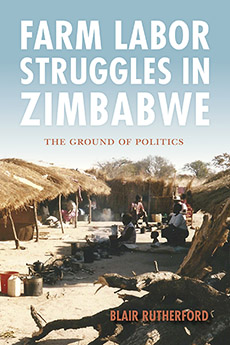 Blair Rutherford, professor of Anthropology and former director of the Institute of African Studies at Carleton, has a new book published with Indiana University Press.Farm Labor Struggles in Zimbabwe: The Ground of Politics examines the unequal social and power relations shaping the lives, livelihoods, and struggles of some of the farm workers during a momentous period in Zimbabwean history, the early twenty-first century when white-owned farms in Zimbabwe were subject to large-scale occupations in an increasingly violent struggle concerning national electoral politics, land reform, and contestations over democracy. His analysis shows that there was far more in play than political oppression by a corrupt and authoritarian regime and a movement to rectify racial and colonial land imbalances, as dominant narratives would have it. Instead, he reveals farm worker livelihoods, access to land, gendered violence, and conflicting promises of rights and sovereignty played a more important role in the political economy of citizenship and labor than had been imagined. Blair Rutherford, professor of Anthropology and former director of the Institute of African Studies at Carleton, has a new book published with Indiana University Press.Farm Labor Struggles in Zimbabwe: The Ground of Politics examines the unequal social and power relations shaping the lives, livelihoods, and struggles of some of the farm workers during a momentous period in Zimbabwean history, the early twenty-first century when white-owned farms in Zimbabwe were subject to large-scale occupations in an increasingly violent struggle concerning national electoral politics, land reform, and contestations over democracy. His analysis shows that there was far more in play than political oppression by a corrupt and authoritarian regime and a movement to rectify racial and colonial land imbalances, as dominant narratives would have it. Instead, he reveals farm worker livelihoods, access to land, gendered violence, and conflicting promises of rights and sovereignty played a more important role in the political economy of citizenship and labor than had been imagined.
|
|
|
|