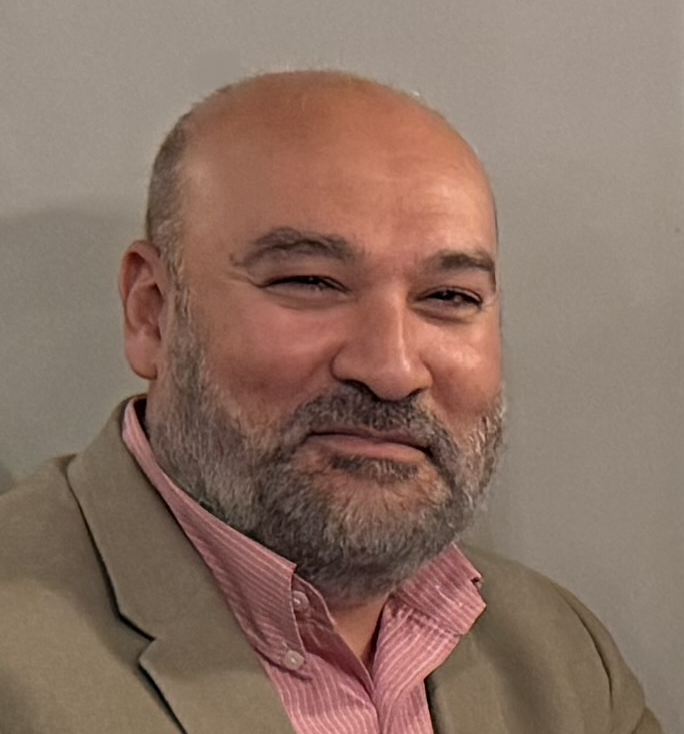
Dr. Mohamed Atia (P.Eng)
Department of Systems and Computer Engineering
Director, Embedded and Multi-Sensor Systems Lab (EMSLab)
Carleton University, Ottawa, Canada.
Email: Mohamed.Atia@carleton.ca
Office Phone: +1(613)-520-2600 ext: 5779
Fax: 613-520-5708
Research profile
My research focuses on positioning, navigation, and timing (PNT), simultaneous localization and mapping (SLAM) and perception systems and algorithms that enable autonomous vehicles, robots, drones, and intelligent machines to understand and navigate the world. The research is based on theoretical foundations in signal processing, signals and systems, estimation, computer vision, and artificial intelligence. The research also addresses the practical software-hardware co-design and implementation of navigation and perception systems on real-time embedded systems and resource-constrained compact, low-power platforms such as microcontrollers, wearables, and internet-of-things (IoT) devices.
Research branches:
- Global Navigation Satellite Systems (GNSS)
- Inertial Sensors and Inertial Navigation Systems (INS)
- Range Sensors (LiDAR, Radar, and Sonar) and Range-aided Navigation Systems
- Imaging Sensors (RGB, RGB-D, and thermal cameras) and Vision-Aided Navigation Systems
- Local Wireless Networks (Wi-Fi, Bluetooth Low Energy “BLE”, and Ultra-Wideband “UWB”)
- Other aiding sensors such as wheel encoders, altimeters, and magnetic sensors
- High-Definition (HD) maps
At the core of my research is the integration of multiple sensing modalities such as radio, visual, inertial, LiDAR, and radar to achieve precise, resilient, and intelligent positioning and perception in complex and GNSS-denied environments such as urban canyons, tunnels, forests, mining, the Arctic, underwater domains, and extraterrestrial surfaces.
New horizons and emerging frontiers:
- Robust navigation against GNSS interference, jamming and spoofing
- Integration of Low Earth Orbit (LEO) satellites and high-altitude platforms for global positioning
- Quantum-based sensing and timing for ultra-precise navigation
- AI-driven and semantic SLAM for perception and environmental understanding
- Optimization for resource-constrained embedded platforms such as IoT and drones
- Reliable navigation in extreme environments such as snow, ice, and fog
- Underwater navigation and mapping
- Interplanetary and lunar navigation for future space missions
- Multisensor online vectorized high-definition (HD) semantic maps for autonomous driving
- Vertical positioning accuracy in dense urban areas
The technologies developed in our lab support applications across several industries such as transportation, robotics, industrial automation, surveying, infrastructure inspection, 3D digital twins, high-definition maps, smart agriculture, mining, defense, security, and environmental exploration.
Training and education
I am deeply committed to training the next generation of engineers and researchers capable of translating scientific knowledge into impactful technologies. Students gain strong foundations in analytical methods, signal processing, estimation, AI, and machine learning, as well as proficiency in C/C++, MATLAB, Python and hands-on experience with embedded hardware and real-time systems. This blend of strong theoretical foundation and hands-on practical tools makes them unique in a demanding and rapidly changing job market.
Career horizons
Graduates from EMSLab have pursued successful careers in automotive, space, robotics, mining, and defense industries, as well as in academia and government research institutions , with several founding their own technology startups.