Leading Team
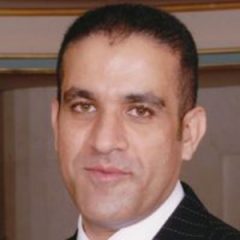 Mostafa El Sayed
Project Manager/Associate Professor
MostafaElSayed@cunet.carleton.ca
Dr. Mostafa El Sayed is the Director of the Aerospace Structures and Materials Engineering Laboratory (ASME-Lab) in the Department of Mechanical and Aerospace Engineering at Carleton University. He received his B.Sc. (1997) and M.Sc. (2002) from the Military Technical College and his Ph.D. (2010) from McGill University. He was a postdoctoral fellow at the Massachusetts Institute of Technology. From 2011 to 2015, Dr. El Sayed was an Aircraft Loads Engineering Specialist at Bombardier Aerospace, where he was involved in all of Bombardier’s new development programs, as well as in the Research and Development of the company’s strategic technologies and future aircraft concepts. His contributions included the implementation of a wide range of dynamic loads analyses for aircraft structural design and optimization. He was also the knowledge owner of the aircraft Water Ditching and Sustained Engine Imbalance (SEI) analyses and a member of the in-service support team. Dr. Mostafa El Sayed is a certified Professional Engineer in the province of Ontario (PEO).
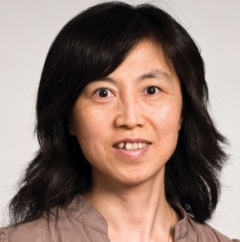
Rong Liu
Lead Engineer/Professor
RongLiu@cunet.carleton.ca
Dr. Rong Liu is a professor with the Department of Mechanical and Aerospace Engineering since 2007, and has since established strong research collaboration with National Research Council Canada (NRC), Kennametal Stellite Inc. and Velan Inc. The main funding resources for her research are NSERC (DG, CRD, RTI), Kennametal Stellite Inc. (in-kind and cash contributions), Velan Inc. (in-kind and cash contributions), GH Power (in-kind and cash contributions). Her past research has focused on evaluating material performance for a range of industrial and energy applications with an emphasis on investigating fatigue and degradation in alloys.

Derek Gransden
Lead Engineer/Assistant Professor
DerekGransden@cunet.carleton.ca
Dr. Derek Gransden is an Assistant Professor in the Dept. of Mechanical & Aerospace Engineering at Carleton University. He received his B.Eng. and Ph.D. at Carleton University, in which he specialised in the vibration and control of parallel chain kinematics with coupled rigid and elastic bodies. He was accepted as a post-doctorate researcher at TU Delft, where in 2014 he completed his computational model of a composite aircraft low-speed crash, with focus on the damage of the composite, to investigate the safety of composite aircraft in pool-fire crashes as part of the AircraftFire project led by Airbus. As an assistant professor at Carleton University, Dr. Gransden studied the impact of open-rotor systems on the fuselage of the next generation of fixed-wing aircraft, the impact of small remotely piloted aerial systems (commonly known as UAVs) on the human head, and the hypervelocity impact of micrometeorite and orbital debris on spacecraft.
Industrial Partners
Bombardier Aerospace
Bombardier Aerospace’s advanced design group acts as the main mentor of the project. Our team coordinates with them regularly for assistance on the design of the aircraft. During less trying times, they have been kind enough to allow us to meet with their company R&D team in Montreal to present our development and tour their assembly plant.
MSC Software
MSC Software has graciously donated five seats of their MSC structural bundle for use by the Blended Wing-Body team. This includes following software used extensively by the team:
- MSC ADAMS — Used by the Loads team to conduct hard landing analysis on the aircraft.
- MSC NASTRAN — Used by our Dynamics team to perform modal analysis (Solution 103) and flutter analysis (Solution 145).
ALTAIR
ALTAIR provides the team with technical support for their multiscale design optimization program OptiStruct. OptiStruct is primarily used by the team to generate lattice structures within heavier parts to reduce their weight while still ensuring the structure is sufficiently rigid. Additionally, our Stress 1 team makes use of OptiStruct for meshing and finite element analysis.