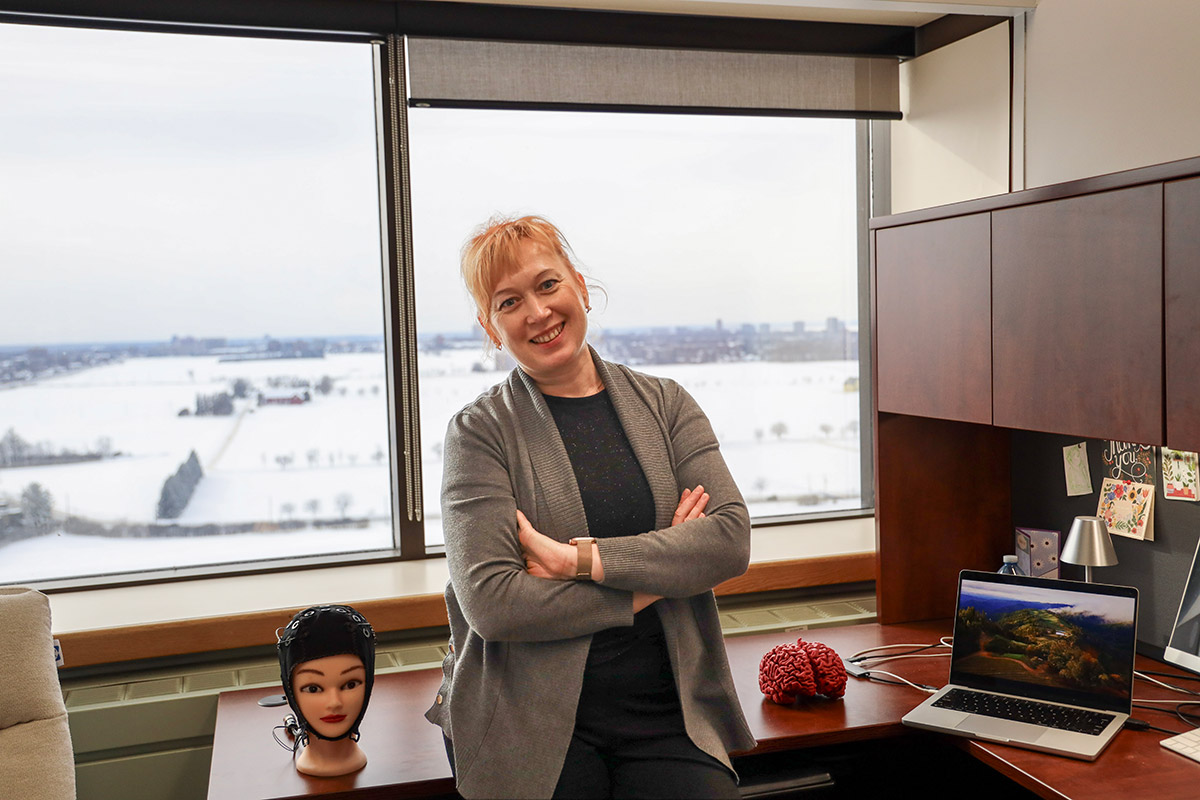
Carleton University Cognitive Science researcher Olessia Jouravlev’s team is challenging this conventional thinking by exploring whether bilingualism may actually enhance communication among people with neurodevelopmental and psychiatric conditions.
Listen to Olessia’s interview on CBC: https://www.cbc.ca/listen/live-radio/1-193-fresh-air/clip/16198023-new-research-bilingualism-autism?onboarding=false