|
Это книга о китайской модели развития и ее отличии от западной. Речь в основном об экономике, но также и о культуре, истории, религии, политике. Три главных вопроса обсуждаются в работе:
(1) Почему Китай и другие страны Восточной Азии, во многом базирующиеся на китайской модели (Япония, Корея, страны Юго-Восточной Азии) в XVIII–XIX веках отставали не только от Запада, но даже и от многих развивающихся стран (Российская империя, Латинская Америка)?
(2) Почему с середины XX века эти страны стали единственным крупным регионом, начавшим кардинально сокращать разрыв в уровнях экономического развития с Западом?
(3) Является ли китайская модель (основанная на «азиатских ценностях», на примате общественных интересов над частными) более конкурентоспособной, чем либеральная западная модель, и чем закончится их соревнование?
В книге доказывается, что возвышение Запада связано не столько с обеспечением индивидуальных прав и свобод, сколько с повышением нормы сбережений и инвестиций в результате разрушения общины и последовавшего роста неравенства в распределении доходов. Однако со временем либеральная западная модель начинает уступать коллективистской китайской.
This is a book about modern China, mainly about the economy (about half the text), but also about culture, history, religion, and politics. There are three main issues discussed in the book:
1. Why did China (and earlier other countries and territories of East Asia, largely based on the Chinese model — Japan, Korea, Taiwan, Southeast Asian countries) in the 18–19 centuries started to lag behind not only the West, but even many developing countries (Russian Empire, Latin America)?
2. Why since the middle of the 20th century have these countries and territories became the only major region that started to close the gap in economic development levels with the West?
3.Is the Chinese economic and social model (based on “Asian values”, the primacy of public over private interests) more competitive than the liberal Western model and how will their competition end?
It is generally believed that the economic success of the West during and after the transition to capitalism is associated with the expansion of human rights (the abolition of slavery and serfdom, guarantees of property rights and contracts). In contrast, this book argues that the rise of the West has less to do with securing individual freedoms and more to do with rising rates of saving and investment as a result of the destruction of the agricultural community and associated rise in the inequality in income distribution. The expansion of human rights became later a consequence of economic success, a kind of luxury that successful and competitive countries could afford. Today, however, the liberal Western model is experiencing increasing difficulties.
The Chinese model: Retrospective and perspective – MPRA Paper No. 57842, August 2014 (in Russian- Китайская модель: ретроспектива и перспектива).
|
|
 |
- China: Leading the Fight Against Global Warning? – DOC-RI website, November 14, 2017.
- Is Russian Economy Finally Tilting East? – PONARS Policy Memo No. 376, August, 2015.
- Because the Chinese growth model became so successful in ensuring catch-up development it has become extremely appealingin the developing world”. – Chapter in: “22 Ideas to Fix the World. Conversations with the World’s Foremost Thinkers”. Edited By Piotr Dutkiewicz and Richard Sakwa. NUY Press, 2013.
- Currency Wars: Why Russia and China Are Rapidly Accumulating Foreign Exchange Reserves. – PONARS Policy Memo no. 256. June 2013.
- Почему Запад разбогател раньше, чем другие страны и почему Китай сегодня догоняет Запад? Новый ответ на старый вопрос. – “Журнал Новой экономической сссоциации“, №3 (15) 2012 г.
- Пот, кровь и институты. “Эксперт“, № 19 (802)/ 14 мая 2012 г.
- The Chinese model of economic success. – Talk at DESA, UN. 22 February 2012, New York
- Повезло с географией, не повезло с элитой. (Leveraging Geography Despite the Anti-Chinese Elitist Sentiment). – “Saldo. Business and Finance in Russia”. No. 2, 2011.
- Ударники капиталистических пятилеток. В чем уникальность китайской модели капитализма. – “Русский Репортер”, 15 (193), 21 апреля 2011 г.
- Is The Chinese Variety of Capitalism Really Unique? –“Transition”, May 24, 2010 (Also published in “Insight”, June 2010; “IDEAs”, October 19, 2010; CEFIR and NES working paper # 156, January 2011.
- Победный оскал дракона. – «Эксперт» №1 (687)/28 декабря 2009.
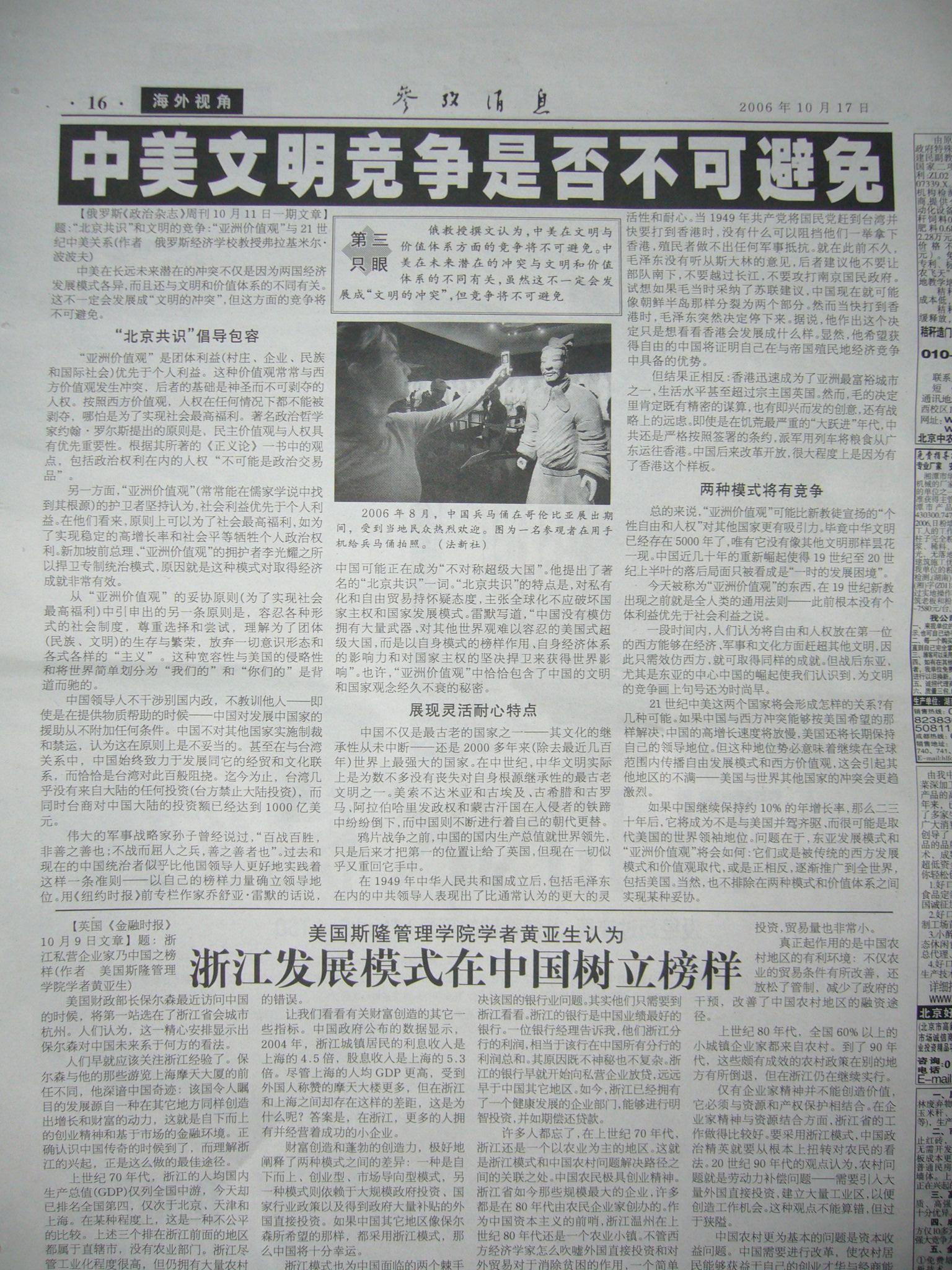
- «Пекинский консенсус» против «вашингтонского»: «азиатские ценности» более конкурентоспособны, чем либерализм? – “Прогнозис”, № 2(10), 2007 г.
- Дракон и юань. Китай: экономический рост вопреки или благодаря религии? – “Политический журнал”, № 27 (170) / 17 сентября 2007 г.
- CHINA’S RISE, RUSSIA’S FALL: MEDIUM TERM AND LONG TERM PERSPECTIVE. – Paper presented at the Global DevelopmentConference, Beijing, January 2007.
|
|