View this in your browser
Banner image for July 2024 Newsletter

July 2024 Newsletter

Follow us on Social Media


EURUS Professors Co-leading the Eastern Europe and Transatlantic Network (EETN)

Starting on July 1, 2024, EURUS Professors Crina Viju-Miljusevic, Paul Goode and Jeff Sahadeo will be co-leading a Collaborative Network as part of the Mobilizing Insights in Defence and Security program of the Department of National Defence Canada (Funding Results – Canada.ca). The project will address three core challenges – for Canada and in the European/Eurasian region – that are spiralling out from Russia’s War on Ukraine: European security, Eurasian security architectures, and Arctic security. The Eastern Europe and Transatlantic Network (EETN) will receive $250,000/year for three years.

Short description:

The objective of this Project is to offer a critical, Canadian perspective on the complicated political, economic, and societal shifts in Eastern Europe and Europe more generally since Russia’s invasion of Ukraine. EETN plans to produce multidisciplinary knowledge with the input and contribution of a global network of experts. The project will analyze current developments, understand past legacies, and consider future scenarios as we face a Russia that has now turned from the West. EETN will look at the transformed Europe, Eurasia, and Arctic and assess what the critical implications are for Canada.

Over the three-year period of the project, EETN will develop relationships with regional partners to produce research with deep local input and will connect findings to Canadian policymakers through collaborative platforms. The network will foster a cohort of young scholars and policymakers, in Canada and in the region, trained in cutting-edge methods and analysis to address vital questions for Canadian defence strategy. Through targeted research themes, including timely topics like Canada’s contributions to European security, Canada’s potential role in Eurasia security architecture, and transformations in the Arctic, as well as Russia’s military capabilities, EETN will provide practical and actionable recommendations. The key outcomes of the Project include knowledge production; training and network-building region-wide and across disciplines; and bridging academic, policymaking, and public interests.


EURUS faculty editors in the Canadian Foreign Policy Journal

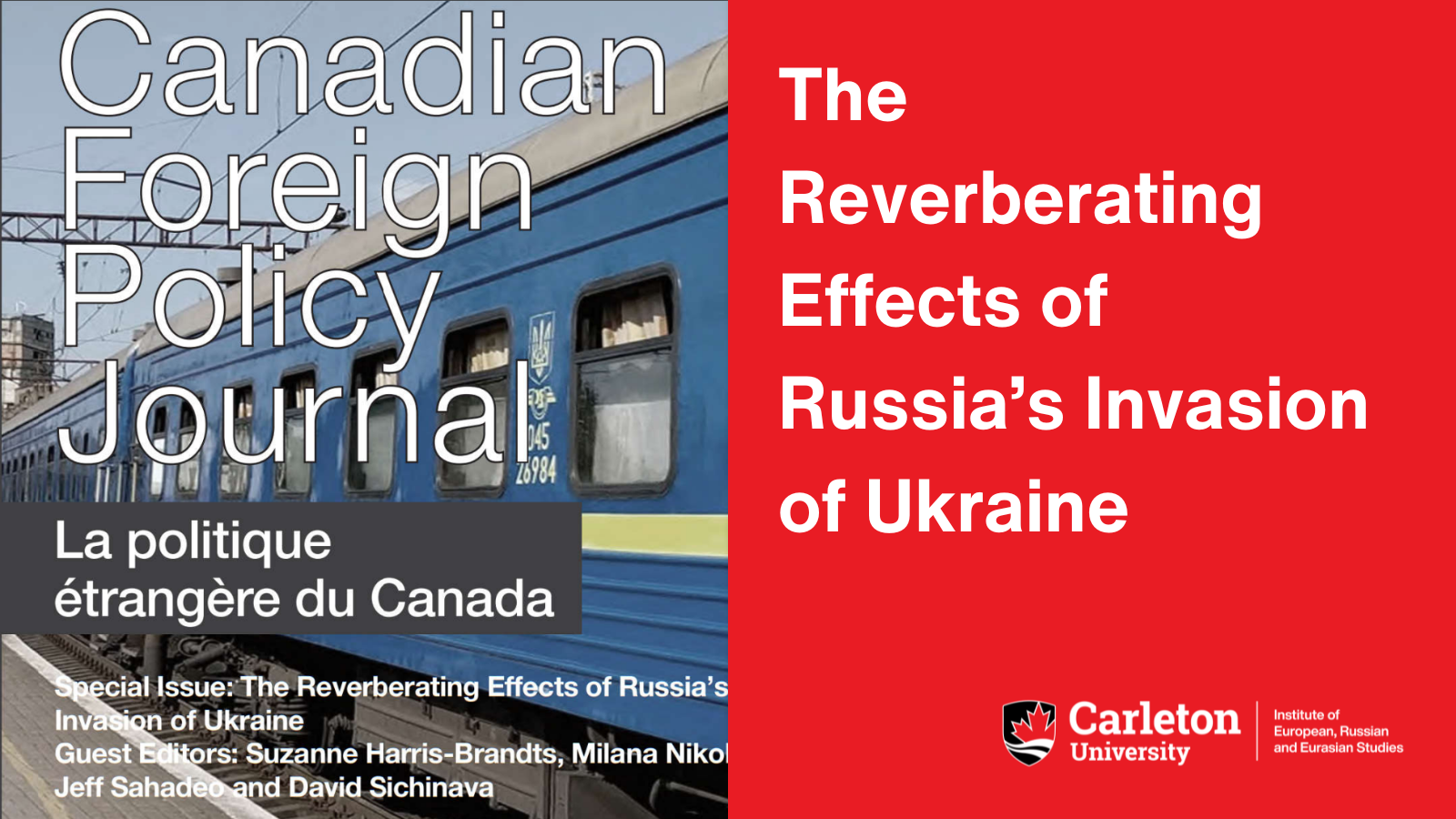
EURUS faculty member Jeff Sahadeo, research Professors Milana Nikolko and David Sichinava as well as the School of Architecture & Urbanism’s Suzanne Harris-Brandts are guest editors of Issue 1 of the 30th volume of the Canadian Foreign Policy Journal (CFPJ) titled “The Reverberating Effects of Russia’s Invasion of Ukraine.” This Issue also includes an article by Milana Nikolko entitled “The loci of Pluralism in a war-torn society”.

CFPJ is a journal edited by Carleton’s David Carment and published by the Norman Paterson School of International Affairs (NPSIA). An excerpt of the press release, as well as a link to the full release can be found here. Read The Reverberating Effects of Russia’s Invasion of Ukraine.


Political Science Workshop: The Grand Split? How The World is Dividing

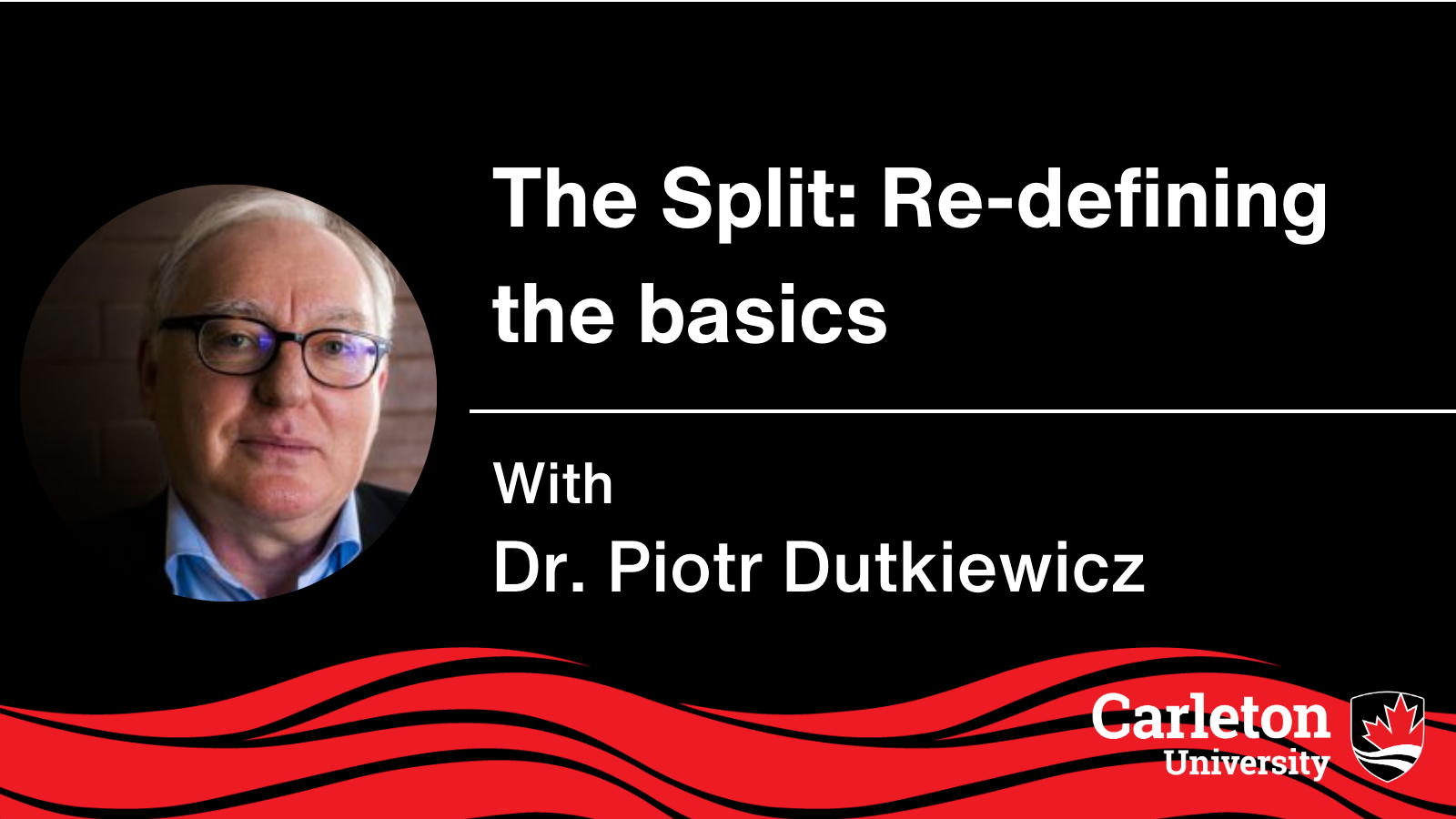
Check out Dr. Piotr Dutkiewicz’s discussion during the Political Science Workshop, entitled “The Split: Re-defining the basics.” This took place in the first panel of the event titled “What is new in our perceptions of world politics?” Dr. Dutkiewicz’s discussion can be found here, and all panels from the event can be found on the Department of Political Science’s Research page.


Discussion Description:

My goal is to sketch a complex process of what I call the Grant Split in which some of the so called “rest” questioned the rule by the “west” moving from competition to confrontation and then from confrontation to an open conflict. Countries of the “South” more openly deny the universalization of the western norms, institutions, principles, and values. Their defiance – until recently – mostly presented in civilizational/cultural terms has moved by now to re-define key IR concepts such – for instance – as sovereignty , security and national interests. In many ways such approach directly clashes with western supported “norm-based order”.


Congratulations to all EURUS Graduates

Congratulations to all of the EURUS students who have passed the stage this June convocation! We are so proud of all of you and excited to see your next steps!


Information for Graduation

If you are a current EURUS student looking to graduate this upcoming fall or winter semester, you can find a step-by-step guide to the process on Carleton’s Graduation page. Keep in mind the following deadlines to apply:

Fall Graduation: August 31st, 2024

Winter Graduation: November 30th, 2024


Student Resources: