Funding/Research Supports
NSERC and DND Project
Project Status
Complete
Project Overview
Project Overview
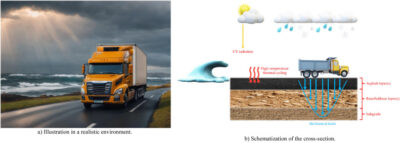
Research highlights climate change as a key factor in pavement distress, with temperature and precipitation being critical. High temperatures cause asphalt softening and rutting, while extreme cold leads to thermal cracking. Heavy precipitation and freeze-thaw cycles accelerate degradation.
To tackle these challenges, the research program focuses on developing climate-resilient asphalt materials, such as binders, mastics, and mixtures, with enhanced resistance to climate-induced distresses. It employs a multiscale approach, using comprehensive testing and performance evaluations to identify durability factors and innovate solutions.
The goal is to strengthen Canada’s road network resilience, ensuring reliable transportation and economic growth amidst changing climate conditions. This program investigates microcrack formation, moisture stripping, and rutting, offering recommendations on using local aggregates, additives, and recycled materials to boost durability. Optimized designs will lead to safer roads, lower emissions, reduced costs, and extended pavement life. Additionally, HQP training in this program will prepare future experts in pavement engineering, promoting sustainability through increased recycled material use and reduced reliance on imported binders.