Research Publications
The complete list of journal and conference papers published by the group can be found here:
Research Projects
1. Electromagnetic Metasurfaces for 5G/6G Wireless
Revolutionizing next-generation wireless communications, this project develops advanced electromagnetic metasurfaces that enable precise wavefront control for beyond-5G (5G/6G) systems. By engineering subwavelength meta-atoms with tunable phase, amplitude, and polarization responses, the metasurfaces achieve dynamic beamforming, anomalous reflection/refraction, and spatial multiplexing without traditional phased arrays. Key innovations include space-time modulated Huygens’ metasurfaces for frequency conversion and non-reciprocal effects, dramatically enhancing spectral efficiency, coverage, and data rates in mmWave/THz bands. Simulations and prototypes demonstrate real-time adaptive beam steering and reduced interference—paving the way for intelligent, energy-efficient 6G networks.
Watch our electromagnetic metasurface in action: dynamic beam steering and wavefront shaping for ultra-fast 5G/6G wireless links. See how subwavelength structures manipulate electromagnetic waves to direct energy precisely where needed, boosting connectivity in dense urban environments. This research effort has been funded by NSERC under various programs including Idea-2-Innovation (I2I).
2. Dynamic Holographic Metasurfaces
This cutting-edge project explores dynamic holographic metasurfaces capable of generating reconfigurable electromagnetic holograms in real time. Leveraging metasurface unit cells with independent control over complex amplitude and phase (including full 2π phase coverage), the technology projects custom field patterns, images, or data streams into free space—far surpassing conventional optics in compactness and flexibility. Applications span secure communications (holographic beamforming), imaging/radar (synthetic aperture generation), and emerging AR/VR interfaces at microwave/mmWave frequencies. Our designs incorporate active elements for tunability, enabling on-the-fly hologram switching with low power and high resolution.
Experience dynamic electromagnetic holography: our metasurface reconstructs intricate 3D field patterns and projected images in real time. From camouflaged illusions to data-encoded holograms—see how engineered surfaces create optical-like effects at radio frequencies for transformative sensing and communication.
3. Advanced Materials and Monolithic Integration for mmWave Metasurfaces
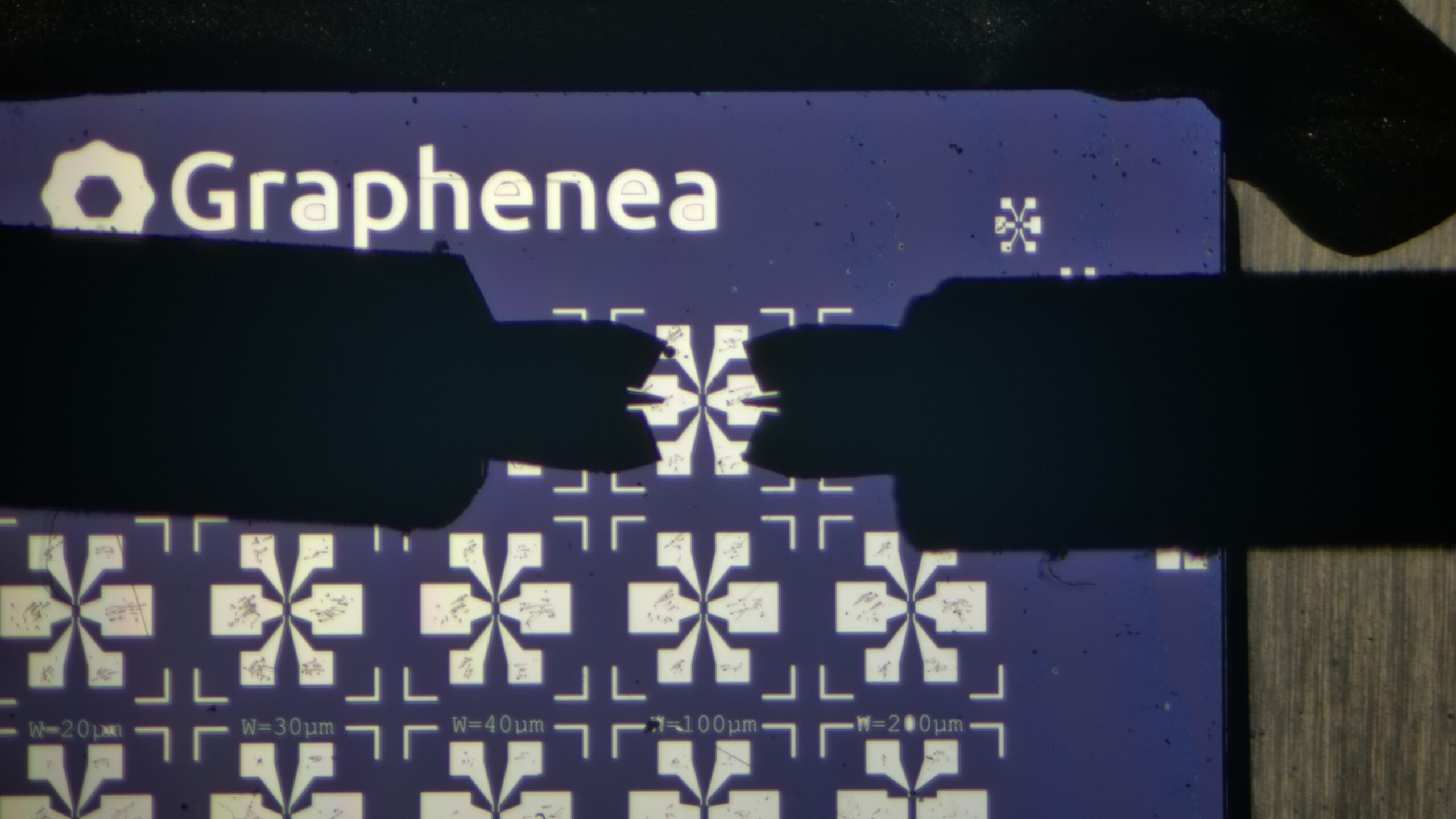
This research theme advances the development of millimeter-wave (mmWave) metasurfaces through the exploration and application of cutting-edge thin-film materials and monolithic integration techniques. In close collaboration with Dell Canada under NSERC/Mitacs-funded initiatives, the work leverages Carleton University’s Microfabrication Facility (CUMFF) for precise cleanroom-based fabrication, focusing on depositing and patterning materials such as graphene and tunable dielectrics directly into subwavelength resonator arrays on a single substrate. This monolithic approach integrates active tuning elements, biasing networks, and electromagnetic structures seamlessly, overcoming limitations of hybrid assemblies—including component discreteness, higher losses, and scalability issues. The resulting metasurfaces deliver compact form factors, low insertion loss, electronic reconfigurability, and optical transparency—enabling innovative “smart window” applications for radio environment engineering. These designs enhance wireless signal propagation across rooms and buildings, supporting high-efficiency beamforming, real-time wave manipulation, and scalable solutions for urban indoor coverage, rural point-to-point links, and beyond-5G/6G systems, holographic imaging, and next-generation digital infrastructure. By combining academic innovation with industry expertise from Dell Canada, the theme strengthens Canada’s leadership in metamaterials and wireless technologies, driving industrially relevant advancements that bridge connectivity gaps and enable robust, sovereign RF solutions.
4. In-House Drone Integration for Advanced RF Systems
This research theme develops in-house drone integration capabilities through strategic collaboration with the National Research Council (NRC) of Canada, focusing on embedding high-performance antennas, metasurfaces, and electromagnetic systems onto unmanned aerial vehicles (UAVs/drones). By leveraging MARS’s expertise in reconfigurable metasurfaces, beamforming antennas, and mmWave technologies, the work equips drones with lightweight, tunable RF payloads for enhanced beyond-line-of-sight (BLOS) communications, adaptive radar sensing, and real-time surveillance. Drones serve as agile platforms to extend wireless coverage in remote or challenging environments, enable dynamic beam steering for reliable data links, support synthetic aperture radar-like imaging for high-resolution monitoring, and facilitate persistent surveillance for security applications.
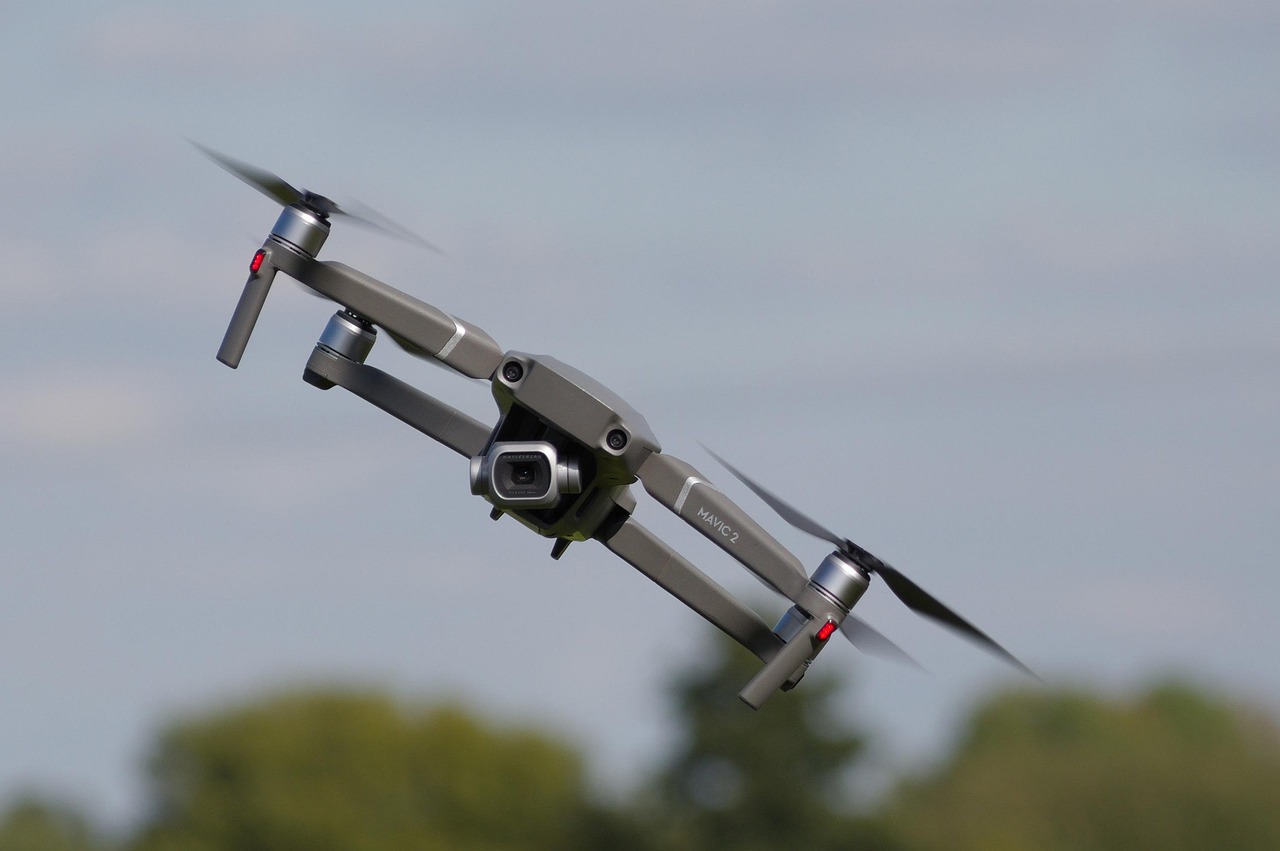
This theme underscores the strategic importance of drones for Canada’s national interests: bolstering resilient communications in vast northern territories, improving radar detection and environmental monitoring, enhancing border and infrastructure surveillance, and advancing self-reliance in critical technologies amid growing global demands for sovereign aerospace and defense capabilities. Through NRC partnership access to specialized testing facilities, flight validation, and collaborative R&D, prototypes achieve compact integration, low power consumption, and robust performance—contributing to secure, sovereign solutions for public safety, disaster response, Arctic monitoring, and defense readiness.
5. Additive Manufacturing Techniques for Metasurfaces and Antennas
This research theme explores additive manufacturing (AM) methods to fabricate high-performance metasurfaces and antennas, enabling rapid, cost-effective, and geometrically flexible electromagnetic devices. Key techniques include screen-printing for large-area conductive patterns, inkjet printing for precise subwavelength features on planar substrates, aerosol jet printing for high-resolution deposition on non-planar or 3D surfaces (with fine lines down to tens of microns), and various 3D printing approaches (e.g., material jetting, stereolithography, or fused deposition) for volumetric structures and conformal integration. Conductive inks (e.g., silver nanoparticles), dielectric materials, and multi-material combinations are deposited layer-by-layer to create tunable resonators, reflective/transmissive metasurfaces, beamforming arrays, and compact antennas—often directly onto flexible, curved, or low-cost substrates without traditional subtractive processes like etching or lithography.
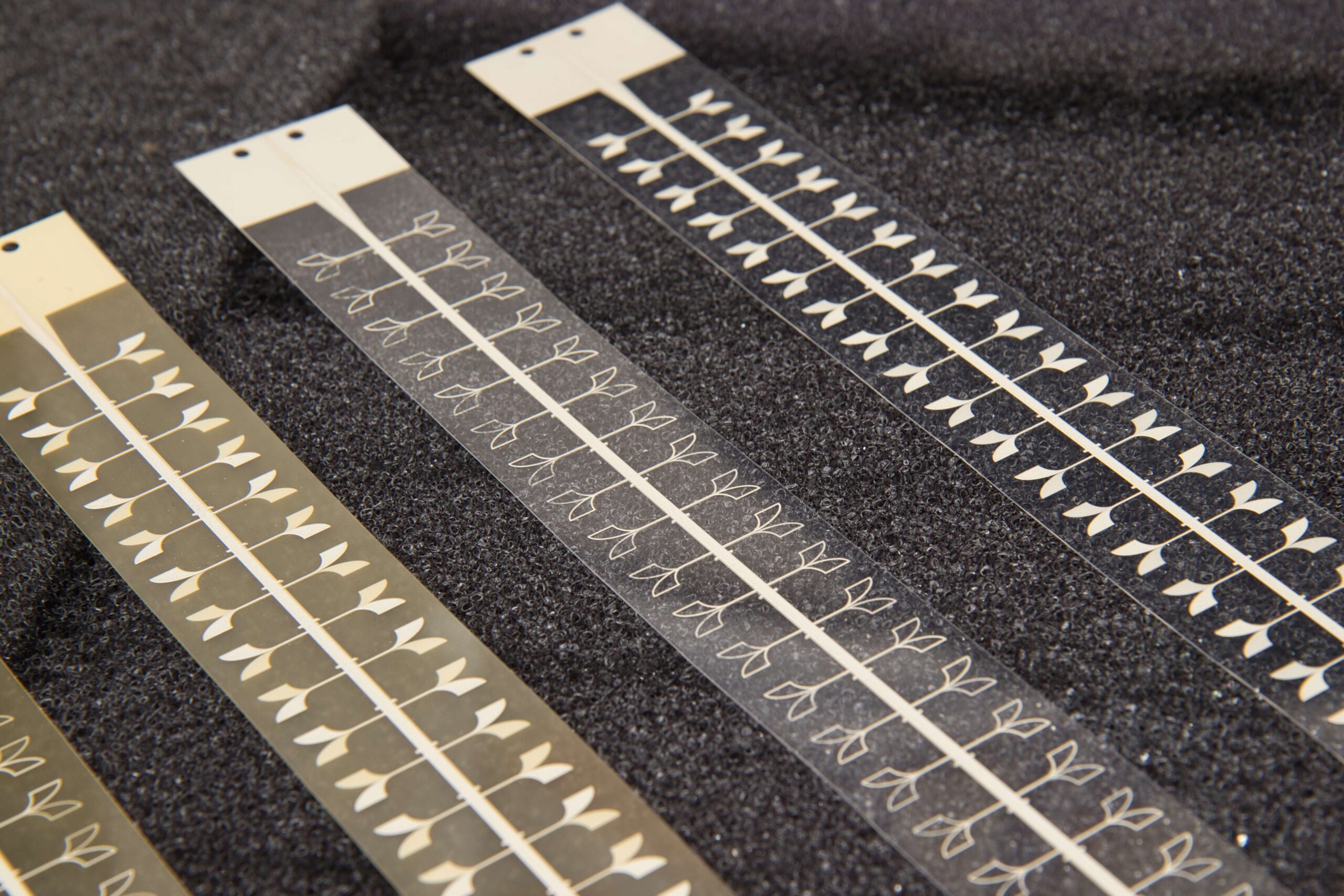
This approach addresses key challenges in metasurface scalability, such as high fabrication costs, limited design freedom, and incompatibility with complex geometries, while delivering low-loss performance at microwave, mmWave, and THz frequencies. Applications include conformal antennas for wearables/IoT, reconfigurable metasurfaces for adaptive wireless environments, lightweight radar/sensing payloads, and rapid prototyping for 5G/6G and beyond. By advancing AM processes tailored to electromagnetic requirements, the theme supports sustainable, on-demand manufacturing of innovative RF components with enhanced functionality and reduced lead times.
6. Sub-THz Systems and D-Band Metasurface Technologies
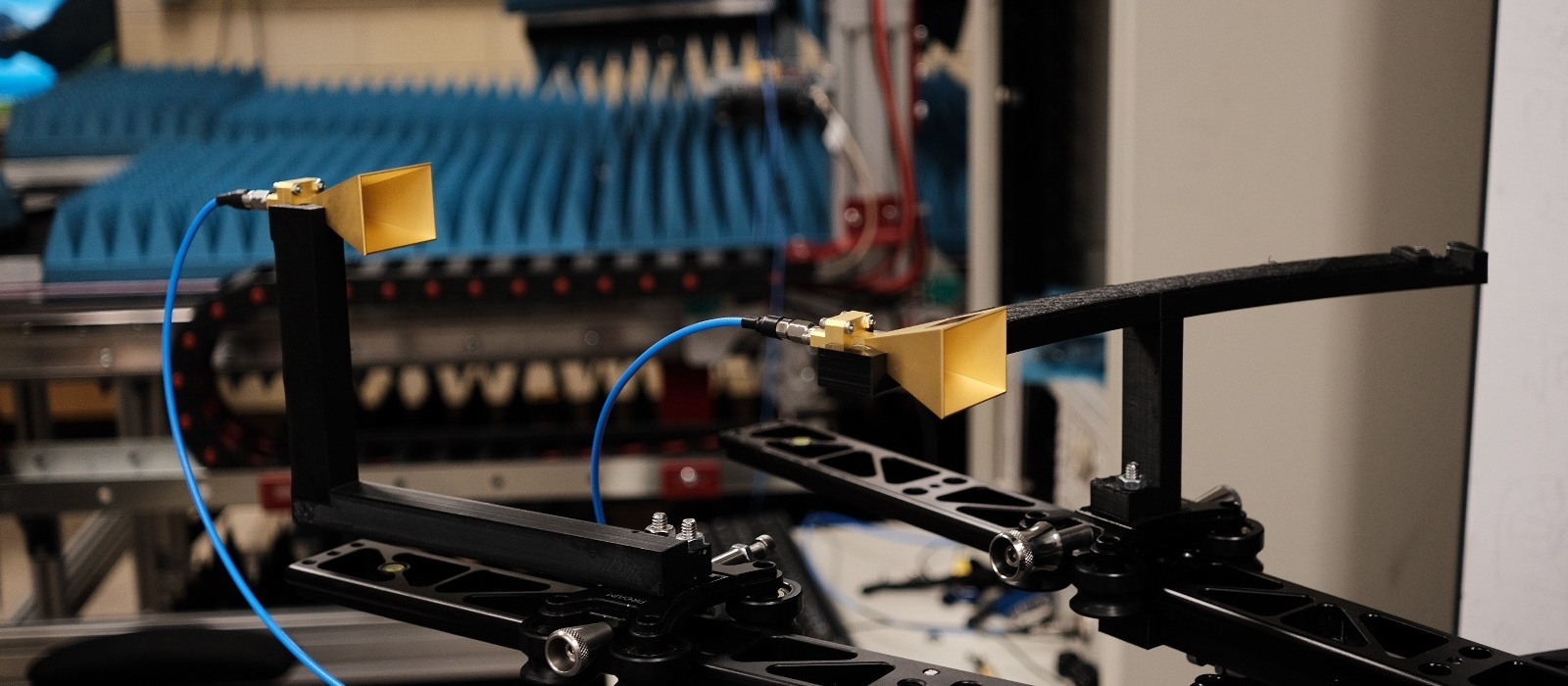
This research theme pioneers sub-terahertz (sub-THz) electromagnetic systems, with a strong emphasis on D-band (110–170 GHz) metasurfaces and antennas to unlock ultra-high data rates, high-resolution sensing, and advanced beam control for 6G communications, imaging, and radar. Novel fabrication approaches address the stringent precision demands at these frequencies, including Modified Semi-Additive Process (MSAP) for fine-line conductive patterning and low-loss interconnects, alongside on-wafer cleanroom fabrication in Carleton’s Microfabrication Facility (CUMFF) for monolithic integration of subwavelength resonators, tunable elements, and active components on silicon or dielectric substrates. These techniques enable scalable, high-accuracy prototypes with minimal losses and compatibility with integrated circuits.

Characterization leverages cutting-edge methods: quad-optical (quasi-optical) systems for accurate near-field/far-field wavefront analysis, beam profiling, and phase/amplitude extraction in controlled environments, complemented by traditional field measurement setups (e.g., anechoic chambers, vector network analyzers with frequency extenders) for validation of radiation patterns, gain, and efficiency. International collaboration with Dr. Takashi Tomura (Japan) enhances designs through joint expertise in Huygens’ metasurfaces, transmit-arrays, polarization control, and mmWave/sub-THz beamforming—yielding innovative structures for refraction, difference-pattern generation, and high-gain applications. This theme drives sovereign advancements in sub-THz technology, enabling compact, low-loss devices for beyond-5G wireless, high-throughput links, precise environmental monitoring, and security imaging, while building global partnerships for accelerated innovation and real-world deployment.
7. Computational Electromagnetics for Metasurface Design and Analysis
This research theme advances computational electromagnetics (Computational EM) tailored to the rigorous modeling, synthesis, and analysis of electromagnetic metasurfaces, treating them as zero-thickness sheets characterized by tensorial surface susceptibilities and governed by Generalized Sheet Transition Conditions (GSTCs). GSTCs serve as the core boundary condition framework, enabling efficient full-wave simulation of bianisotropic, dispersive, space-time modulated, and spatially dispersive metasurfaces without meshing volumetric unit cells—drastically reducing computational cost while preserving accuracy for arbitrary excitations and geometries. This work is done in close collaboration with Prof. Tom Smy. Key developments include time-domain solvers like GSTC-integrated Finite-Difference Time-Domain (GSTC-FDTD) for broadband, dispersive (e.g., Lorentz/Drude models), nonlinear, and temporally varying metasurfaces; frequency-domain integral equation approaches such as IE-GSTC for scattered-field computation, extended to IE-GSTC-SD (spatial dispersion) with higher-order boundary conditions incorporating spatial derivatives and multipolar effects; and accelerated variants using Fast Multipole Method (FMM) for electrically large domains and complex environments (with collaboration with Dr. Karim Achouri). Physics-informed models leverage dipolar and multipolar (electric/magnetic) polarizability representations to capture higher-order phenomena like spatial dispersion, non-locality, and normal polarizabilities—ensuring faithful emulation of physical unit-cell behaviors in compact, zero-thickness equivalents. 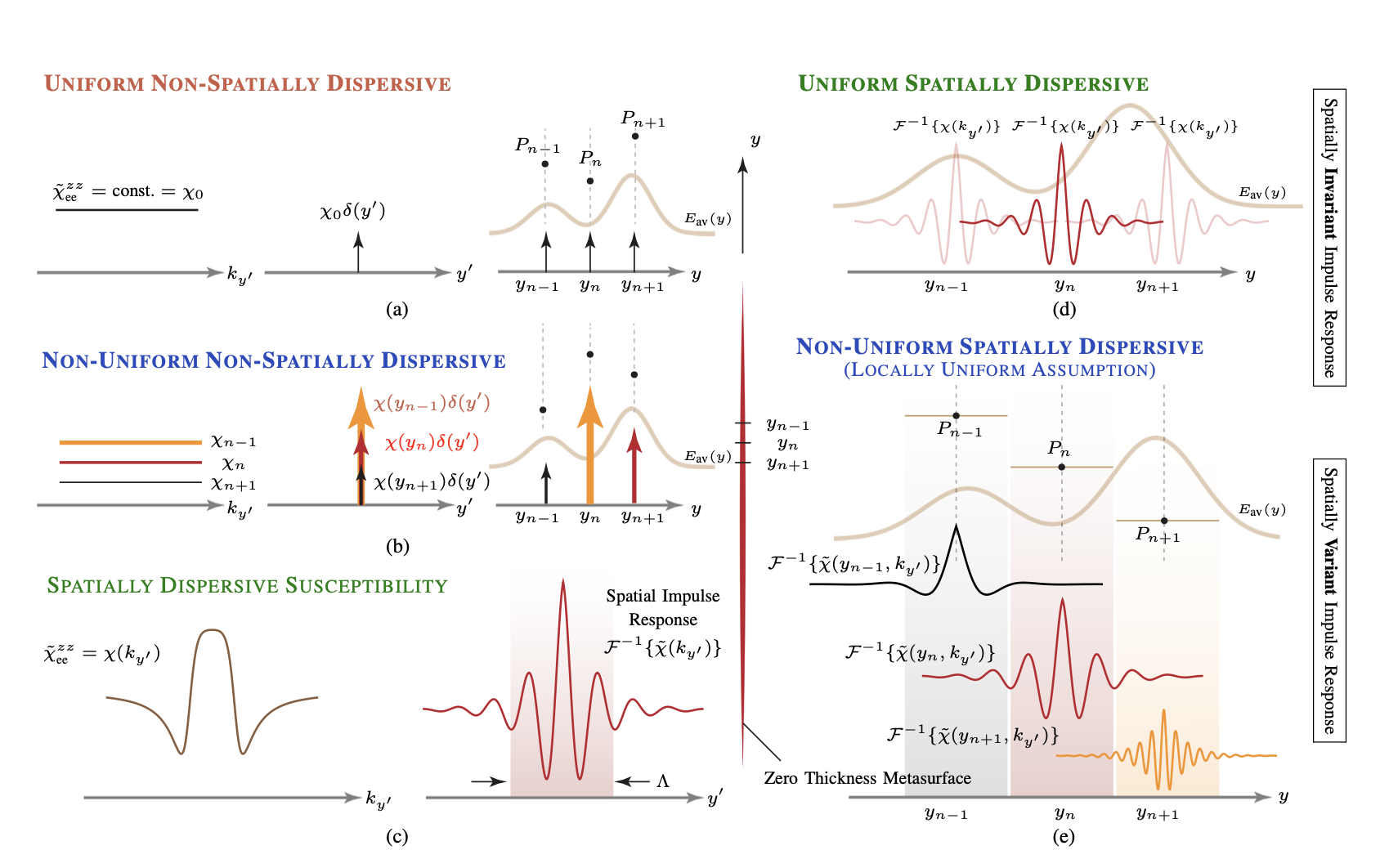
This theme enables rapid metasurface synthesis (e.g., for beamforming, holography, illusions/camouflage, and wave manipulation), accurate prediction of scattering/radiation patterns, and scalable design optimization for microwave to THz applications in 5G/6G, sensing, and beyond. By bridging fundamental EM theory with efficient numerical tools, it supports innovative, computationally tractable solutions that accelerate discovery and prototyping within the MARS group.
8. High-Gain Multifunctional Antennas with Leaky-Wave Structures for mmWave and Beyond
This research theme advances a versatile family of high-gain, multifunctional antennas built around leaky-wave structures, optimized for millimeter-wave (mmWave) frequencies while demonstrating inherent frequency scalability from microwaves through THz/sub-THz to optical regimes. Leaky-wave antennas (LWAs) harness controlled leakage from traveling waves in guiding structures to deliver inherent frequency-beam scanning, wide angular coverage (backward to forward through broadside), high directivity, and compact profiles—eliminating the need for complex phased-array feeds and enabling dynamic, low-profile systems across broad spectral ranges.
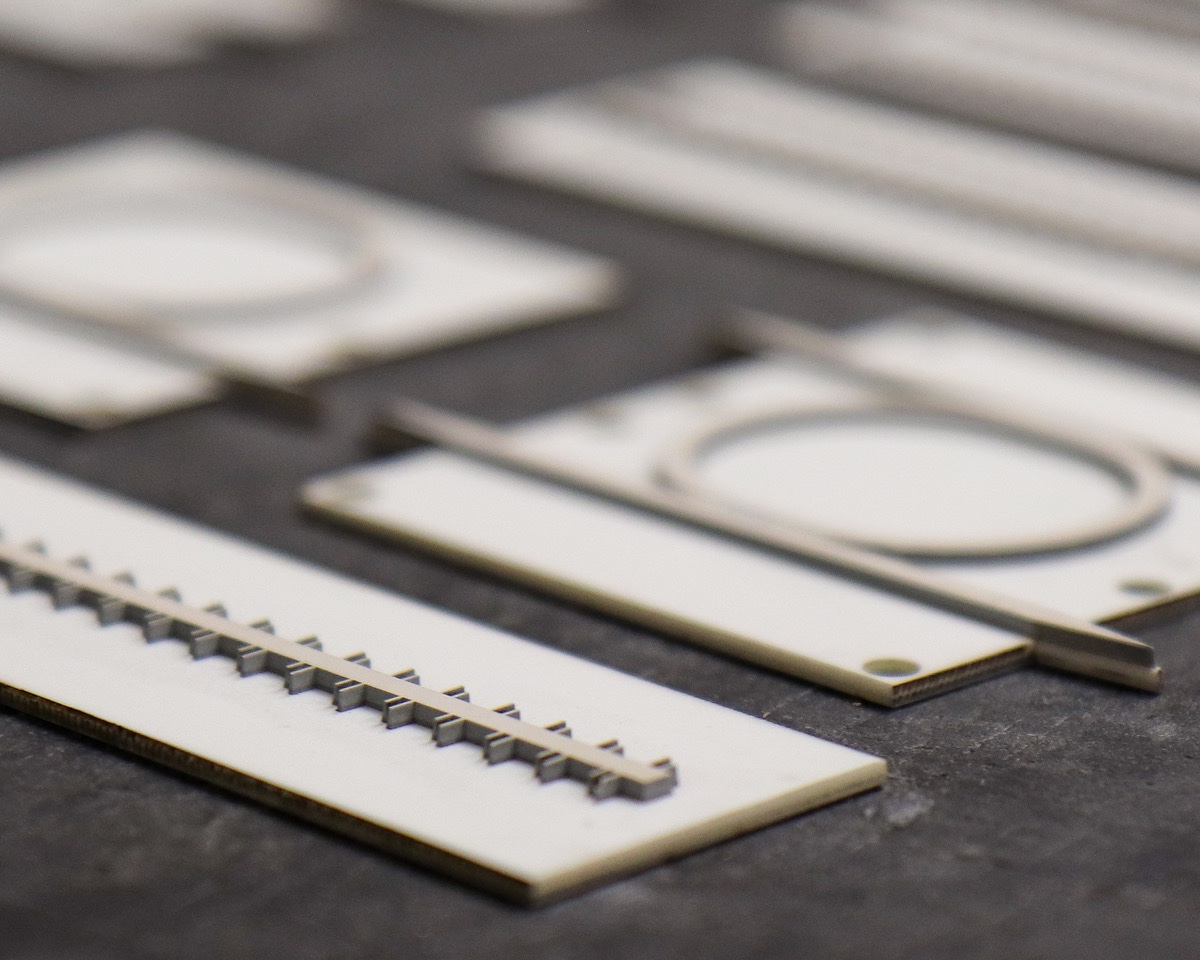
Core designs feature periodic/segmented slot arrays on substrate-integrated waveguide (SIW) or dielectric platforms for precise beamforming (e.g., flat-top patterns, sidelobe suppression), comb-like or hybrid slot configurations for enhanced bandwidth and multifunctionality (e.g., integrated multiplexing, polarization agility), flexible/planar implementations on low-loss substrates for conformal/wearable applications, and combinations with metasurfaces or resonators to further boost gain, enable reconfigurability, and support multi-beam operation. A key focus is on all-dielectric architectures—using high-permittivity, low-loss materials (e.g., silicon, ceramics, or polymers) in waveguides, slabs, or perturbations—to avoid metallic ohmic losses, achieve superior efficiency at higher frequencies, and facilitate monolithic integration or additive fabrication.
This scalability arises from the fundamental physics of leaky-wave propagation: dispersion-engineered modes maintain consistent radiation mechanisms across decades of frequency, with structural parameters (e.g., periodicity, perturbation strength, dielectric contrast) scaled proportionally to wavelength—yielding directive beams, reduced dispersion, and high aperture efficiency from mmWave point-to-point links to THz radar/imaging and optical nanoantennas for efficient coupling between nanoscale circuits and far-field emission. Applications include high-throughput 5G/6G communications, real-time spectrum sensing, near-field probing, adaptive wireless environments, and emerging optical interconnects/photonics. By exploring novel LWA topologies—from classical slots to advanced segmented, comb-hybrid, and all-dielectric variants—the theme drives sovereign, high-performance antenna technologies that tackle challenges in path loss, beam alignment, integration density, and loss mitigation across the electromagnetic spectrum.
9. Mid-IR Long-Range Metasurfaces and Leaky-Wave Antenna Arrays
This research theme extends metasurface and antenna technologies into the mid-infrared (mid-IR) spectral range, developing long-range metasurfaces and leaky-wave antenna arrays based on plasmonic and all-dielectric structures for advanced wavefront manipulation, directional emission, and high-resolution sensing over extended distances. Leveraging Carleton University’s Microfabrication Facility (CUMFF) for precise, wafer-scale cleanroom fabrication, the work fabricates subwavelength resonators using compatible processes (e.g., lithography, etching, deposition of high-index dielectrics like silicon/germanium or mid-IR plasmonic materials such as doped semiconductors, polar dielectrics, or low-loss metals like aluminum/gold). Plasmonic designs harness surface plasmon polaritons for strong near-field enhancement and compact unit cells, enabling efficient absorption/emission control and resonant phenomena in mid-IR bands. All-dielectric implementations rely on Mie resonances in high-contrast nanostructures (e.g., silicon pillars, holes, or slabs) to achieve low intrinsic losses, high-Q factors, and broadband operation—avoiding ohmic damping common in metals at these wavelengths while supporting multipolar responses for advanced beam shaping. This work is done in collaboration with Prof. Niall Tait.
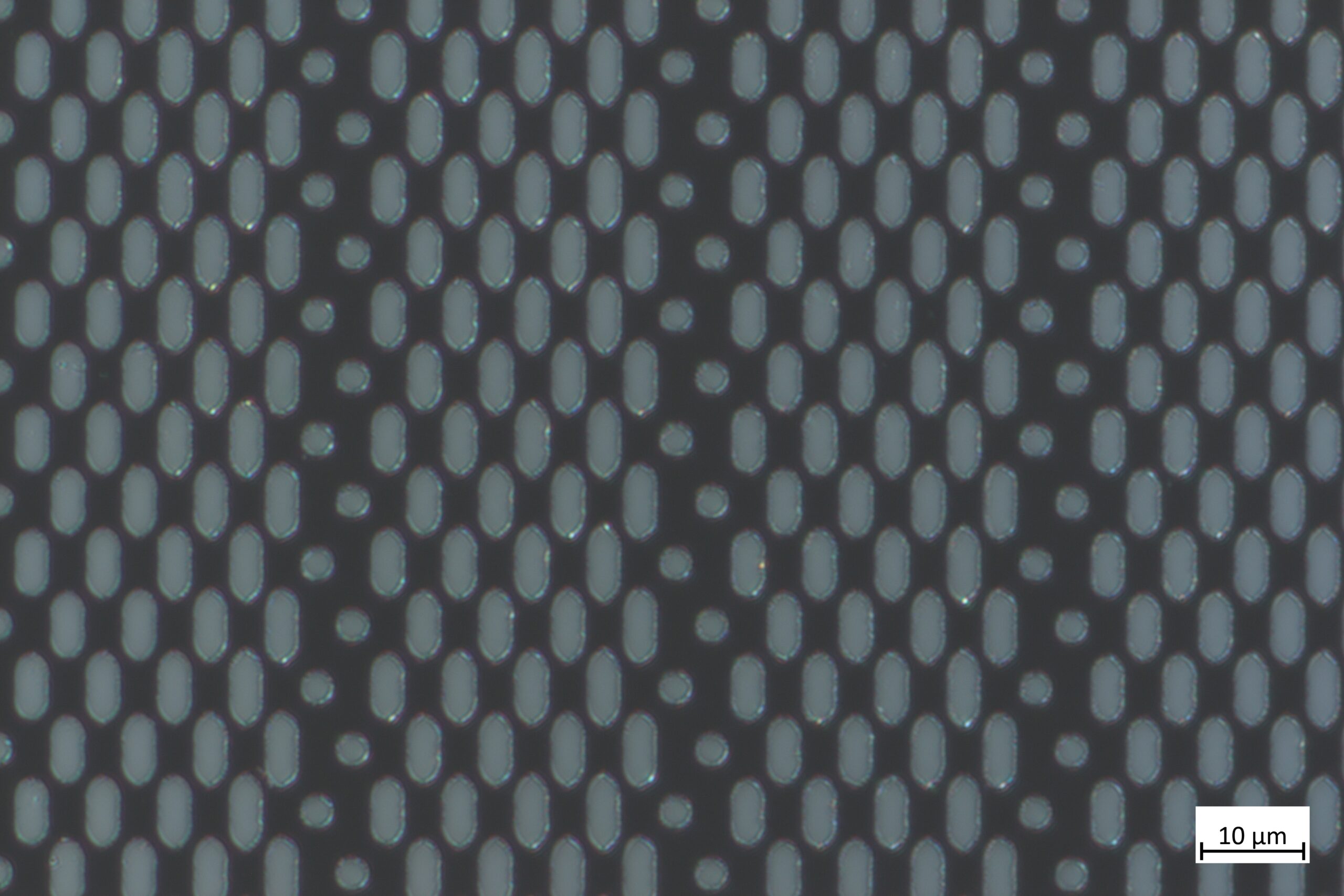
Leaky-wave configurations introduce controlled periodicity or perturbations to guide waves along the surface with engineered leakage, producing highly directive, frequency-scannable beams or focused spots at long ranges—ideal for standoff chemical/biological detection, thermal signature management, hyperspectral imaging, and directed infrared countermeasures. Hybrid plasmonic-dielectric combinations balance enhancement and efficiency, while monolithic integration via CUMFF ensures scalability, precise alignment of biasing/tuning elements (where applicable), and compatibility with on-chip photonics or free-space optics. This theme addresses mid-IR challenges like atmospheric attenuation and material losses through dispersion-engineered designs, supporting sovereign advancements in defense/security monitoring, environmental sensing, medical diagnostics, and beyond—bridging the group’s RF/mmWave expertise to emerging infrared photonics applications.
Selected Research Fundings