On Friday, April 10th, 2026, students from Carleton University’s Advanced Cognitive Engineering (ACE) Lab presented their latest driving‑related research at the annual Carleton Cognitive Science Student Conference, held in Richcraft Hall.
The conference’s mission remains central to the Cognitive Science program at Carleton: to provide a supportive, inclusive venue where students across all areas of cognitive science can present original work, exchange ideas, and receive constructive feedback from peers and faculty.
This year, ACE Lab undergraduate and graduate researchers contributed across lightning talks and poster sessions, highlighting the lab’s multidisciplinary approach to understanding human behaviour in complex driving environments.
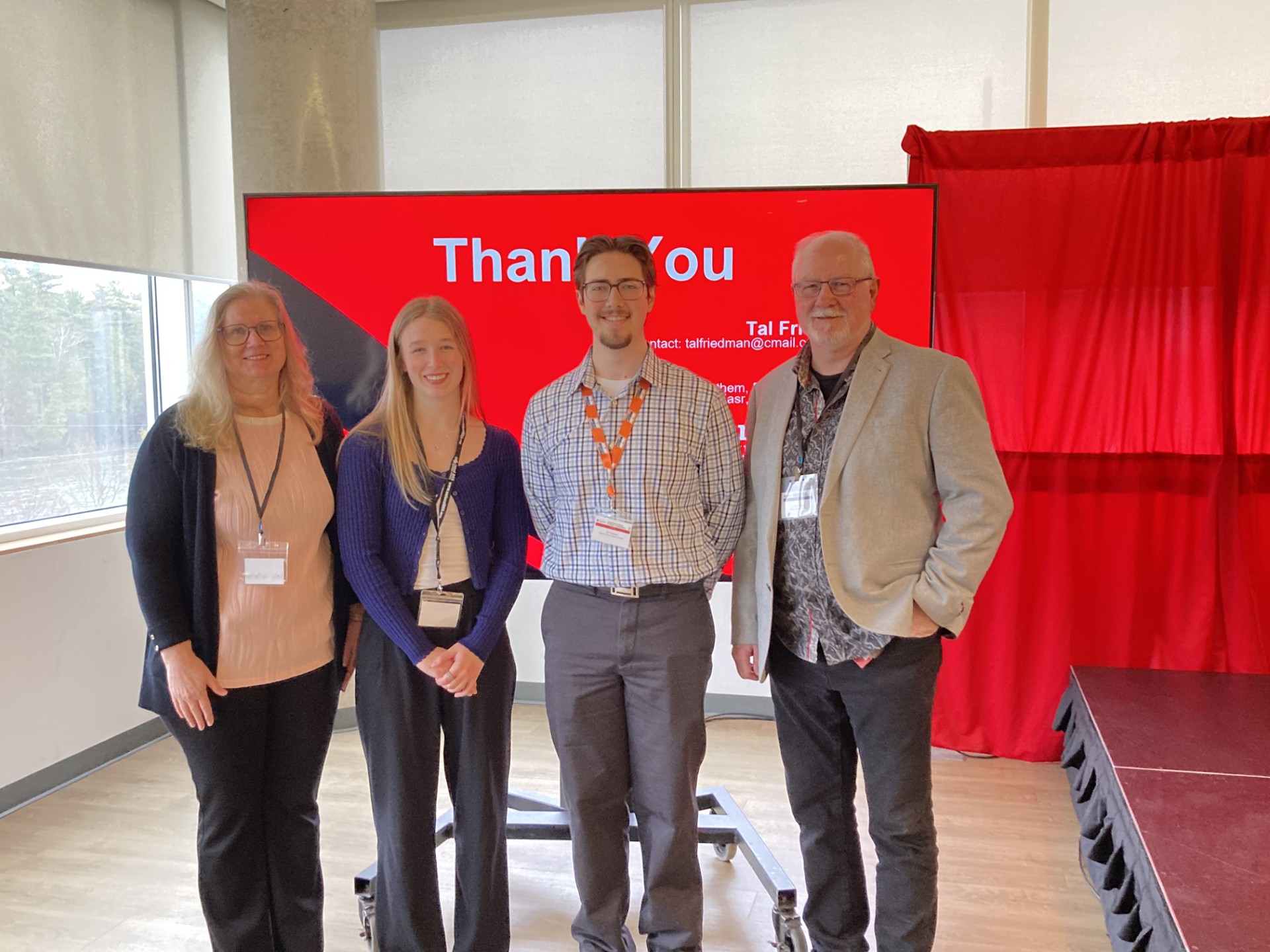
ACE Lab researchers and faculty at the 2026 Carleton Cognitive Science Student Conference. From left to right: Dr. Kathleen Van Benthem, Chloé Lachance‑Soulard, Tal Friedman, and Dr. Chris Herdman.
Lightning Talk Presentations
- Chloé Lachance-Soulard, Second‑Year Master’s Student (Cognitive Science)
Alert, Aware, or Overwhelmed? How Stress Shapes Human Responses to Takeover Requests
Chloé presented research on how audio and visual alert salience levels influence driver stress during takeover requests. Her work shows how alert intensity can shape cognitive load and response quality during transitions from automation to manual control. - Tal Friedman, Second‑Year Master’s Student (Cognitive Science)
From Steering to Screening: Predicting Mature Driver Health Status from Driving Data
Tal presented research using Machine Learning models to predict mature driver health status from naturalistic driving data. His work demonstrates how everyday driving behaviour can serve as a non‑intrusive indicator of emerging health changes in older adults.
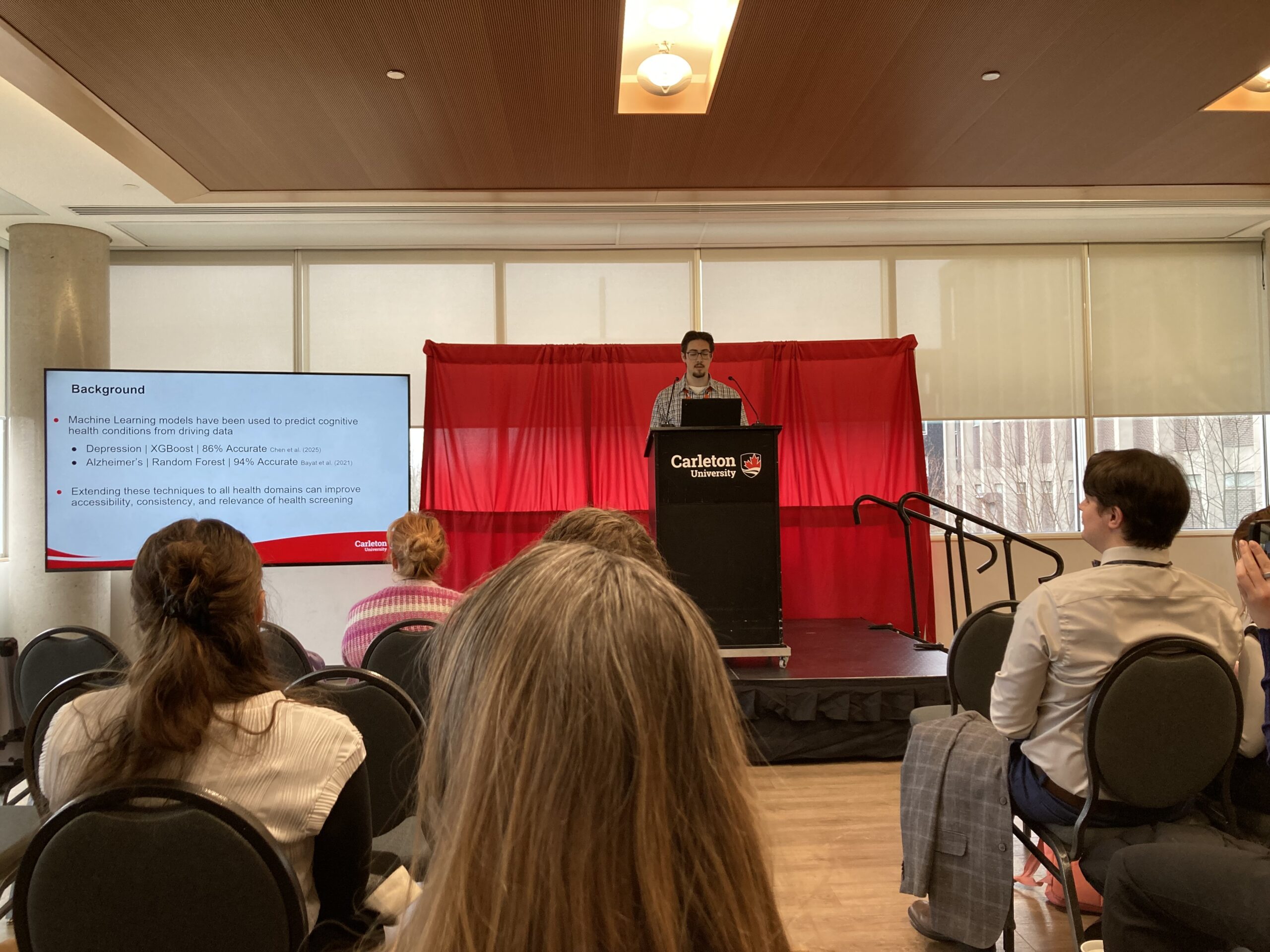
Tal Friedman presenting his research on predicting mature driver health status from driving data.
Poster Presentations
- Lexy St. Pierre, Second‑Year Master’s Student (Human-Computer Interaction)
Understanding Advanced Driver Assistance System (ADAS) Usage in Mature Drivers: A Technology Readiness Index Perspective
Lexy St. Pierre examined how technology readiness in mature drivers influences their knowledge and use of advanced driver assistance systems. Her findings show that individuals with higher technology readiness demonstrate better ADAS understanding and greater system use, indicating that improved education and training may support safer, more effective engagement.
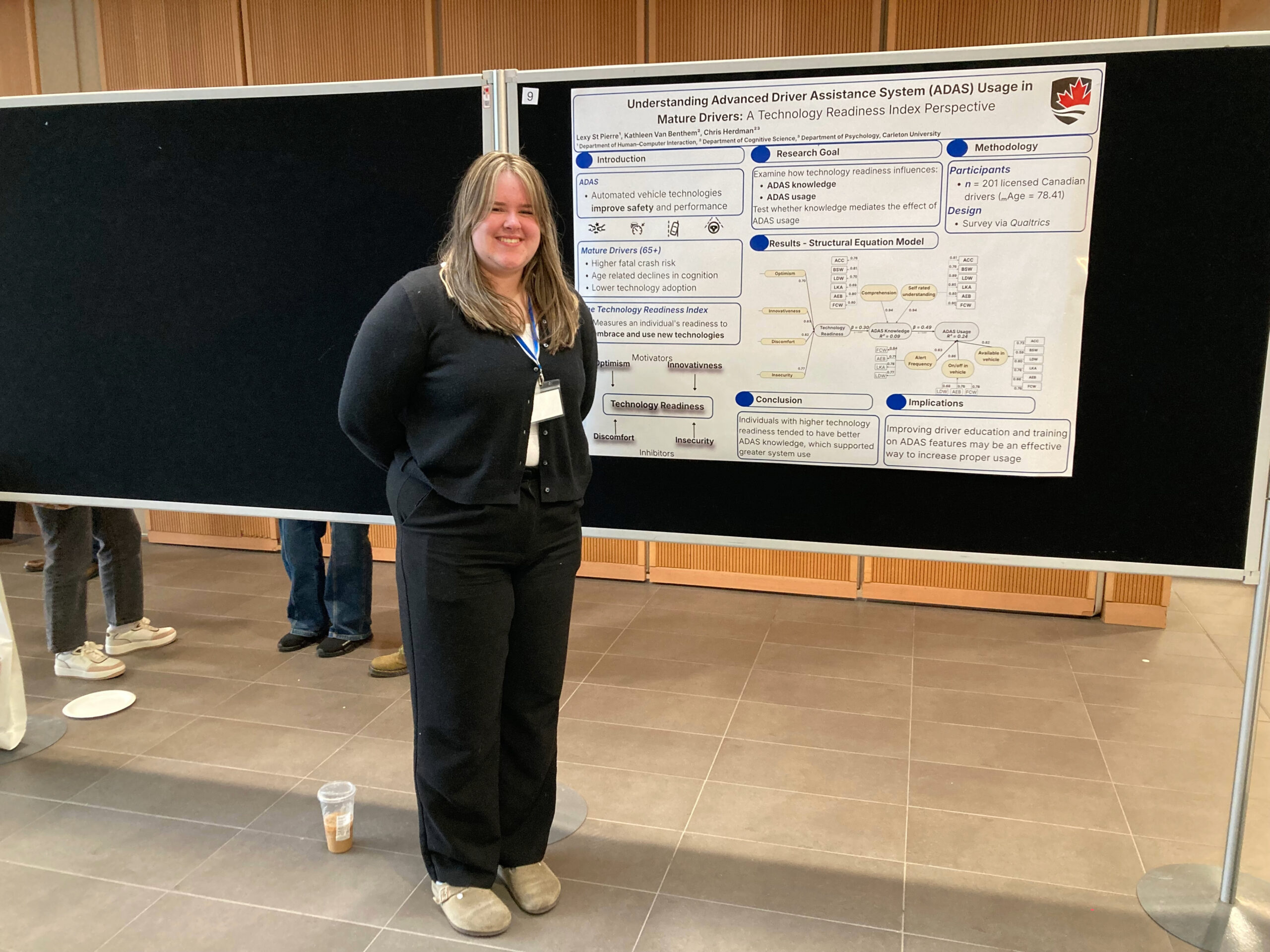
Lexy St. Pierre presenting her research on technology readiness and ADAS engagement in mature drivers.
- Tamara Mendizabal, Fourth‑Year Undergraduate Honours Student (Cognitive Science)
Alert Salience and Driver Fatigue as Predictors of Takeover Performance in Semi‑Autonomous Vehicles
Tamara Mendizabal investigated how internal driver fatigue and external alert salience predict takeover performance in semi‑autonomous vehicles. Her work highlights how passive monitoring and reduced situational awareness in automated driving can impair successful takeovers, underscoring key risks as drivers shift into more passive roles.
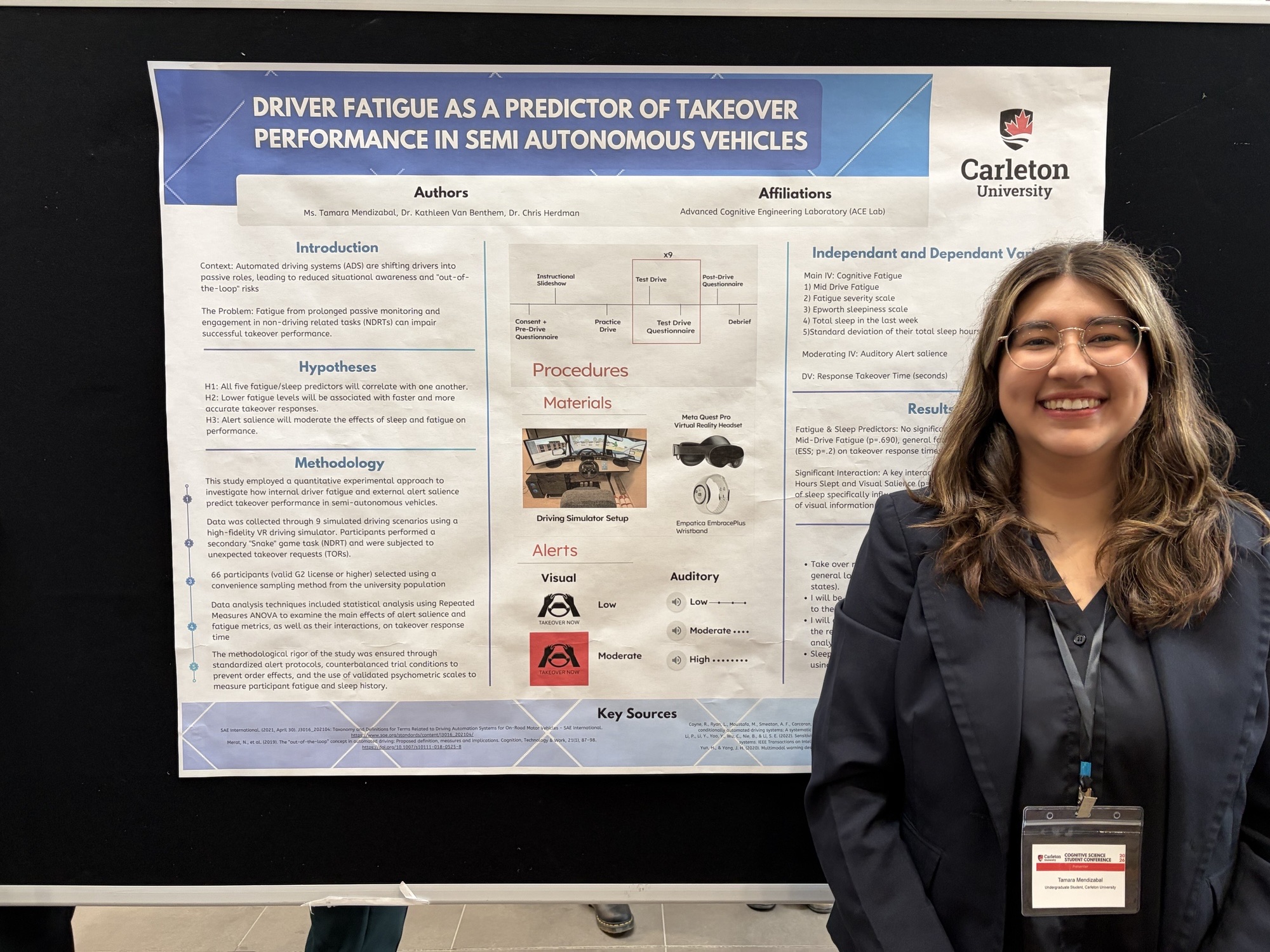
Tamara presenting her working on driver fatigue as a predictor of takeover perfomance in semi autonomous vehicles.
- Sadia Naureen, Fourth‑Year Undergraduate Honours Student (Cognitive Science)
Staying Alert in Autopilot: The Effects of Trust in Automation and Attentional Capacity on Situation Awareness in Novice and Senior Drivers
Sadia explored how trust in automation and attentional capacity affect situation awareness when automation is active.
A Strong Showing for ACE Lab Research
The ACE Lab’s contributions highlighted the lab’s commitment to improving road safety through human‑centred research. From automation trust to stress responses, from mature driver readiness to cognitive predictors of takeover performance, the work presented reflects the lab’s ongoing leadership in understanding how humans interact with increasingly automated vehicles.
The conference once again provided an invaluable platform for students to share their work, refine their ideas, and connect with the broader cognitive science community.