By Dan Rubinstein
Photos by Brenna Mackay
Carleton University’s new partnership with South Africa’s University of Zululand is much more than a formal agreement to work on research projects together.
The two universities, whose leaders signed a memorandum of understanding in a ceremony on the Carleton campus on Sept. 3, are unlocking the transformative potential of African Indigenous knowledge systems — the traditional knowledge, practices and beliefs held by Indigenous communities on the continent, which can help people throughout Africa, Canada and around the world navigate some of the most pressing challenges on the planet.
“Even if this knowledge wasn’t written down, it has shaped how people live for thousands of years,” said Samuel Ojo Oloruntoba, a professor in Carleton’s unique, standalone Institute of African Studies and the principal investigator of the Mastercard Foundation-supported African Indigenous Knowledge Research Network (AIKRN), which is dedicated to re-centring African knowledge.
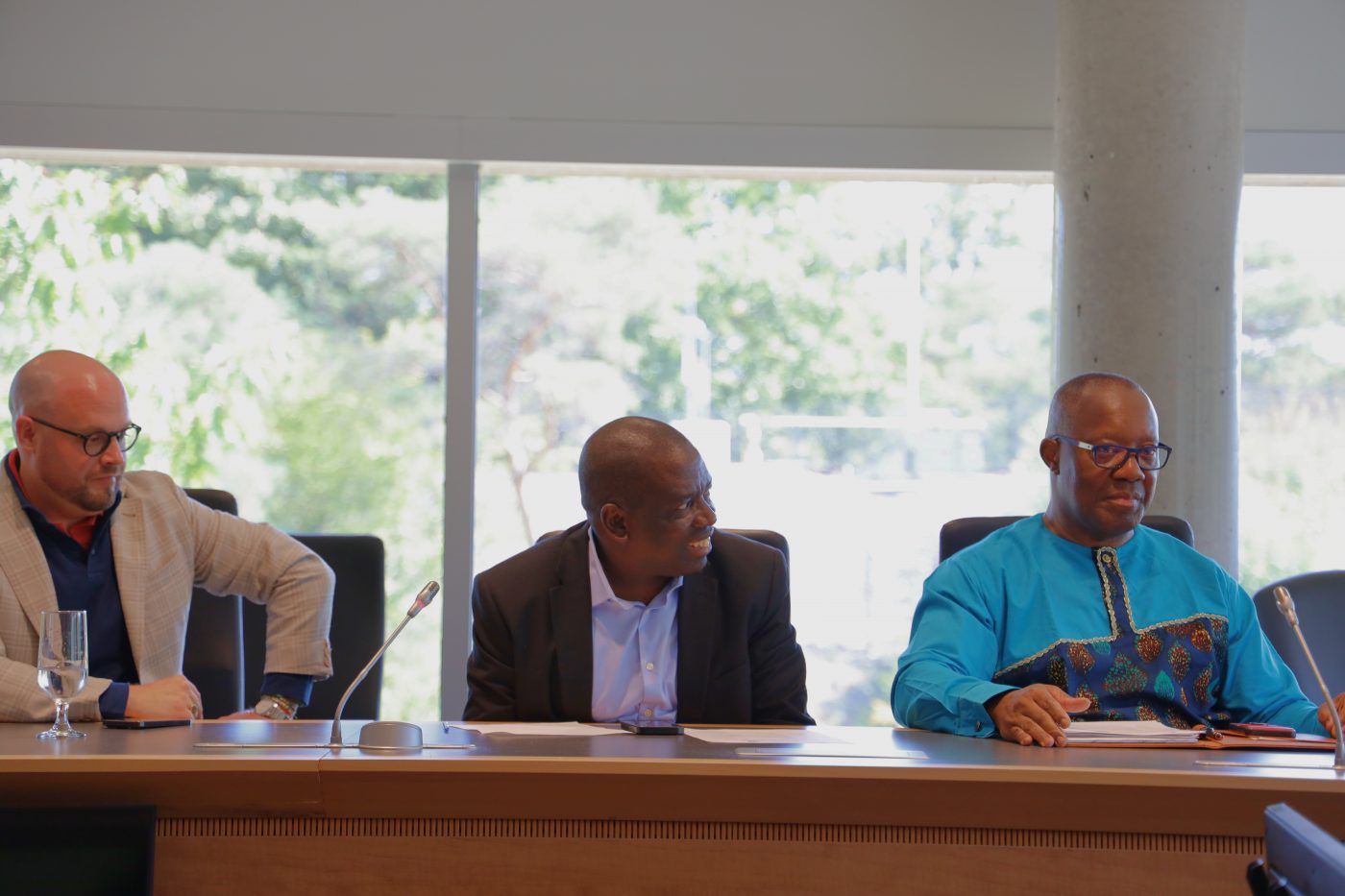 Left to right: Carleton Vice-Provost and Associate Vice-President (Academic) David Hornsby, African Studies researcher and AIKRN principal investigator Samuel Ojo Oloruntoba and Institute of African Studies director Nduka Otiono
“We’re not just mapping this knowledge,” Oloruntoba continued. “We’re going back to our roots and applying it toward sustainable livelihoods. It is something to build upon.”
“We want to shift the ecosystem of knowledge production in Africa and contest Eurocentricity,” added Oloruntoba’s collaborator Inocent Moyo, a human geography researcher at the University of Zululand and Deputy Dean of Research and Internationalization.
“What we’re doing involves both natural and social sciences and is directly related to the strategic focus of both our universities. We have engaged people in our communities on projects that will foreground Indigenous knowledge systems. We’re moving forward together.”