IAS Journal: Nokoko
Nokoko Vision and Mission
We are committed to a world where people are free from all forms of oppression and exploitation, where respect for individuals’ varied differences is maintained, and where everyone can realise their full potentials.
A critical step in creating such a world requires us to analyze, reflect on, and debate the world as it is, as it might, could, or should be.
Nokoko aims to be a site for such important conversations related to Africa, the African diaspora, and the continent’s relationship with the rest of the world. Nokoko is a platform for public intellectuals, academics, social movements and organizations that share our vision.
Hosted by the Institute of African Studies, at Carleton University (Ottawa, Canada), the journal Nokoko offers a space for emerging and established scholars to publish and engage in discussions about their work on Africa and the African diaspora. Published annually, articles and contributions to the journal are peer-reviewed. Submissions should be robust, clearly written and accessible to academic and non-academic readership alike (see below for author guidelines).
‘Nokoko’ is a Ga word that means something new, novel, surprising and interesting.
Nokoko is currently published once a year.
Nokoko is referenced by ProQuest’s “Black Studies Center” (http://www.proquest.com/en-US/catalogs/databases/detail/bsc.shtml) and is recognized as a refereed journal by Ulrich.
NokokoPod
We also have a new podcast series, NokokoPod. NokokoPod is a companion to the journal, covering current African issues. It aims to bring forth new perspectives that broaden, trouble, complicate and enrich current discourses. Edited and annotated versions of the conversations will be made available on the journal website. Visit the website to hear (or read) the insights on topics such as Changes in Ethiopia, the Changing Landscape of Freedoms in Tanzania and Protests in Sudan.
Previous Issues
-
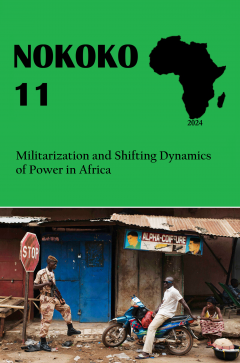
Front Matter (Editorial Board, Table of Contents, Contributors)
A Note from the Editor-in-Chief: Navigating the Complex Terrain of Militarization in Africa
Nduka OtionoIntroduction: Militarization and shifting Dynamics of Power in Africa
Toby Leon Moorsom and Richard Levi RaberSinging against the State’s Guns and Goons: Timothy Wangusa’s Poetry and the Quest for Democratic Governance in Uganda
Danson Sylvester Kahyana
The Struggle to Transform Sudan
Mahder Habtemariam Serekberhan
Constructing Security Communities in Nigeria? Interrogating the Politics of Regionalization of Vigilante Protection and the Dynamics of Ethnic Security Dilemma
Kialee Nyiayaana
State Fragility, Non-State Armed Groups, and the Privatization of Violence in the Anglophone Conflict in Cameroon
Tindo Narcisse and Elokobi Eposi Ethel
Briefing Notes
Shifting Geopolitics in Africa
Padraig Carmody
Community Protocols: The Legal Framework to Safeguard Biocultural Rights in South Africa
Sobantu Mzwakali
Photo Essay
“Ukugrumba: Recollecting Dry Bones: Revisiting the Aftermath of the Liberation Struggle”
Tshepiso MabulaReview Essay
The Autobiographical and Feminist Backgrounds of Ukamaka Olisakwe’s Ogadinma: Inclusion of Low-Class Women in the African Feminist Discourse
Chibueze Darlington Anuonye
Entire issue of Volume 11 (Spring 2024) -
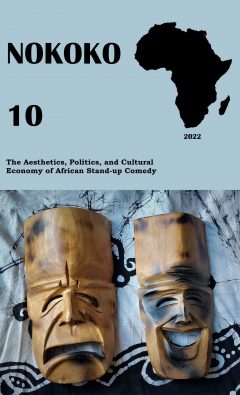
Front Matter (Editorial Board, Table of Contents, Contributors)
Introduction: The Aesthetics, Politics, and Cultural Economy of African Stand-up Comedy
Nduka Otiono
The Logic of Laughter and the Ecology of Ethno-Cultural Representation in Nigerian Stand-up Comedy
James Tar Tsaaior
From Alarinjo to Oniduro: Stand-up Comedy as a Neo-Cultural Expression
Doyin Aguoru
Comedy on the Cusp of Plurality: Gbenga Adeboye and the Context of Social Critique in Nigeria
Adeshina Afolayan
Comedy at the Junction of Popular and Political Cultures in Guinea: The Cases of Gèètö, Tyotyop, and L’Homme
Mohamed Saliou Camara
Performing Humour on Ugandan Buses: Preliminary Insights on the Jokes Performed by Hawkers of Medicinal Products
Danson Sylvester Kahyana
Representations of the Nigerian Police and Policing in Stand-up Comedy: Tracking Embedded Meanings and Implications
Chikezirim Nwoke
Lexical Cohesion as a Narrative Force in the Jokes of I Go Die
Destiny Idegbekwe
Collective Beliefs as Script Triggers: A Case Study of Gordons’ Stand-up Comedy Performance
Lynda Chinenye Ambrose
Standing Up, Talking Back: Stand-up Comedy, African Immigrants and Belonging in Canada
Eyitayo Aloh
Appendix: What has gender got to do with African comedy and stand-up acts?
Nduka Otiono
Book Review
Bakassi, Okey. (2019) The Memoirs of an African Comedian. Lagos: Tribal Marks Media.
Reviewer: Ifesinachi Nwadike, Independent writer and scholar. -
Front Matter (Editorial Board, Table of Contents, Contributors)
Introduction: Africanist Public Intellectuals, Progressive Politics and Youth Agency in a Digital Age
Nduka OtionoThe Contemporary Africanist Philosopher and the Need for Indigenous Modern Knowledge
Adeolu Oluwaseyi Oyekan‘Stomach Infrastructure’: Survival, Trauma, and the Slippery Relations of Nation-Building in Nigeria
Comfort Olajumoke VerissimoDiaspora Diplomacy: Opportunities and Challenges for African Countries
Jane KeruboPius Adesanmi: A Paradigm Shift in Pan African Humanity
Samuel Ojo OloruntobaMenippean Satire in Postcolonial African Literature: A Reading of Pius Adesanmi’s You’re Not a Country, Africa
Olusola OgunbayoThe Academic As A Public Intellectual: Olu Obafemi’s Ideas And Ideals
Toyin FalolaThe Struggle, Their Life: African Public Intellectuals and the Crisis of Representation
Nduka OtionoBook Reviews
Listening to African Voices: Adesanmi’s Love letter From the Grave
Eyitayo AlohThe Privilege of Editing #WhoOwnsTheProblem: Remembering Pius Adesanmi
Emma Bider -
Front Matter (Editorial Board, Table of Contents, Contributors)
Blair RutherfordA Semiotic Investigation of the Relations between Ifá and Yorùbá Indigenous Markets, Markets Location and Marketing Theories
Olúwọlé Tẹ́wọ́gboyè ÒkéwándéA Closer Look at Climate-Induced Human Migration from Seven African Nations to Seven OECD Nations
Fathima Bushra ZaheerPolicy Impacts on Africa’s Extractive Sector Kenya, Mineral Wealth, and Legislation Facilitating Inclusive Development
Hany Besada and Ben O’BrightThe Role and Influence of Media in Creating Environmental Awareness in Dar es Salaam, Tanzania
Jackson Simon LusagalikaBook Reviews
Satgar, Vishwas, ed. Racism after Apartheid: Challenges for Marxism and Anti-Racism. Wits University Press, 2019
Takudzwa MusekiwaEze James. Dispossessed: A Poetry of Innocence, Transgression and Atonement. Daraja Press, 2019
Ifesinachi Nwadike -
Front Matter (Editorial Board, Table of Contents, Contributors)
Incorporeal Words: The Tragic Passing of Pius Adesanmi
Blair RutherfordEditors’ Notes: Elections and Electoral Politics in Africa: Movements Forward, Backwards or Nowhere?
Toby Leon Moorsom, Wangui Kimari, Christooher WebbEntrenched Dictatorship: The Politics of Rigged Elections in Rwanda since 1994
Susan Thomson with Madeline HopperElectoral Democracy and the Attenuation of Subaltern Resistance in Ghana: Why Democracy is increasingly
becoming a Poisoned Chalice in Africa
Jasper Abembia AyelazunoVoting without Choosing? Ethnic Voting Behaviour and Voting Patterns in Nigeria’s 2015 Presidential Election and
Implications for Institutionalisation of Social Conflicts
Kialee NyiayaanaGoverning Extractive Industries: The Case of Angola’s Petroleum Sector
Anastasia UfimtsevaAn Exploration of Domains Towards Unlocking Zimbabwean Youths’ Socio Economic and Political Empowerment
Tatenda Goodman Nhapi & Takudzwa Leonard MathendeThe People’s President? Raila Odinga and the “Tunaapisha” Movement
Oyunga PalaFiroze Manji: What happened to the “African Awakenings” of 2011?
Interview by Toby Leon Moorsom and Christopher WebbAfricanizing the State: Globalizing the Discipline
Andrew Heffernan -
Front Matter (Dédicace/Dedication, Table of Contents, Contributors)
Notes from the Nokoko Editors
Blair RutherfordNuméro Spécial – Philosophie africaine: Ses paradigmes et son historiographie /
Special Issue: African Philosophy: Its Paradigms and HistoriographyIntroduction : La philosophie Africaine est méthodique
Dia Mbwangi DiafwilaIntroduction: African philosophy is a methodical discourse
Dia Mbwangi DiafwilaDe l’herméneutique des traditions à l’histoire des idées dans le contexte de l’oralité
Benoît Okolo OkondaFrom the hermeneutics of traditions to the history of ideas in the context of orality
Benoît Okolo OkondaThe Hermeneutical Paradigm in African Philosophy: Genesis, Evolution and Issues
Louis-Dominique Biakolo KomoLa methode philosophique de Hebga
Jean BertrandThe philosophical method of Hebga
Jean BertrandLe modèle philosophique inflexionnel
Elie P. Ngoma-BindaThe inflexionnel philosophical model
Elie P. Ngoma-BindaL’approche déconstructiviste en histoire de la philosohie africaine méthode et taxinomie de Grégoire Biyogo
Dia Mbwangi DiafwilaThe deconstructivist approach in the history of african philosophy method and taxonomy of Grégoire Biyogo
Dia Mbwangi DiafwilaArticles
African philosophy in search of historiography
Ademola Kazeem FayemiA Semiotic Investigation of Philosophical Relations between Ifá and Ayò Ọlọ́pọ́n among the Yorùbá People of Nigeria
Olúwọlé Tẹ́wọ́gboyè Òkéwándé -
Front Matter and Table of Contents
Editorial Note: Notes on the diaspora, and other things
by Wangui Kimari and Daniel Tubb“Black against black, blood against blood”: How International Complicity Incubated Genocidal Violence in Rwanda
Brittany M. HopkinA Discourse Analysis of Three Selected Urhobo Oral Poems
Emmanuel A. MedeThe Dramatic and Poetic Contents of the Idju Festival of the Agbarha-Ame People of Warri
Peter Emuejevoke OmokoIs Surveillance the Solution? Evaluating CCTV as a Strategy for Addressing Crime in Post-Apartheid Johannesburg, South Africa
Heather DonkersPaysans, afrocolombiens, déplacés: Leaders entre communautés rurales et urbaines au Chocó, Colombie
Claudia Howald -
Editorial Note: Women’s rights and gender equality in Africa
by Wangui Kimari, Nduka Otiono, Toby Moorsom, Blair Rutherford, and Daniel Tubb“Spare Tires,” “Second Fiddle,” and “Prostitutes”?: Interrogating Discourses about Women and Politics in Nigeria
by Grace Adeniyi-OgunyankinKupururudzira muroora songs in Muzvezve: Bride welcoming ceremony or relegation of women to the subaltern?
by Wonder Maguraushe and Treda MukuhlaniCatherine Acholonu (1951- 2014): The Female Writer as a Goddess
by Nduka OtionoThe Story of Cape Town’s Two Marches: Personal Reflections on Going Home
by Stephanie UrdangKenya’s Silence on Colonialism
by Wairimu Gitau -
Editorial Note: Exploring Radio, Convergence and Development in Africa
Allan ThompsonGetting on the Same Wavelength: Convergence and the Communication of Livelihoods Information in Rural Uganda
Ed Pauker and David MusiimeCommunity Radio, Gender and ICTs in West Africa: A Comparative Study of Women’s Participation in Community Radio Through Mobile Phone Technologies
Frances Fortune and Cindy ChungongRadio for Women’s Development: Examining the Relationship Between Access and Impact
Oreoluwa SomoluRadio and Mobile Telephony – The Gender Factor
Kennedy KubugaImpact of an SMS-Augmented Participatory Radio Campaign (PRC) in Atanga Sub-County of Northern Uganda
Naomi Ayot Oyaro and Farm Radio InternationalRadio Trottoir and Political Communication in Ethiopia
Elizabeth Demissie DadiReview Essay: Communicating for Social Change, Empowerment & Human Rights in Africa
Tokunbo OjoChinua Achebe (1930-2013): And Home Goes the “Teacher of Light”
Nduka Otiono -
Editorial Note: The Front Lines and the Margins of a Global Anti-Poverty Movement
Toby MoorsomEconomics of Afro-Pessimism: The Economics of Perception in African Foreign Direct Investment
Victoria SchorrBeyond an Epistemology of Bread, Butter, Culture and Power: Mapping the African Feminist Movement
Sinmi Akin-AinaDesigned Disempowerment and Hegemonic Benevolence: A critical analysis of individual behavior change HIV/AIDS prevention programming in Sub-Saharan Africa
Imara Ajani Rolston“Something Ironic Happened on the Way to the Black Revolution”: The Politics and Power of Definition and Identity Construction within the Historiography of the African Diaspora
Leslie WellsIndian Hair, the After-Temple-Life: Class, Gender and Race Representations of the African American Woman in the Human Hair Industry
W. R. Nadège CompaoréTwo Cities: Guangzhou / Lagos
Wendy Thompson Taiwo -
Editorial Note: Things a-stirring with the Harmattan
Blair RutherfordWhat is Africa doing with the Novel?
Edward SackeyA habitus of war and displacement?: Bourdieu’s ‘third way’ and
youth in Northern Uganda after two decades of war
Lara RosenoffThe South African Reserve Bank and the telling of monetary stories
Elizabeth CobbettThe neoliberal turn in the SADC: Regional integration and disintegration
Jessica Evans“Setting the agenda for our leaders from under a tree”: The People’s Parliament in Nairobi
Wangui Kimari and Jacob RasmussenPolitics Across Boundaries: Pan-Africanism: Seeds for African unity
Gacheke Gachihi