Democracy as Disempowerment: Insurgent Publics and the Political Economy of Post-1999 Nigeria
April 8, 2026 at 1:00 PM to 2:30 PM
| Location: | Zoom |
| Cost: | Free |
| Audience: | Alumni, Anyone, Carleton Community, Current Students, Media, Staff and Faculty |
| Contact Email: | AfricanStudies@cunet.carleton.ca |
Join us for the Brownbag Seminar entitled ” Democracy as Disempowerment: Insurgent Publics and the Political Economy of Post-1999 Nigeria” by Professor Adelaja Odutola Odukoya , Department of Political Science University of Lagos, Nigeria
Abstract
The return of Nigeria from military authoritarianism to political democracy—distinct from economic democracy—on 29 May 1999 was greeted with widespread national and international support. This support was anchored on the assumption that democracy necessarily translates into good governance, improved material conditions, and the empowerment of the citizenry. Over more than two decades of uninterrupted civil rule, this philosophical assumption has hardened into a dangerous delusion. The existential conditions of Nigerians are today worse than they were in 1999, while the country has continued to regress deeper into an illiberal democratic order. This paper argues that this outcome is not accidental but is rooted in the unresolved tension between the political and economic foundations of democracy in Nigeria. While formal political rights and electoral competition have expanded, neoliberal restructuring—entrenched through the convergence of domestic political elites and transnational capital—has produced economic authoritarianism, mass dispossession, and systematic disempowerment. Democracy, in this context, has functioned less as an instrument of popular empowerment than as a legitimating framework for elite accumulation and state capture. Given Nigeria’s long history of resilience and resistance, the paper notes that Nigerians have not been passive in the face of democracy’s unrealised expectations. However, unlike the organised civil society and labour movements that were at the forefront of the struggles against military rule in the 1980s and 1990s, the contradictions generated by the post-1999 democratic order have produced what this paper conceptualises as insurgent publics. These insurgent publics, despite their deep misgivings about democracy and their desire for transformative change, are characterised by weak organisation, multiple and dispersed centres of action, incoherent or absent ideological orientation, and largely episodic interventions. Against this background, the paper contends that the struggle for popular empowerment in Nigeria has, in a fundamental sense, yet to begin. The insurgent publics remain too weak to constitute an effective counter-force against a predatory domestic political elite that has successfully deployed the mantra of democracy for state capture, and in alliance with transnational capital have institutionalised neoliberalism as a mechanism of economic authoritarianism and disempowerment. The paper also notes that the ideological puritanism and sectarianism of the Nigerian Left have further undermined this struggle. Suggestions are advanced towards a viable pathway for popular empowerment in Nigeria.
Keywords: EndBadGovernance; EndSARS; protest; social media; repression; civic resilience.
About the Speaker:
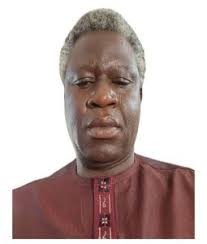
Professor Adelaja Odutola Odukoya, fspsp.
Adelaja Odutola Odukoya, PhD.; a scholar-activist, is a Professor of Comparative Political Economy at the Department of Political Science, University of Lagos, Nigeria. He is the Dean of the Faculty of Social Sciences of the University and also doubles as the Chairman of the Joint Board of Postgraduate Studies at the Administrative Staff College, Topo, Badagry, Lagos, Nigeria. A fellow of the Society for Peace Studies and Practice (FSPSP), his research interest is oriented towards the intersection between the state, class power and accumulation as a basis of understanding the crisis and contradictions of peripheral capitalist development in Africa. He also works on concerns dealing with indigenous knowledge, development, democratization and governance crises in Africa among other areas. He is widely published with over fifty publications within and outside Nigeria in influential outlets.