Tanzania’s National Legal Framework for Refugees
Working Paper 5
Leonard Chimanda, University of Dar es Salaam
Stéfanie Morris, University of Ottawa
Executive Summary
In the summer of 2019, Leonard Chimanda, a Masters candidate of Laws in Migration and Refugee Law at the University of Dar es Salaam and Stéfanie Morris, a researcher at the University of Ottawa were tasked to evaluate whether there are gaps in Tanzania’s current national legal and regulatory framework.
Discrepancies between international law and policy and local practice have proved significant in Tanzania in recent years. As a country that has hosted refugees since its independence, with no end in sight, the protracted nature of this situation has challenged the government’s willingness to cooperate in the implementation of international policies.
Leonard and Stéfanie drew on legal texts, recent academic literature, reports from Civil Society Organizations (CSOs), and findings from semi-structured interviews with local and international actors. The research found that the Refugees Act allows for a great deal of flexibility in interpretation, while policies and practices have increasingly restricted the lives of refugees in Tanzania. Additionally, recent actions by Tanzanian authorities have contradicted some of their legal commitments and suggest increased collaborative, local research as a tool for future advocacy.

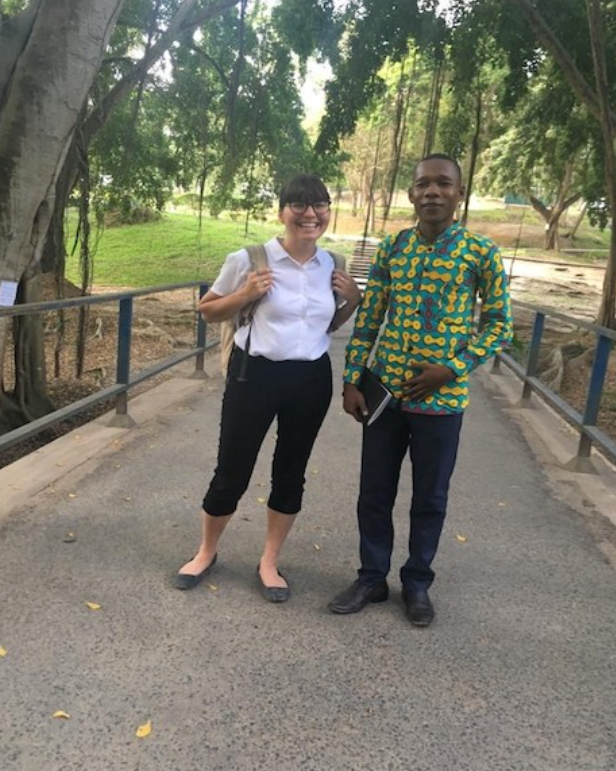
Watch the video below to learn more about Leonard, Stéfanie and their work:
View the full LERRN Working Paper Series here:
Citation: Chimanda, L., Morris, S. (2020). Tanzania’s National Legal Framework for Refugees. Local Engagement Refugee Research Network (LERRN). https://doi.org/10.22215/glrnw/208342