For Dr. Aboubakar Sanogo, cinema is an archive of humanity that shapes how people, cultures, and nations understand themselves.
His research interests include African and Afro-diasporic cinemas, documentary film theory, history and form, transnational and world cinemas, film preservation and restoration, colonial cinema, early and silent cinema, and film festival studies.
Much of African cinema’s history remains unknown or undocumented, and the films most often studied today are
those screened at festivals, distributed internationally, or circulated beyond their countries of origin.
“There’s an immense ocean of films that never circulated and never left their own country, that were never seen beyond maybe one or two screenings. Some were never screened at all.”
“That must be accounted for properly in order to be able to really have a grasp of the further longevity of African
film history, the complexity of African history, and the interrelationship between different national contexts,” says
Sanogo.
Recovering and preserving this unseen history has become the driving force of Sanogo’s work over the past decade.
That commitment led to the African Film Heritage Project (AFHP), the initiative for which he is now internationally
known.
He says the AFHP was created in large part for African filmmakers and the larger African film community. Sanogo says many legacy creators in African cinema are insufficiently known in Africa itself. His hope is that African
filmmakers can be inspired by creative projects in their own neighbourhood.
“In other words,” Sanogo describes, “we have not yet succeeded in vanquishing the coloniality of film distribution
and exhibition.”
Across Africa, the preservation of cinematic heritage is undermined by a convergence of structural, financial, and political obstacles. Many countries lack dedicated film archives, stable funding for cinema, and adequate restoration facilities, placing existing collections at constant risk.
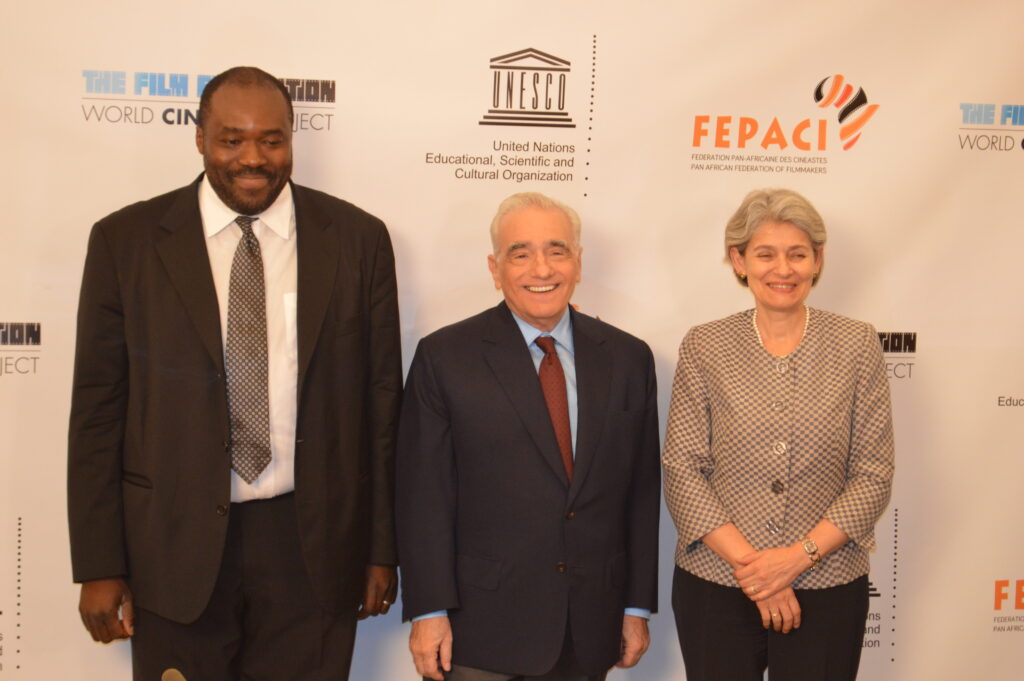
“Our projection is thus one of repatriating the African cinematic heritage in view of its reappropriation toward the creation of other African new waves, new movements, and bold cinematic and audiovisual experiments,” says Sanogo.
The AFHP also strives to expand the domain of cinema to include newsreels, documentaries, experimental and avant-garde works, short films, and even raw footage, so long as the material in question embodies important historical, cultural, and artistic elements.
Sanogo says the AFHP grew out of his role as North American Regional Secretary of the Pan-African Federation of Filmmakers (FEPACI), Africa’s leading filmmakers’ organization that was founded in 1970.
Through this, he launched the FEPACI Archival Project, an initiative devoted to the memory, preservation, and historiography of African cinema from each of the six regions of Africa: West Africa, North Africa, Central Africa, East Africa, Southern Africa, and the African diaspora.
Read more