Capstone Project Offerings 2023-2024
Academic year 2023-2024 Projects
All projects officially start at the beginning of the academic year in September. Projects are offered in different areas of electronics, usually related to the research interest of the supervising professors. By finishing the third year requirements in an engineering program, most students develop an interest for working in a particular area or with a specific professor. Because of the high demand for certain project topics and the limited number of seats for each project, there is an application and assignment process for distributing the projects among students. Professors usually have a section in their websites dedicated to 4th-year projects, where the details of the projects and the required background are outlined. Students should carefully browse through the available projects for the current academic year to find their preferences based on their interest and background. Due to sabbaticals and other types of academic work load adjustments, several professors do not offer 4th-year projects in any one academic year.
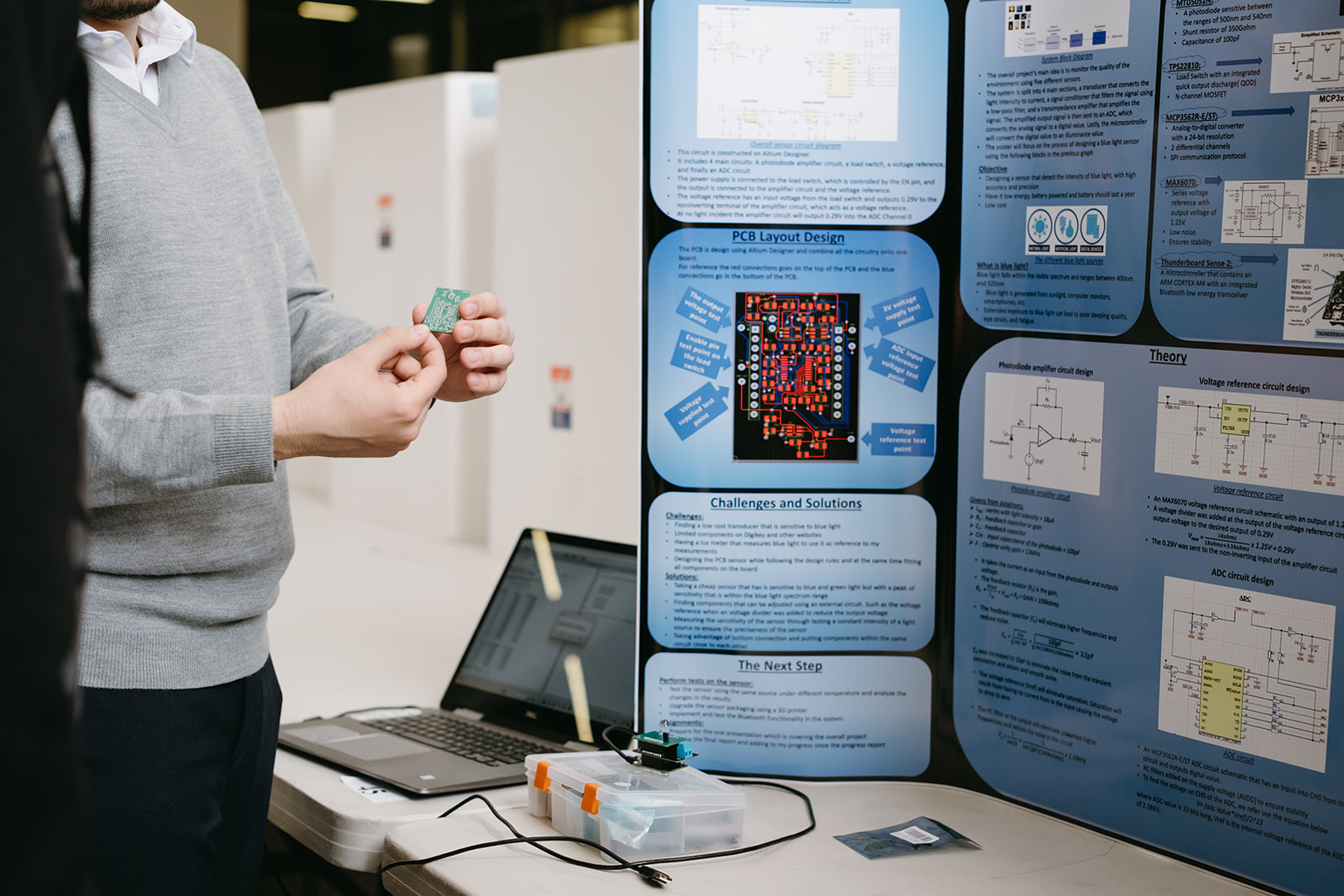
Students may wish to contact professors directly to get more details on their proposed projects before finalizing their decision. Sometimes a student or a group of students approach a professor and convince him or her that they have the motivation and the necessary background to undertake a certain project. They still need to file the application form and indicate this mutual interest. In this case, the individual or the group may start acquiring the background material for the project during the summer.
Before proceeding further with project selection, make sure that you have reviewed the projects options on ECOR4907 Multidisciplinary Engineering Project, as they are reviewed and processed separately from ELEC/SREE courses. Students are allowed to register for either ELEC/SREE/SCE or ECOR. The following ELEC/SREE projects were currently offered in 2023-2024 academic year:
Project Fundings
Funding avenue is available to students through the Department of Electronics (DoE) with a capped budget. A funding request to the Department of Electronics (details available on the course Brightspace page later during the term) must be made with detailed budget information. The deadlines for the funding application is listed in the calendar section.