New Sun Grad Bursary Recipient is Researching Traditional Oral Storytelling
Written by Ty Burke
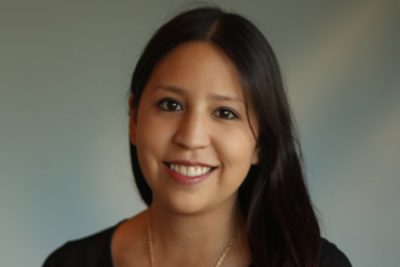
“Education got us into this mess, and education will get us out”
Chief Commissioner of the Truth and Reconciliation Commission Senator Murray Sinclair summed up the challenge bequeathed to the survivors of Canada’s residential schools with a pithy call to action, and if reconciliation is to be achieved, education can’t be a one-way street.
“Empowering Indigenous students and encouraging Indigenous thought in the classroom is incredibly important for reconciliation, and for building a brighter, more inclusive future for Indigenous peoples,” says Liane Chiblow, a Master of Arts Communication student in the School of Journalism and Communication. She also states that Indigenous ways of learning are different and it’s important for Indigenous students to see themselves in education.
Chiblow stresses that reconciliation is a two way street: “Education about Indigenous issues for non-Indigenous students is essential in reconciliation, to build awareness and create greater inter-cultural understanding.”
Her research explores traditional oral storytelling as an important part in Indigenous history, culture and ways of life. Through examining creation stories to Anishinaabeg folklore tales, her research aims to explore the multilevel bodies of theory as they relate to communication, decolonization and Indigenous resurgence. She was recently awarded a New Sun Graduate Bursary, a $10,000 annual award for First Nations, Inuit and Métis graduate students who have shown a willingness to use their knowledge to benefit Indigenous communities in fields such as Indigenous governance, public administration, social work, architecture and environmental studies.
“My research looks at the foundations of communications from an Indigenous theoretical perspective, one rooted in Anishinabeg thought,” she says.
“Communication is incredibly important for nation-to-nation relationships and reconciliation, which is why I’m looking at traditional oral stories and the underlying values embedded in them. They’re a starting point when thinking about communication, one that’s rooted in responsibility, reciprocity and love.”
Chiblow explains how these stories are meant for Indigenous survival – “they tell the stories of a community – and contain information, values, and ways of life that are integral to continued Indigenous revitalization. There’s a lot of responsibility when it comes to storytelling, but through analyzing these stories, I’m hoping to open a tiny window of intercultural understanding with settler cultures in Canada. These stories are the foundation of Indigenous cultures and ways of life. So they’re an incredible medium for understanding.”
Read the full story on the Faculty of Graduate and Postdoctoral Studies page.
Related News
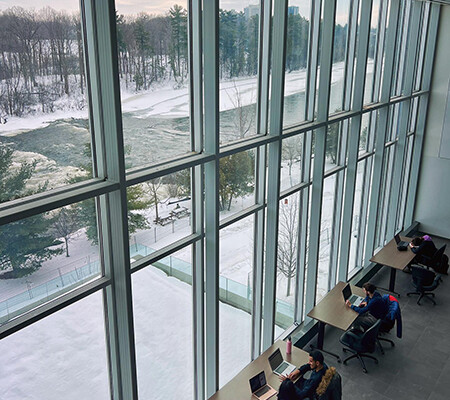
New Generation of Indigenous Journalists to Learn and Work in Home Communities
Carleton University’s Journalism Certificate Offers High Quality Learning in Rural and Remote Communities Carleton University is launching a new one-year journalism certificate to be delivered ...
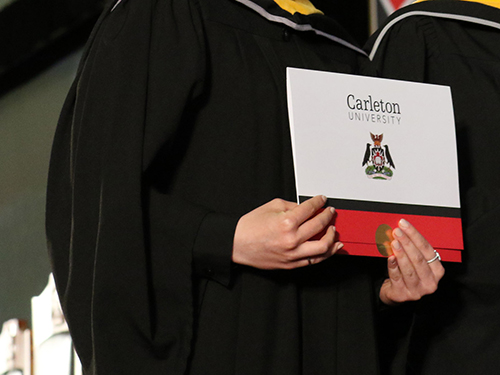
Carleton to Bestow Five Honorary Degrees at Spring Convocation
As part of the 2024 spring convocation ceremonies, Carleton University will bestow honorary degrees to five inspiring individuals for their leadership, impactful achievements and contributions ...
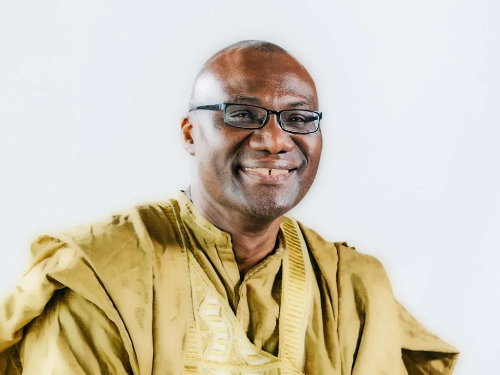
Dr. Wisdom Tettey Appointed Carleton University’s 17th President and Vice-Chancellor
Carleton University’s Board of Governors is pleased to announce Dr. Wisdom Tettey has been appointed Carleton University’s 17th President and Vice-Chancellor. Dr. Tettey will commence ...