Carleton Engineering Researchers Receive Transport Canada Funds
By
Tyrone Burke
Photo Credit:
Keven Tao
If you’ve ever sat idling impatiently as an apparently endless stream of boxcars rolling past a level crossing, you won’t be surprised to learn that freight trains can reach nearly four kilometres in length and carry thousands of tonnes of cargo.
But there’s economy in that scale: rail is an ultra-efficient way to ship goods over land. A single litre of fuel can move a ton of goods nearly 200 kilometre – about four times the fuel efficiency of highway shipping.
That’s because steel wheels on smooth rails produce little friction, and while the engine meets with wind resistance, additional cars behind it don’t add much more drag.
But there’s always room for improvement, and Prof. Mostafa El Sayed of Carleton University is bringing his aerospace engineering expertise to rail car design to make them lighter, stronger and safer using multidisciplinary design optimization employing hybrid materials, including cellular solids and composite materials. On Wednesday, Aug. 29, El Sayed – director of Carleton’s Aerospace Structures and Material Engineering Lab – was awarded a $25,000 grant from Transport Canada.
Transport Canada Funds Carleton Research
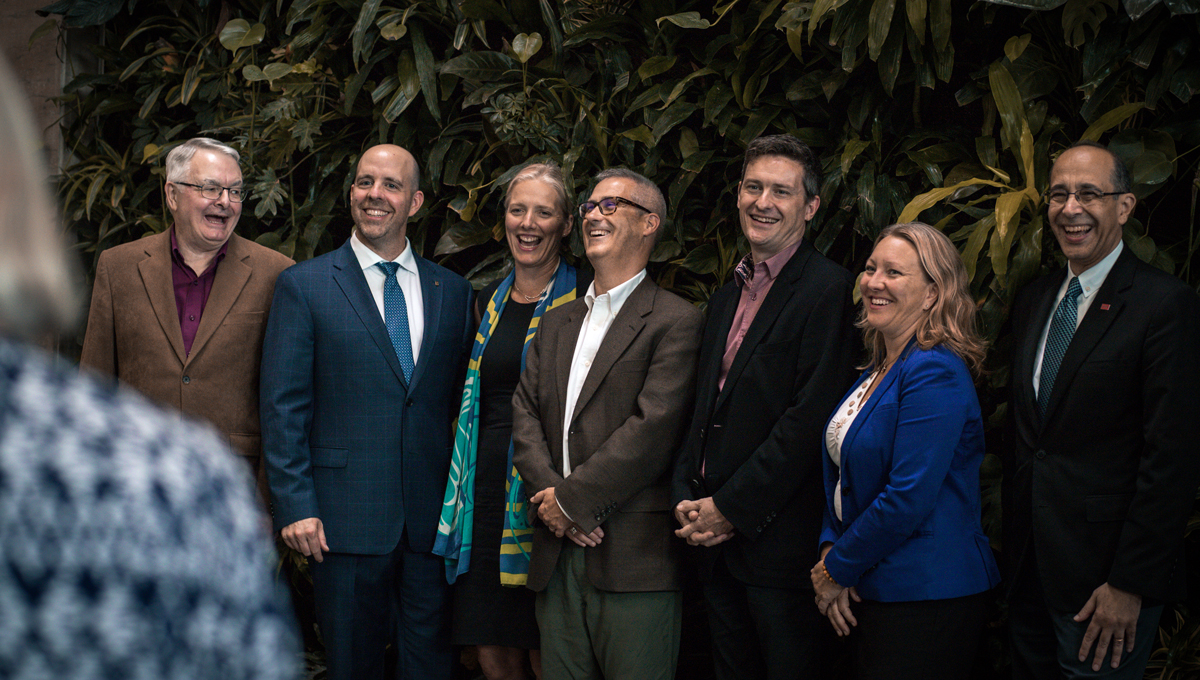
He was one of two Carleton researchers awarded a Clean Rail Academic Grant. Prof. Jeremy Laliberté also got funding for his research on the long-term environmental, fatigue and chemical exposure hazards of the lightweight materials used in freight rail.
Four other projects received grants through Transport Canada’s Advance Connectivity and Automation in the Transportation System (ACATS) program:
- Carleton Transportation Engineering Prof. Yasser Hassan received $50,000 to model how deploying connected and automated vehicles would impact regional infrastructure planning.
- Kanata’s Unmanned Systems Canada received a $50,000 grant to develop Canada’s automated and connected vehicle talent pool through a national student competition to build working scale models of street sweepers and snow plows.
- The Canadian Automobile Association received a $25,000 grant to develop a bilingual, interactive online tool to teach consumers what they need to know about autonomous vehicles.
- the City of Ottawa received $140,000 to expand its Eco-drive to Connected Vehicle pilot project, which has upgraded 12 traffic signals to wirelessly communicate timing to targeted delivery vehicles.
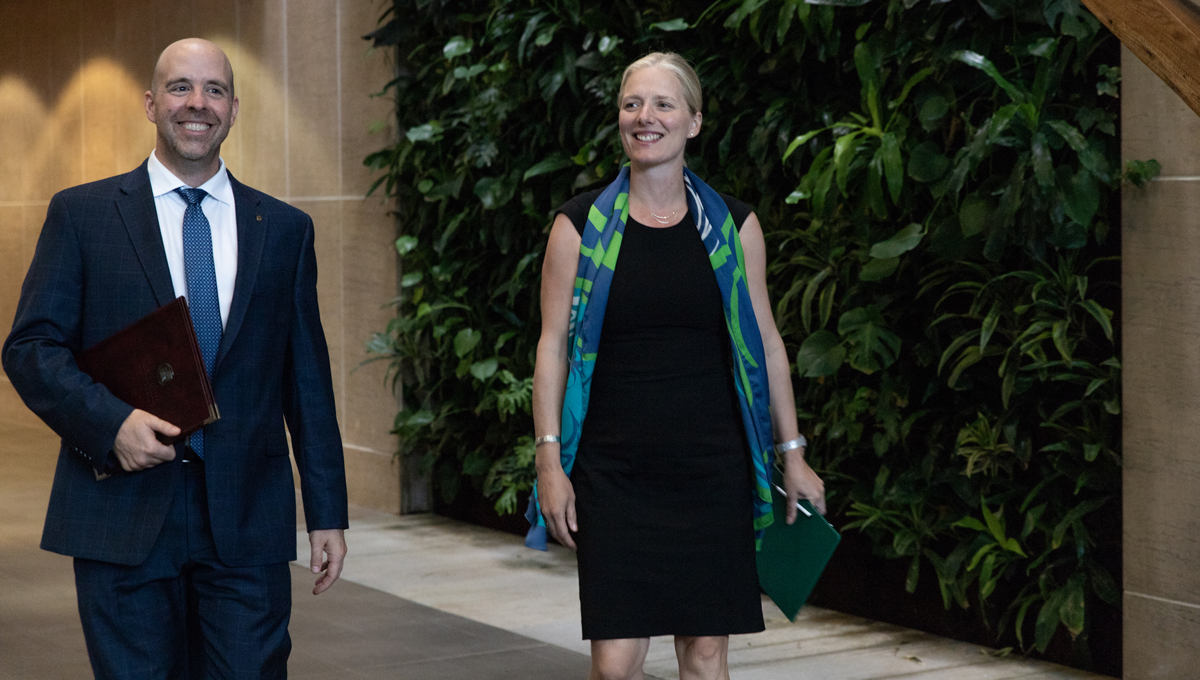
“We want Canada to be at the forefront of clean growth,” said Environment Minister Catherine McKenna, who was on hand to announce the funding awards with Carleton President Benoit-Antoine Bacon and Rafik Goubran, vice-president (Research and International).
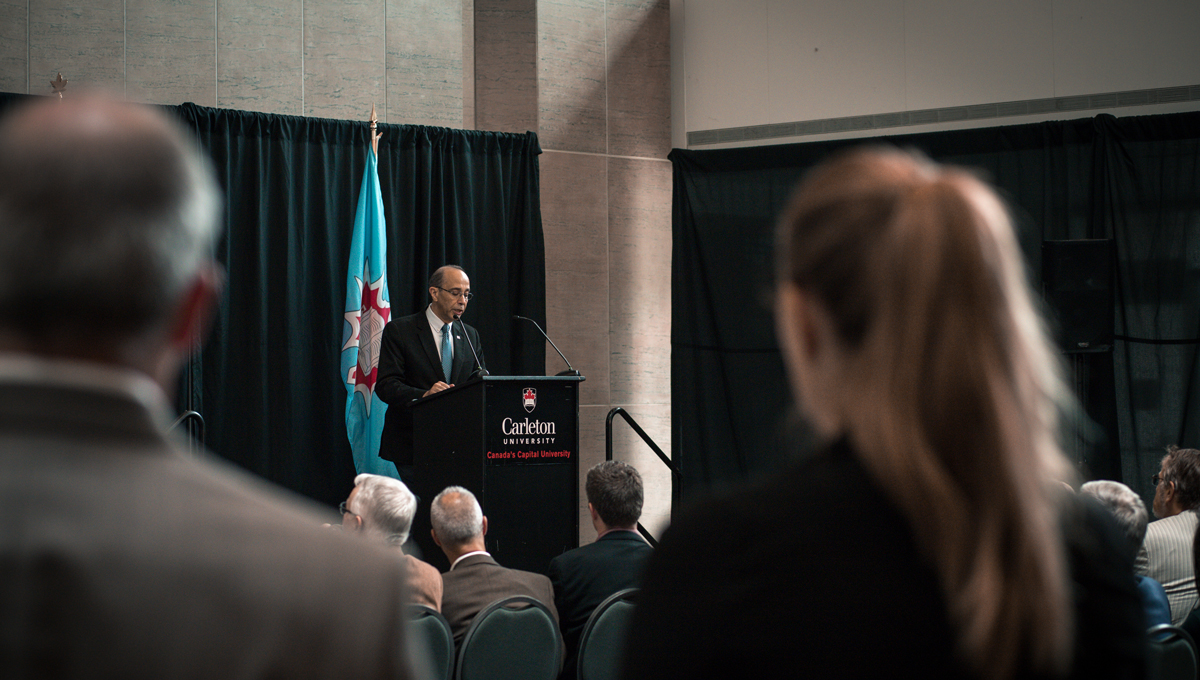
“Transportation is a significant source of emissions – around 20 per cent in Canada– but we know there are innovations we’re making right here that will reduce our emissions,’’ she said. “New vehicle technologies are developing at an unprecedented rate. Many of the announcements I come to Carleton to make are great examples of how Canadian academics, researchers and partners are coming together to change and innovate and create really good jobs, right here in Canada, and find solutions we can export to the entire world.”
El Sayed’s research could be applied anywhere there’s freight rail – virtually all of the developed world.
“I was astonished to learn the weight of an empty rail car,” he says.
Empty cars can weight upward of 25,000 kilograms. Fully loaded, they can weigh five times that.
“I learned this last year through a colleague and said: `Why don’t we apply the technologies we use in aerospace to rail cars.’”
Reducing the Risk of Structural Failure
El Sayed has expertise in hybrid periodic cellular solids — lightweight, honeycomb-like structures that make aircraft better able to sustain the jarring forces of flight while keeping them light enough to remain aloft. Weaknesses in an aircraft’s structure can lead to catastrophic failure. The stakes are typically lower in rail transportation, but structural failure could also be disastrous.
“When you reduce the weight of anything, you need to be careful about the critical design,” says El Sayed, who was an Aircraft Loads Engineering Specialist with Bombardier Aerospace before joining Carleton’s Department of Mechanical and Aerospace Engineering.
El Sayed will use design optimization techniques to maximize the performance of rail system through studying the multidisciplinary interaction between rail car structures and dynamic characteristics during operation, ensuring they’re strong where their loads stress their structure, but lightweight where they can be. El Sayed envisions using additive manufacturing – 3D printing – combined with traditional manufacturing techniques to supplement their steel structure.
“This reduces the weight significantly,” he says, “and that reduces the amount of power to drive that car forward, but it can also be translated into increasing the payload. Instead of having huge weight in the rail car itself, you translate added strength into a larger payload, which gives you money. It can work both ways.”
Most Canadians will never notice that rail cars are more lightweight, but they will notice if more efficient trains reduce shipping costs and efficiency.
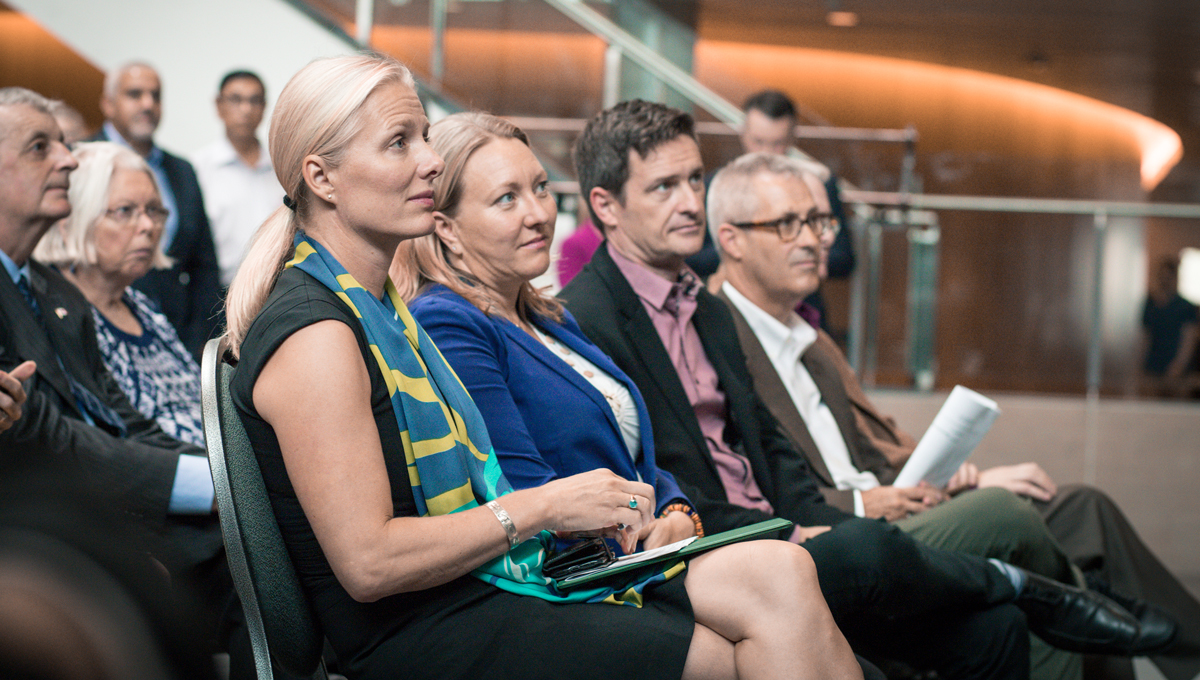
“The research support being announced for these transportation projects won’t only help improve our transportation systems,” says Goubran. “They will improve the lives of Canadians moving forward.
Related Stories
Protecting People from Earthquakes
Earthquakes are among the most destructive natural disasters on the planet. They typically happen when the tectonic plates that form the Earth’s outer shell, which…

CKCU 93.1 FM: Community Radio at Carleton University
As Canada’s first campus-based community radio station, CKCU 93.1 FM has been a staple of Ottawa-Gatineau’s airwaves for 50 years, amplifying local voices, emerging artists…

Reimagining Responses to the Refugee Crisis
The geopolitical chaos of the past few years has made life even more precarious for millions of people around the world who have been forced…