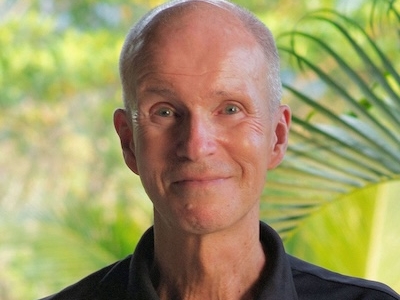
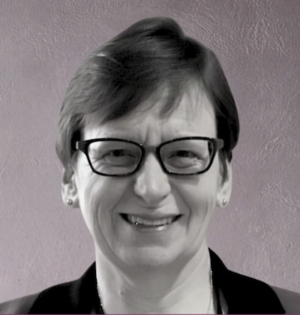
 Susan Hardie, Executive Director of Winnipeg-based Eviance, has worked for more than three decades in the cross-disability and mental health fields. She’s built Eviance into a national organization that champions engagement and builds collaborations with historically siloed groups, collaborations informed by intersectionality, human rights and reflexivity. This Q&A with her is part of the PANL Perspectives “Making Canada Accessible” series.
Question: How does Eviance increase accessibility?
Susan Hardie: I sometimes stumble on the word “accessibility,” because we’re always striving towards inclusion. We find barriers or inequities, and we name them and try to do better in terms of inclusion. What’s most important for Eviance is how we locate ourselves in the work. We’re an organization of persons with a disability, which means at least 75% of our staff, board and volunteers are persons with diverse disabilities. But it’s not just about a certain percentage. It’s about how you actually do things. It’s about a collective commitment to capacity building, a commitment to power analysis and consciousness raising — what we now call intersectionality and reflexivity. Also important is a rights-based model of disability. Our website has a three-minute video explaining the four models of disability.
Question: What programs does Eviance run with youth with diverse disabilities?
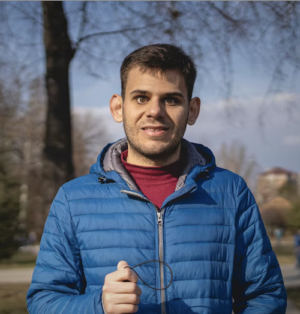
Eviance’s program, “Canadian Disability & Climate Change Network and Strategy Project,” addresses the interaction between SDGs and disability and climate change.
Susan Hardie: We’re in the process of formalizing our third iteration of a youth program that started with student placements in 2014. It’s a response to the disconnect we saw between youth and government and organizations. Among youth, there’s a real isolation in dealing with system issues. Our organization is trying to create the spaces, to listen to youth, to try to bridge a gap. The program is “Youth with Disabilities Strive to Accelerate Results (YStar) Project-to-Program.”
A second program is “Canadian Disability & Climate Change Network and Strategy Project,” which addresses the complex interaction between the UN’s Sustainable Development Goals (SDGs) and disability and climate change. We’ve been able to gain access to spaces that historically have not been inclusive. This is really important for youth with diverse disabilities. Climate change was a burning issue for our youth fellows. If you don’t see people with diverse disabilities, and not all are visible disabilities, then you need to explore who is getting access to the spaces related to climate issues.
And third, we just received a grant for “Innovating for inclusive and equitable post-secondary education,” which is a partnership with three universities and three organizations to scale up innovative and inclusive approaches to Universal Design for
The most important thing is to think about what kind of society we want to realize, and that’s what Eviance is all about. Intersectionality and reflexivity, inclusion and equity, and human rights, connected work, sustainable solutions, and capacity building all frame our commitment to our clients and our field.
Question: Do you think people should disclose their disabilities to employers?

“Reflexivity” is about connecting our personal biases and privilege with a larger picture, and taking actions that reflect the self-awareness and realizations. Eviance provides a video to explain the concept in more detail: https://www.eviance.ca/videos.
Susan Hardie: With the resurgence of identity politics, people want to know the demographics related to equitable hiring. That’s good to a point, as long as we’re not discriminating on the basis of that information.
Staff, youth and volunteers have talked to me about the choice to disclose or not disclose a mental health disability to their employers. I disagree with disclosure, because the sector has actually regressed, and mental health isn’t evidence-based, however you define it. There are some policies out there that would increase discrimination if people disclose to HR or an employer. I say that after working in the sector for more than 30 years and helping to write Canada’s mental health strategy regarding psychological safety in the workplace, a strategy that was never implemented, and so I know that systems are broken. One issue is significant stereotypes and discrimination against people with disabilities; those have gone up since minimum standards were started. I don’t want people to run into walls after they disclose. Hopefully, people are more cognizant of barriers in different spaces.
I came from a place where I didn’t have a lot of power, and organized and funded a small group of people with lived experience, some labeled with manic depression, others with schizophrenia. I lived with chronic PTSD, a label that came from a feminist therapist, not from the system. That’s really important, because the system did more harm than good for me.
I encourage people to think twice about the choice to disclose. People in privileged positions can disclose and can more easily navigate the world. Myself, when I started, I was, by definition, homeless. I didn’t have any kind of positional power, and now at the end of a career, I still selectively choose to disclose — only if it’s going to involve systemic change — not because it’s required of my position.
Eviance is on LinkedIn.
Sunday, December 21, 2025 in General
Share: Twitter, Facebook