Methane emissions from the oil and gas sector are significantly underreported, yet this sector holds the greatest potential for near-term climate mitigation. Our latest publication investigates the real-world effectiveness of regulated leak detection and repair (LDAR) surveys in British Columbia, Canada. Periodic LDAR surveys are a key part of most modern oil and gas sector methane regulations, so these findings raise important questions about their effectiveness and broader implications.
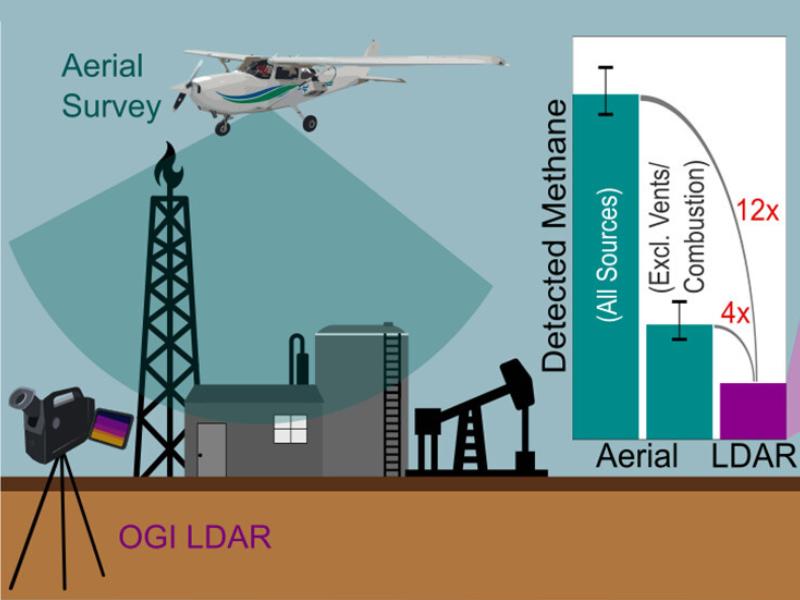
Analyzing three years of industry-reported LDAR data, we found that sites undergoing regular optical gas imaging (OGI) surveys—around 3 times per year—showed a 50% reduction in detected emissions. However, when we compared these results to independent aerial surveys at the same sites, the picture changed dramatically: aerial surveys detected 12 times more methane emissions overall, and 4 times more even after excluding sources not targeted by LDAR programs.
The discrepancy highlights a critical issue—regulated LDAR programs may only capture a small fraction of total emissions. Our analysis shows that OGI surveys tend to detect numerous small leaks, while aerial methods identify fewer but significantly larger sources, including combustion and venting emissions.
This study underscores the need for integrated measurement approaches and independent verification frameworks like OGMP 2.0 to ensure methane mitigation efforts are both effective and transparent. As regulations evolve and alternative technologies emerge, understanding the limits of current LDAR practices is essential for designing better policies and achieving real climate impact.
Read full publication below: