On 10 September 2025, the Migration and Diaspora Studies (MDS) program launched its Guest Speaker Series for the 2025-2026 academic year. The event welcomed MDS students into a thought-provoking dialogue with Dr. Ritesh Shah, LERRN partner, a distinguished scholar in the political economy of education and Co-Director of the Centre for Asia Pacific Research Studies (CAPRS) at the University of Auckland, New Zealand. In this conversation, Dr. Shah invited participants to reflect on the key themes of his draft paper, “The Tangled Web between Refugee Rights, Capitalism, Race, and Education”. Drawing on his extensive research, Dr. Shah encouraged students to critically examine how these forces intersect within education in emergencies, positioning it as a key site for understanding the complex intersectionality of forced migration.
Borders are more than lines—they shape who belongs
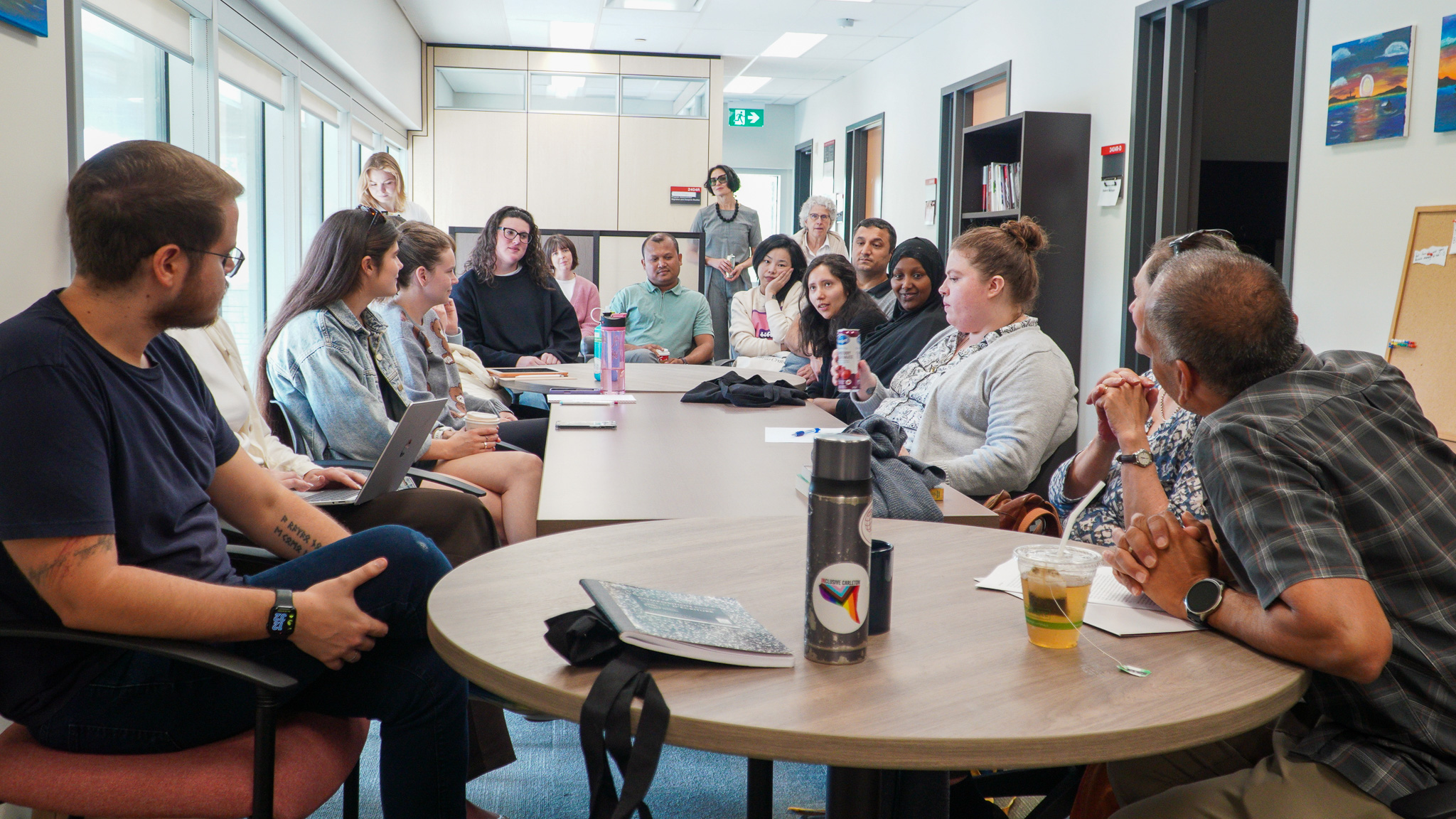
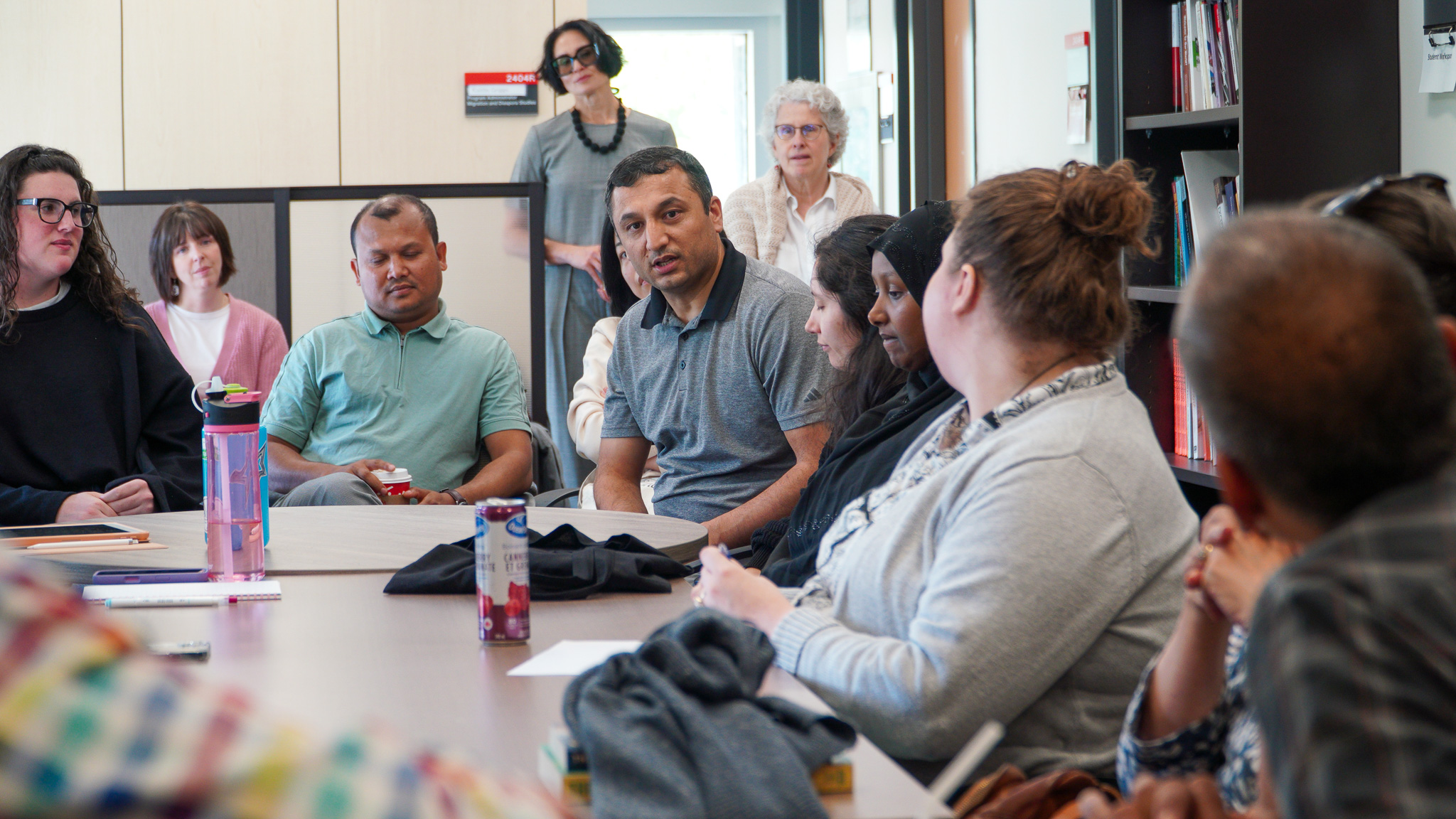

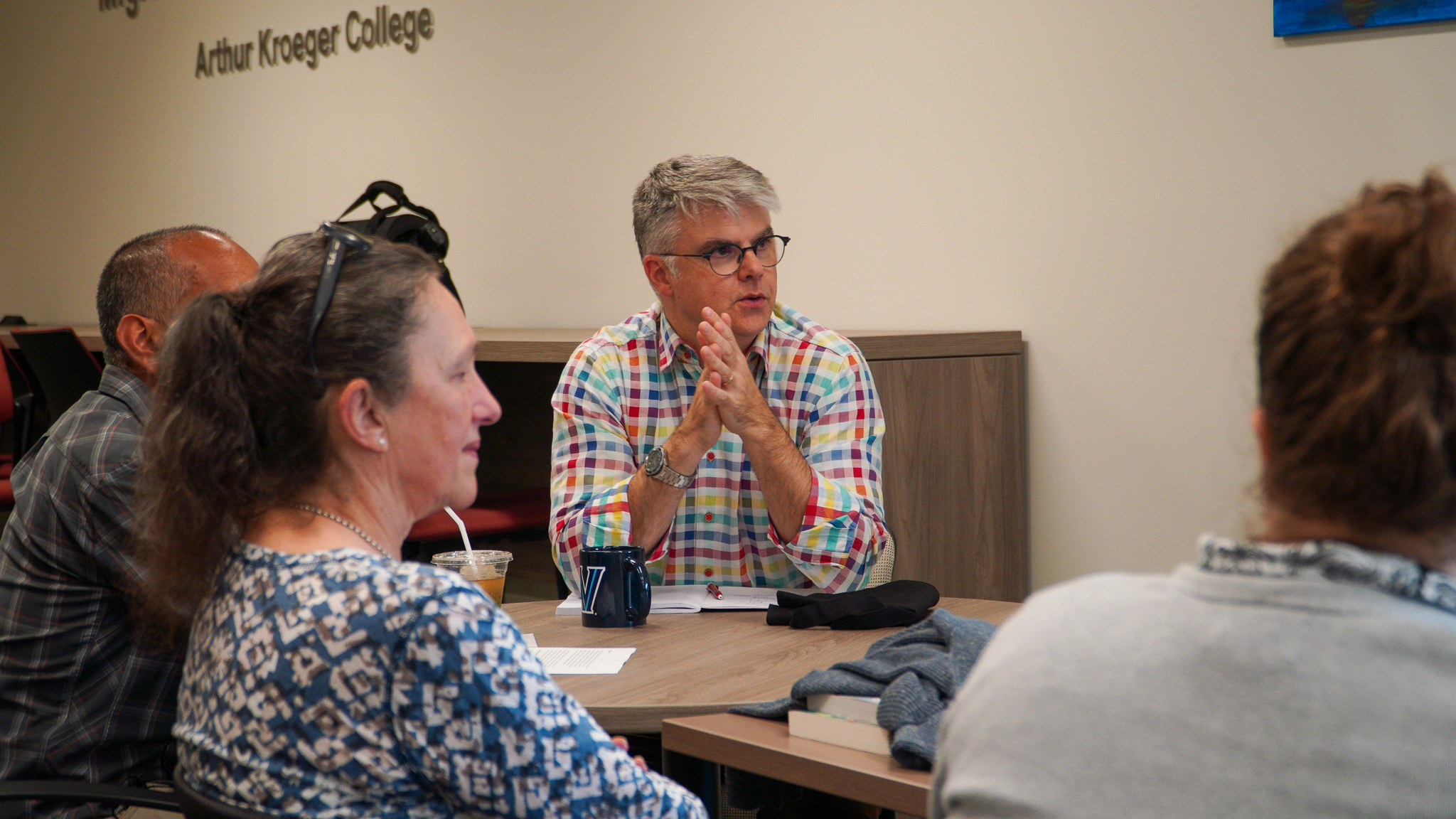
Dr. Shah began by discussing contemporary bordering and its connection to racialization, highlighting how these practices continue to impact refugee education. He defined bordering as the “practices and policies that construct, maintain, and enforce borders,” emphasizing that borders are not only physical but also social and political practices embedded in everyday life. Beyond geographic boundaries, bordering shapes who is included or excluded, and also influences individuals’ sense of belonging. Racialization, through groupings, labels, and categories, justifies mobility for some while criminalizing or securitizing movement for others. Furthermore, this racialization determines the levels of protection and access to rights available to different individuals and groups.
Drawing on the work of Nira Yuval-Davis et al. in Bordering, Dr. Shah elucidated the concept of “gray zones” — spaces where national sovereignty and accountability become blurred in contemporary migration management, leading to the externalization of migration. He argued that the provision of education has itself become a “gray zone” within this context. Much of contemporary externalization is observed within the Global North, which prioritizes security over human rights, leaving many refugees in an “unsettled present and uncertain future.” Dr. Shah presented examples of how non-state actors in the Global North have come to profit from the externalization of mass migration.
Dr. Shah suggested that the work of refugee teachers and learners in and through these gray zones is both necessary and vulnerable to global capitalism. For learners, the primary challenge is accessing education, whilst teachers navigate gray zones by creating opportunities in informal and unrecognized education programs. Due to the unaccredited nature of these programs, learners often struggle to find higher levels of education or navigate their way into the workforce. Refugee teachers often face restrictions that limit their ability to join the workforce due to host country fears of increased unemployment for citizens. Additional barriers include the non-recognition of refugees’ credentials and qualifications or, when recognition is possible, a process that is often complex, bureaucratic, and difficult to navigate.
Global capitalism profits from exclusion
Dr. Shah and students reflected on the question of why there has been no national political will for enabling refugee teachers to help address the growing teacher shortage. To answer this question, Dr. Shah turned to the work of Nancy Fraser, who argued that global capitalism is fueled by exploitation and expropriation, relying on conditions that are created outside the formal economy, which help sustain and expand its operations. Capitalism thus thrives off emerging spaces outside the traditional realm of commodification and economic activity. Dr. Shah argued that contemporary political and social structures of the Global North are indicative of racialized capitalism.
Dr. Shah concluded by arguing that capitalism’s dual logic — expropriation and exploitation — is enabled by racialized social relations that compel refugees to participate in economic systems that marginalize them and push them to the peripheries of capitalism. Drawing on his work on refugee education, he illustrated how forced migration is not a crisis for global capitalism but rather essential to its survival. As the Global North continues to securitize its borders and profit from the externalization of migration, the global political economy thrives on the precarious conditions imposed on refugees.
What an inspiring start to a year of critical dialogue and new ideas at the Migration and Diaspora Studies Program! Through critical cross-disciplinary scholarship and open dialogue MDS fosters deeper understanding of movement and transnational settlement of people.
To learn more about the program and join the conversation by visiting Migration and Diaspora Studies – Carleton University
This event was in part supported by LERRN, Local Engagement Refugee Research Network.