Protection Working Group
The Protection Working Group: One of the core objectives of the global refugee regime is to ensure protection for refugees. As detailed in international refugee law and policy, protection may be understood in terms of positive rights, such as the right to work and freedom of movement, and negative rights, such as the prohibition on being forcibly returned to a country where a refugee fears persecution. However, the concept of protection is contested and increasingly used to cover a wide range of contexts and needs that go beyond what was originally envisioned by the refugee regime.
With the aim of advancing stronger protection for refugees in the Global South, the Protection Working Group seeks to expand our knowledge on protection and the challenges various actors face in achieving this core objective by investigating:
- What are the implications for protection of refugees in protracted contexts of crisis?
- What are the limits of protection for refugees?
- How do other actors, such as civil society organizations, reinforce the rights of refugees and develop new approaches to protection?
- What does protection mean from the perspectives of refugees themselves and is this reflected in the practice of the global refugee regime?
Lead

Members

Contributors



2019 Policy Dialogue Event
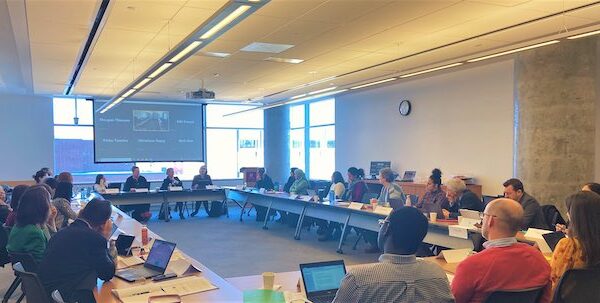
In September 2019, LERRN, the Refugee Hub and members of the Protection Thematic Working Group convened researchers, practitioners and policymakers for a Policy Dialogue to explore how Canada can support meaningful refugee participation. Refugee-led organizations often express the principle “nothing about us without us” to highlight the importance of including refugees in discussions and decisions that impact their lives, not only when implementing projects and policies but also from the beginning of the design process. These discussions contributed to LERRN Advisor Mustafa Alio being named as Refugee Advisor to the Delegation of Canada to the Global Refugee Forum in Geneva in December 2019. This represented an important step forward in the objective of ensuring that refugees can engage in a direct and meaningful way in global policy discussions that are intended to benefit them. The Policy Dialogue also played a crucial role in LERRN’s exciting plans to launch a Refugee Advisory Network, which will comprise a group of refugee leaders in Canada who will actively engage in diverse aspects of global refugee policy discussions and connect to global refugee networks.