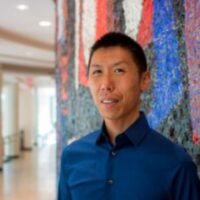
Kenta Asakura
| Degrees: | MSW, RSW, LICSW, PhD |
Keywords: Clinical social work and psychotherapy; Clinical education; Simulation-based research; Resilience science; Qualitative & mixed-methods research
Research Interests
Dually licensed/registered as a clinical social worker in Canada and the U.S., I bring 20 years of mental health practice into my program of research. As the Director of SIM Social Work Research Lab, my research focuses on (1) practice competencies among mental health professionals, using simulation (e.g., use of trained actors as simulated patients) as an innovative research methodology and (2) simulation-based clinical teaching and learning. My most recent study uses simulated patients to examine how mental health professionals conduct assessment of COVID-19 pandemic-triggered stress and trauma on a teleconference platform (e.g., Zoom).
Selected Publications
Asakura, K., Lee, B., Occhiunto, K. & Kourgiantakis, T. (In Press). Observational learning in social work education: Comparison of interviews and observers. Social Work Education: The International Journal.
Asakura, K., Occhiuto, K., Todd, S., Leithead, C., & Clapperton, R. (In Press). A call to action on Artificial Intelligence and social work education: Lessons learned from a simulation project using Natural Language Processing. Journal of Teaching in Social Work
Kourgiantakis, T., Saunders, J., Sewell, K., Asakura, K. & Bogo, M. (In Press). Students’ conceptualization of culture and diversity in social work practice: A simulation-based study. Journal of Ethnic and Cultural Diversity.
Asakura, K., Gheorghe, R., Borgen, S., Sewell, K., & MacDonald, H. (2020). Using simulation as an investigative methodology in researching competencies of clinical social work practice: A scoping review. Clinical Social Work Journal. https://doi.org/10.1007/s10615-020-00772-x
Asakura, K., Lundy, J., Black, D., & Tierney, C. (2020). Art as a transformative practice: A participatory action research project with trans* youth. Qualitative Social Work, 19(5/6), 1061-1077. https://doi.org/10.1177/1473325019881226