Carleton Researchers Receive Funding to Develop New Technology to Protect Military Assets
A Carleton University research team led by Shulabh Gupta, a professor in the Department of Electronics, has received funding of $1.5M from the Department of National Defence’s Innovation for Defence, Excellence and Security (IDEaS) program to create the next generation technology for electronic camouflaging.
“Carleton continues to take the lead working with government partners on cutting-edge electronics technology,” said Rafik Goubran, vice-president (Research and International). “This interdisciplinary project will save lives and improve the safety of Canadian personnel.”
The project will develop an artificial electromagnetic veil to protect military assets from enemy detection based on cutting-edge Metamaterial technology. The intelligent veil would cover the surface of the asset and hide it from a range of detection methods operating is various spectral bands, including radio frequencies (RF), infrared and optical.
The project, officially known as the Artificially Intelligent Biomimetic Metasurfaces for Electromagnetic Camouflage, is a collaboration with the University of Ottawa and Polytechnique Montreal, and includes Carleton’s Sreeraman Rajan, a professor in the Department of Systems and Computer Engineering, and Jim Wight, a professor in Department of Electronics.
“In much the same way an octopus dynamically senses and adapts to its background, changing its colour as it moves, these smart electromagnetic veils would be able to sense their backgrounds, even while moving, and in real time adapt to blend into their surroundings while protecting the important targets,” said Gupta. “While an octopus is only capable of hiding from the optical detection of predators, assets utilizing the new veil would be hidden from a broad range of detection.”
For example, radar can detect and distinguish a jeep driving through a forest because the jeep reflects a different signal back compared to its background. To prevent this, the intelligent veil on the jeep would predict the signal being reflected back by the trees and mimic it, thereby making it indistinguishable from the trees as it drove. In the future, the actual three-dimensional texture of the jeep may also be envisioned to change to match its background, using something like an origami-type surface.
This novel technology will use engineered reconfigurable electromagnetic metasurfaces equipped with smart-sensing networks for environment monitoring and autonomous decision-making based on artificial intelligence, areas of research in which Carleton University excels.
Media Contact
Steven Reid
Media Relations Officer
Carleton University
613-520-2600, ext. 8718
613-265-6613
Steven_Reid3@Carleton.ca
Carleton Newsroom: https://newsroom.carleton.ca/
Follow us on Twitter: www.twitter.com/Cunewsroom
Need an expert? Go to: www.carleton.ca/newsroom/experts
Related News
New Generation of Indigenous Journalists to Learn and Work in Home Communities
Carleton University’s Journalism Certificate Offers High Quality Learning in Rural and Remote Communities Carleton University is launching a new one-year journalism certificate to be delivered ...

Carleton to Bestow Five Honorary Degrees at Spring Convocation
As part of the 2024 spring convocation ceremonies, Carleton University will bestow honorary degrees to five inspiring individuals for their leadership, impactful achievements and contributions ...
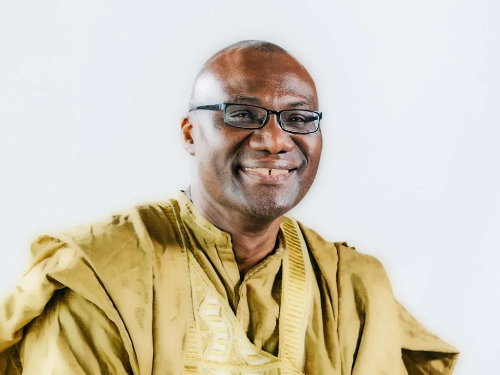
Dr. Wisdom Tettey Appointed Carleton University’s 17th President and Vice-Chancellor
Carleton University’s Board of Governors is pleased to announce Dr. Wisdom Tettey has been appointed Carleton University’s 17th President and Vice-Chancellor. Dr. Tettey will commence ...