New Canada Research Chair to Study Advanced Photonic Sensing Components and Systems
By Elizabeth Kane
Hubert Jean-Ruel is the new Canada Research Chair in Advanced Photonic Sensing Components and Systems at Carleton University.
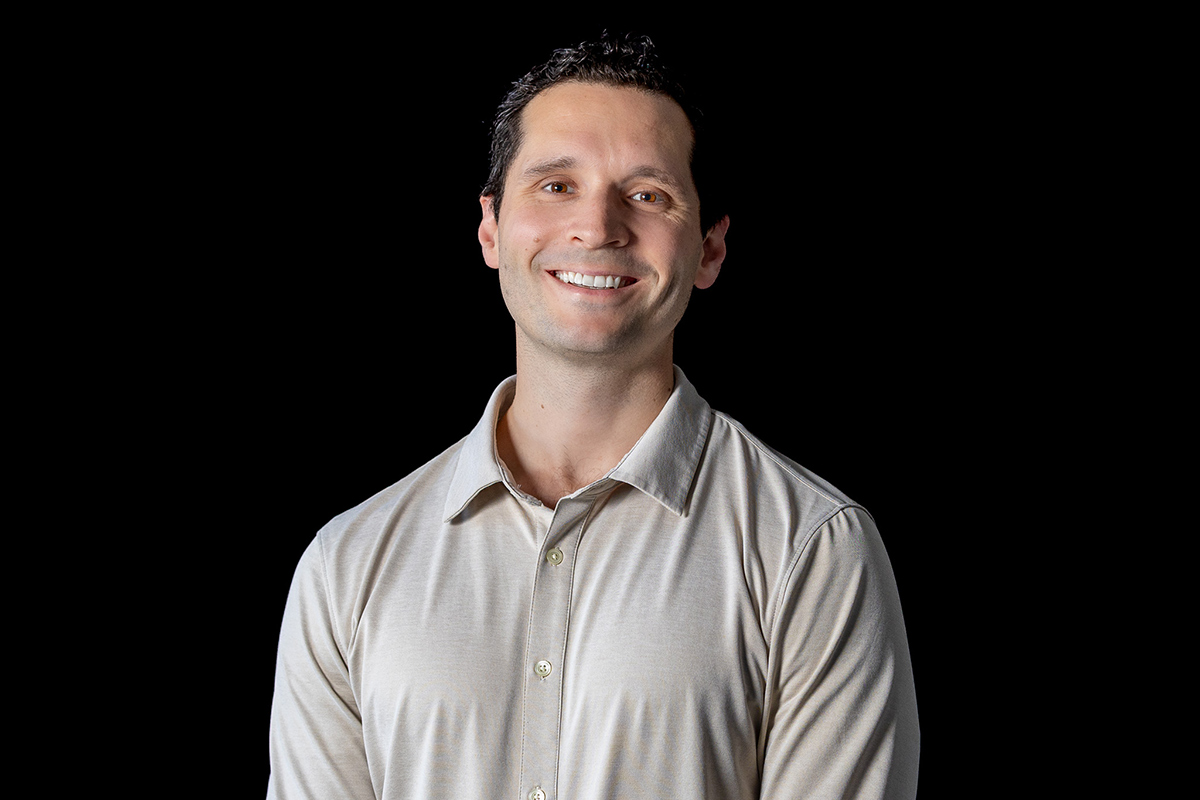
The Tier II Canada Research Chair (CRC) recognition is awarded by the Government of Canada to exceptional emerging researchers, acknowledged by their peers as having the potential to lead in their field. The new chair is a testament to the caliber of Carleton’s faculty and researchers – signifying their profound impact in critical areas of study.
“Carleton is proud to be the research-intensive home to many world-class academics,” said Rafik Goubran, Vice-President (Research and International).
“Congratulations to our newest CRC, Hubert Jean-Ruel, who is undertaking groundbreaking research to improve Canadians’ health through the development of innovative photonic sensing technology.”
The new CRC was announced on Nov. 14, as part of $6.79 million investment supporting innovative research at Carleton across four funding programs. The funding was announced on campus by Yasir Naqvi, Parliamentary Secretary to the Minister of Health, on behalf of the Minister of Innovation, Science and Industry.
The new funding is part of a growing number of investments and partnerships with government.
Jean-Ruel, a researcher in the Department of Electronics, studies the development of advanced photonic sensing components and systems. Since joining the Faculty of Engineering and Design in 2023, his research team has been working to develop novel fiber optic-based biosensing technologies. The applications of this cutting-edge research include biomedical devices that could enable large scale screening programs to enhance early diagnosis for health conditions and environmental sensors that could detect contaminants.
During his five-year CRC appointment, Jean-Ruel will be focused on developing breakthrough photonic technologies to dramatically increase point-of-care medical testing options – improving patient outcomes and Canadians’ overall health.
These technologies would help facilitate the quick provision of diagnostic tests in non-laboratory settings – such as in one’s home, a local pharmacy or doctor’s office.
Using lasers to inscribe the core of optical fibers to precisely control light propagation and interaction with its surroundings, Jean- Ruel’s team will aim to develop novel biosensors for medical use. Low cost, compactness and remote operation are a few of the advantages devices designed with optical fibers provide. Such technology could create portable devices able to detect multiple biomarkers in saliva samples in minutes.
Chairholders improve Canadians’ depth of knowledge and quality of life, strengthen the country’s international competitiveness, and help train the next generation of highly skilled people. See Carleton’s full listing of Canada Research Chairs.