Carleton Researcher Named Canada’s 2026 Frontiers Planet Prize National Champion
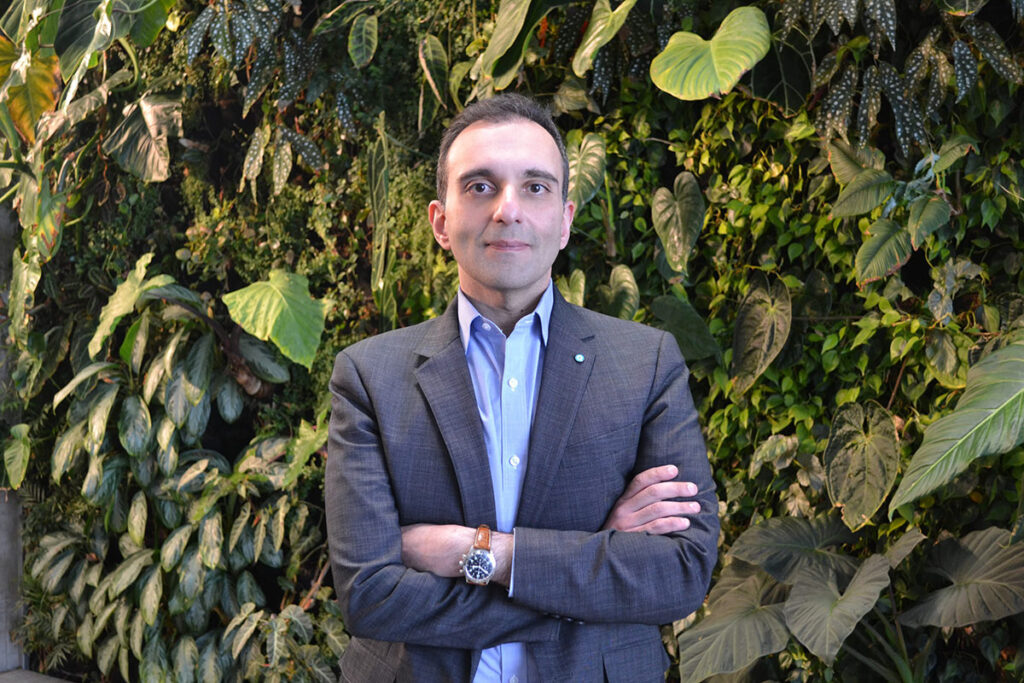
Carleton University’s engineering researcher Ahmed Abdulla has been named Canada’s 2026 National Champion by the Frontiers Planet Prize for his research on direct air capture, a technology that removes carbon dioxide (CO₂) from the air to address climate change.
Abdulla, a professor in the Department of Mechanical and Aerospace Engineering, is one of just 25 National Champions selected worldwide. The prestigious prize recognizes research focused on keeping humanity within the planet’s “safe operating space.”
Three International Champions will be named in January 2027 in Davos, Switzerland, and awarded $1 million USD each to scale their research.
Advancing Deep Decarbonization
Abdulla’s work focuses on designing future energy systems that are reliable, affordable and deeply decarbonized. At Carleton, he co-leads APEX (Alternative Pathways for the Energy Transition), an initiative that tackles and solves the deployment challenges of low-carbon energy technologies to support global climate goals. The initiative focuses on reducing risk and uncertainty, eliminating deployment bottlenecks, and improving policy design to advance clean energy solutions.
His award-winning research, published in Proceedings of the National Academy of Sciences, examines how environmental conditions such as temperature, humidity, air pressure and carbon dioxide concentration influence the performance of direct air capture systems. The findings show that performance can vary significantly by location, with implications for energy demand, water use and overall net carbon removal.
Abdulla said the work highlights the importance of grounding climate modelling in real-world conditions.
“Nations are not decarbonizing fast enough to stabilize climate. Our in-depth, global analyses of the performance of a main capture technology paint a picture of carbon removal’s role in our future,” said Abdulla.
The research also informs From Science to Policy: Planetary Solutions in Action, a global policy report developed with the United Nations University Centre for Policy Research and the Potsdam Institute for Climate Impact Research. The report explores how scientific evidence can better inform climate policy and international cooperation.
About the Frontiers Planet Prize
The Frontiers Planet Prize is the world’s largest science competition on planetary health, involving more than 700 universities and research institutions worldwide. National Champions are selected through an independent review by international experts. As Canada’s National Champion, Abdulla will represent Carleton internationally, contributing to discussions that connect scientific research with policy and real-world application.
The recognition comes as countries increasingly look to carbon removal technologies as part of broader net-zero strategies, though researchers note that real-world performance varies significantly depending on local environmental conditions and energy system constraints. Abdulla’s work contributes to ongoing efforts to ensure climate modelling reflects these operational realities.