Reimagining Responses to the Refugee Crisis
Lead image by Naeblys / iStock
By
Dan Rubinstein
Photo Credit:
Beatrice Villadelgado
The geopolitical chaos of the past few years has made life even more precarious for millions of people around the world who have been forced to leave their homes because of persecution, climate change, violence or human rights violations.
Roughly 120 million people — the highest figure ever recorded — are either internally displaced, refugees or asylum seekers in need of international protection. At the same time, funding for the United Nations Refugee Agency has fallen by about 40 per cent and the willingness to welcome and support migrants is declining in many countries.
This may seem like an insurmountable challenge, but the Local Engagement Refugee Research Network (LERRN), a global team of academics, practitioners and displaced-led organizations whose secretariat is based at Carleton University, is drawing on years of collaboration to develop a response.
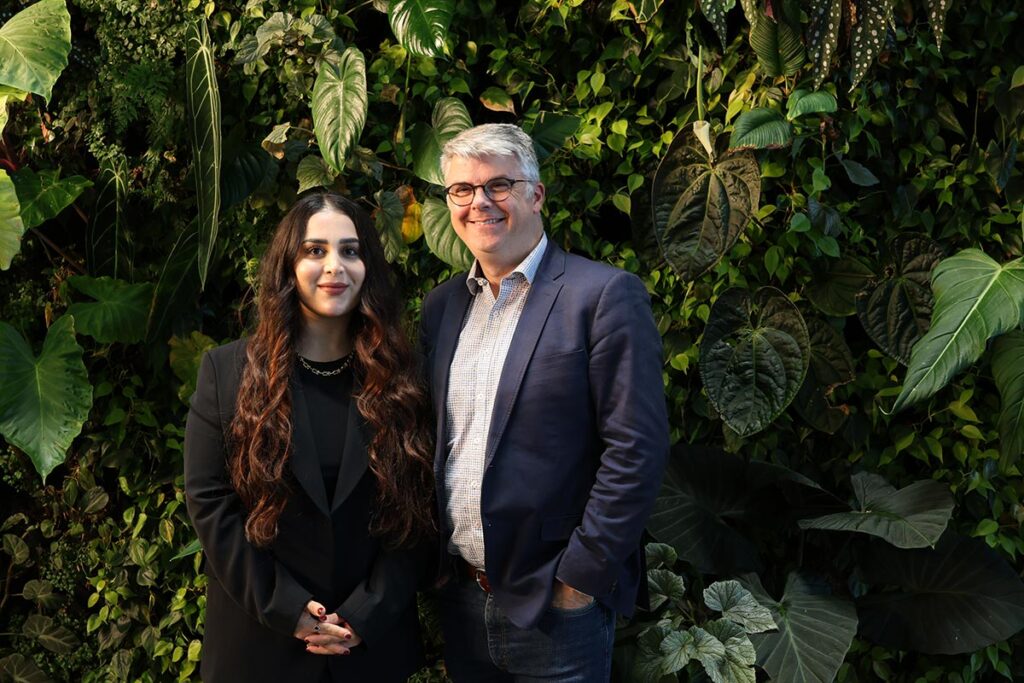
Grounded in displaced-led leadership, LERRN advances solutions with refugees rather than for them, confronting top-down approaches that have long dominated the global refugee system. What project director James Milner describes as a “moment of rupture” is therefore not a signal of collapse and despair, but a turning point — a historic opportunity to rebuild a system that is more inclusive, more efficient, better equipped to meet today’s realities and more accountable to refugees and forcibly displaced populations and communities that host them.
“Today’s existential crisis has been brewing for a long time,” says Milner, a Political Science professor at Carleton and director of the university’s Migration and Diaspora Studies program.
“The politics of refugee protection are becoming more polarized in the United States, Europe and Canada. What was once a political consensus on the need to support refugees has eroded alongside the belief in multilateralism and collective action. So, at a moment where the needs are most acute, the old model clearly isn’t working.”
Building on the network’s initial mandate, the partnership secured $2.5 million in funding from the Social Sciences and Humanities Research Council of Canada last year, along with an additional $2.5 million in contributions from partner organizations, to support a collective six-year effort to reimagine responses to forced migration.
“We have this transformative opportunity where refugees can come to the table and collectively decide what kind of research projects will benefit them and how we can amplify the work they’re doing at the grassroots level,” says LERRN co-director Rez Gardi an international human rights lawyer who was born as a refugee in Pakistan and became the first Kurdish graduate of Harvard Law School.
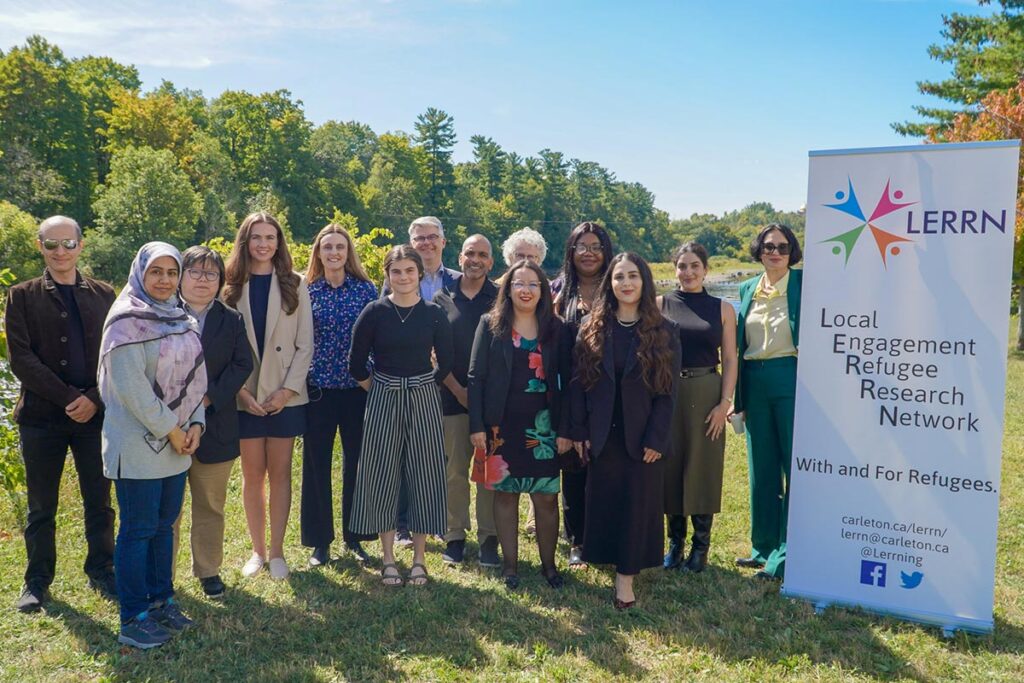
Refugees Leading the Response
The core of LERRN is a recognition of the need to “flip the paradigm,” says Milner — to move beyond the notion that refugees and forced migrants are passive, vulnerable people waiting for help.
“That characterization isn’t borne out by what we have seen,” he says, “which is that refugees are always at the front line of responding to their displacement and responding to the needs of their communities.”
For the past 75 years, since the UN Refugee Agency was established in 1950, the prevailing assumption was that the Global North, led by the U.S., would provide funding for short-term, life-saving humanitarian assistance until refugees could return home or be settled in another country.
In reality, displacement has become increasingly protracted with diminishing resettlement opportunities. Millions of refugees have lived in exile for decades, often across generations, and the vast majority — approximately 70 per cent — remain in the Global South rather than in wealthy Western countries.
“Because the old model has proven to be insufficient, the question is, what new approaches can be developed?” asks Milner.
“LERRN takes the expertise and experience of refugees seriously. Working in contexts as different as Colombia, Turkey and Kenya, refugee-led organizations have done extraordinary work to navigate diverse political environments and come up with practical solutions that benefit refugees and the communities that host them.”

Inclusion over Isolation
Documenting the substantive benefits of inclusion is an important part of LERRN’s strategy.
In Colombia, for example, instead of considering the presence of refugees a temporary phenomenon, the status of about a million Venezuelans has been “regularized,” allowing them to work legally, to bring their capacities as doctors and teachers, to pay taxes and contribute to the national economy.
In Brazil, the government has created an innovative system of “humanitarian visas” to respond to the needs of people who have been displaced by climate change and natural disasters. And Kenya has adopted a multi-year plan to promote socioeconomic inclusion by transforming camps into integrated settlements and including refugees in national health and education systems.
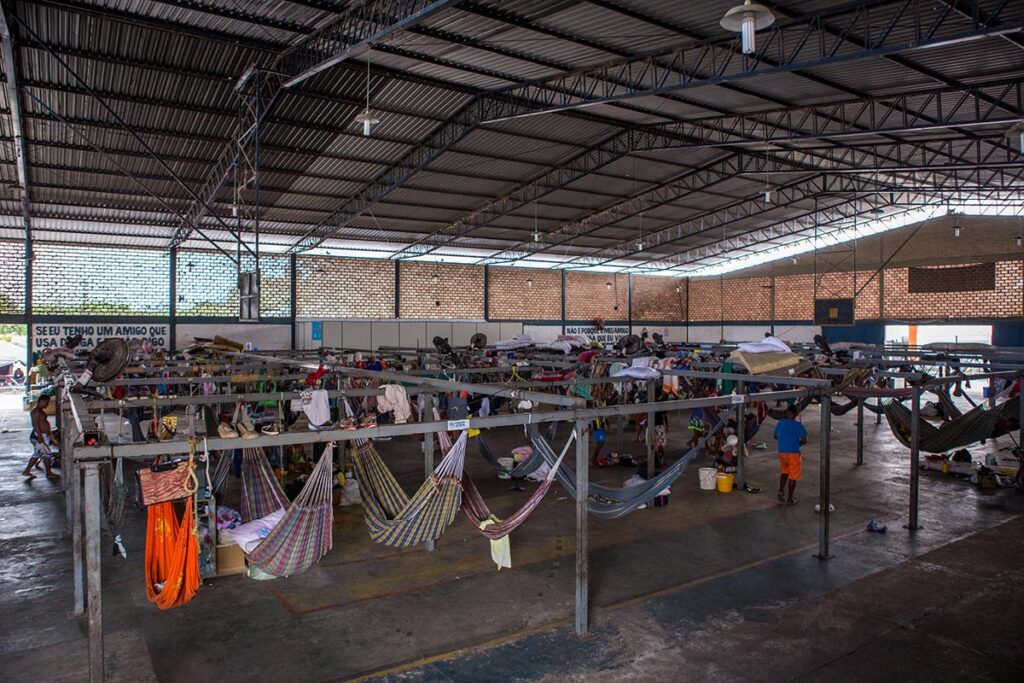
“There’s a recognition that if refugees and the host community work together,” says Milner, “it’s going to improve long-term development outcomes for both.
“Refugees who face dire situations do need rapid, urgent assistance. But that’s the minority of people. The vast majority are ready, willing and keen to contribute, not only to building their own lives but to building their new communities.”
Related Stories
When Hate Goes Viral: Countering the Power of Conspiracy
Conspiracy theories aren’t new. For centuries, they’ve been used to target groups cast as outsiders, from anti-Semitic myths in Europe to misogynistic and xenophobic narratives…
Confronting the Monetization of Housing
Access to housing is a fundamental human right in Canada, yet roughly 1.7 million households do not have an affordable or safe place to live.…

CKCU 93.1 FM: Community Radio at Carleton University
As Canada’s first campus-based community radio station, CKCU 93.1 FM has been a staple of Ottawa-Gatineau’s airwaves for 50 years, amplifying local voices, emerging artists…