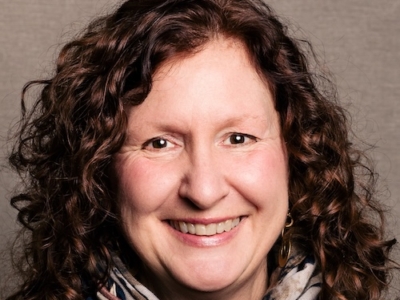
 By Jessica Field, Community Education and Outreach Coordinator, ARCH Disability Law Centre, a nonprofit legal clinic funded primarily by Legal Aid Ontario and specializing in disability rights law. Her article is part of the PANL Perspectives “Making Canada Accessible” series.
ARCH: a specialty legal clinic
ARCH provides free legal services to persons with disabilities to help reduce barriers and improve accessibility in Ontario. For more than 45 years, ARCH has been a leader in both disability rights advocacy and test case litigation, with the aim toward the full of inclusion of persons with disabilities.
 Through our Summary Advice and Referral service, we offer free, confidential legal advice by phone to persons with disabilities in the areas of law that ARCH practices, and we provide disability accommodations, as needed, to access this service.
More broadly, we offer public legal education on different areas of law — through webinars, podcasts and presentations for persons with disabilities, lawyers and paralegals, in addition to fact sheets, guides, tool kits and videos. These resources are advertised and available on our website.
Obstacles we’ve faced
 One key obstacle ARCH experiences is the high demand for disability-related legal services, alongside the limited capacity within the clinic system to meet all needs. Many people with disabilities face legal issues in different areas of law simultaneously. The complexity and volume of these issues can sometimes exceed our capacity.
In addition, we receive inquiries outside our areas of practice, such as housing or income support, on which we cannot advise.
ARCH attempts to overcome these challenges by prioritizing cases that have the potential to create systemic change, and by offering accessible legal education and materials to people with a disability in an effort to increase their own understanding of both the issues they face and their legal rights.
Openings we’ve found

In May 2025, Respecting Rights Toronto and ARCH released a six-part video series about ARCH’s services and decision-making rights in the areas of finance, healthcare and relationships. They also released a video on the recent changes to Toronto’s Wheel-Trans para-transit services. The videos are here: https://www.youtube.com/@respectingrights1618.
ARCH has built strong relationships with other community legal clinics in Ontario and expanded our Private Bar Referral and our Community Partner programs in an effort to connect people with a disability to the wider range of legal expertise. Under these programs, we refer individuals to other clinics and to private bar lawyers when their legal issues fall outside our scope of practice, and we collaborate with community organizations on projects, law reform work and public legal education.
We also support legal professionals with a free Case Consult Service and disability-related Continuing Legal Education opportunities.
These partnerships and connections expand our reach, strengthen our collective capacity, and help people with disabilities gain access to a broader set of legal supports.
For those dealing with disability rights law
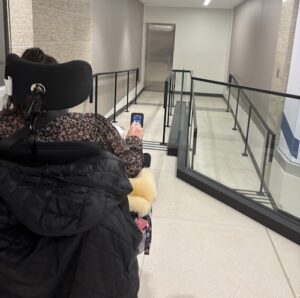
A member of Respecting Rights Toronto, an ARCH project led by people with disabilities, assesses a ramp in Toronto’s underground PATH during a Map Mission event for National AccessAbility Week.
Our experience highlights the importance of legal clinics, law professionals and community organizations identifying what supports and services are available to people with disabilities, and then creating meaningful partnerships with one another for the benefit of the people we support.
Organizations and legal professionals can collaborate and thereby respond more effectively to legal issues and better assist people with disabilities in navigating what can be a complex system. Establishing partnerships and learning how to work together might not necessarily be easy, but they are essential steps to providing sustainable, accessible, person-centred services.
For people without a disability who want to promote accessibility
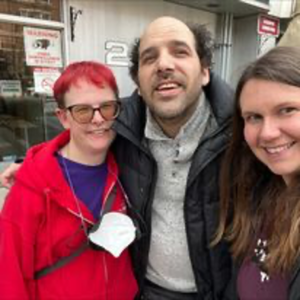
Respecting Rights members and the Project Coordinator after delivering a Public Legal Education presentation on decision-making rights for persons with disabilities in Toronto.
It’s important to acknowledge, recognize and learn about the different types of barriers that prevent people with disabilities from full participation in society. These types include but are not limited to physical, communication, attitudinal and systemic barriers. It’s important to include persons with disabilities in discussions and in efforts to identify and remove such barriers. Input from persons with lived experience is critical to creating meaningful change in society.
Lastly, become involved with local advocacy groups and organizations working to improve accessibility for persons with disabilities. Your active involvement can help create a more inclusive and equitable society for everyone.
Jessica Field is on LinkedIn, as is ARCH Disability Law Centre. Photos and graphics are courtesy of ARCH.
Monday, November 24, 2025 in Accessibility, For homepage, News & Events
Share: Twitter, Facebook