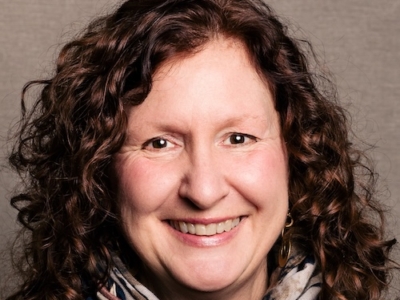
Tara Levandier
Tara Levandier is the Executive Director of Operations & Social Impact for Inclusion Canada (and is an MPNL alumna in the 2014 cohort). This article is part of PANL Perspectives‘ series, Making Canada Accessible.
Our origin and quest
Inclusion Canada was established more than 65 years ago by families across the country who found themselves to be the unexpected advocates for children with intellectual disabilities who they wanted to live at home, attend school and have a meaningful future. They did this at a time when disability-related supports didn’t exist, and in resistance to recommendations that their children be institutionalized.
 Now, with 13 provincial and territorial member organizations and more than 300 local associations, Inclusion Canada has become the only national organization working solely on behalf of people with intellectual disabilities and their families. It does so believing in a Canada where everyone belongs. Inclusion only happens when the lives of children and adults with an intellectual disability unfold no differently than others – immersed together with their peers without a disability in the same pathways and experiences of life common to us all.
Challenges remaining

Woodlands School, in BC, was a psychiatric institution operated by the government and closed following advocacy from people with lived experience.
Many challenges to a fully inclusive society remain. There are roughly 755,000 children and adults with intellectual disabilities in Canada. Despite the gifts and contributions they bring to their families, classrooms, workplaces and communities, the majority live in precarious conditions. Discrimination on the basis of disability is often disguised as progress. Students with an intellectual disability are segregated, away from their peers, in rooms purportedly designed to meet their needs. Administrators claim that those asked to attend school part-time are being accommodated. Across the country, many supports are available only in group homes and long-term care facilities, institutions widely documented as places of abuse and isolation.
Widespread use of mental health laws, guardianship and committee-ship continue to prevent people with intellectual disabilities from making crucial decisions about their healthcare, finances, family life and property.
Human rights violations and systemic discrimination against people with an intellectual disability persist in Canada. Ableism – the belief that it’s “normal” not to have a disability and that “normal” is preferred – plays into this. Ableism is discrimination on the basis of disability. Because of it, children and adults with an intellectual disability can go through life believing they don’t belong.
Inclusion Canada is committed to ending ableism and ensuring that people with an intellectual disability realize the rights to which they are entitled under the UN Convention on the Rights of Persons with Disabilities that Canada has ratified, as well as under the Canadian Charter of Rights and Freedoms. By enabling inclusive lives for people with an intellectual disability, we’re helping to build a Canada where everyone has the opportunity to thrive and prosper. This benefits us all.
Our strategies and successes

Read the other stories in PANL Perspectives’ “Making Canada Accessible” series, led by Daryl Rock and Calum Carmichael, in which charitable and nonprofit organizations outline their work in advocacy, barrier reduction and increased accessibility.
Inclusion Canada has a 65-year history of driving social change by strengthening families, defending rights, and transforming communities and systems into places where everyone belongs. We work in areas across the lifespan to address legislative, policy, program, practice and attitudinal barriers that prevent people with intellectual disabilities from enjoying and exercising their full rights and full inclusion in society.
Our strategy is multi-faceted. We partner with educators, healthcare workers, finance and legal professionals, employers, housing developers, municipalities, and others. We engage with governments and national agencies on policy development and law reform, encourage key sectors to adopt inclusive practices, participate in court cases that have the ability to affect change, and maintain an ongoing dialogue with the public through online platforms and national campaigns that amplify the contributions and voices of people with an intellectual disability and their families. We conduct community research, developing and sharing resources for people with lived experience, as well as for community leaders, employers and policymakers about how to make inclusion work – whether at home, at school, in the workplace or in the community.
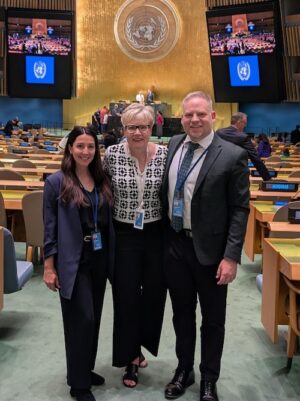
In 2025, Inclusion Canada participated in the Canadian civil society delegation that provided extensive testimony to the UN Committee on the Rights of Persons with Disabilities about the state of disability rights in Canada.
And we’ve had many successes – in employment, healthcare, housing, early learning and education, in a legal capacity and in justice, income security and federal legislation. Three things have contributed to these successes: we remain grounded in the lived experience of people with an intellectual disability and their families; we work in solidarity and collaboration with allies; and we base our quest on human rights. Rights aren’t favours for which we should be grateful. Rights aren’t negotiable. The beauty of rights is that you claim them – through sheer, unrelenting persistence, until they’re respected. We’re committed to this work.
As an example of this, Inclusion Canada recently participated in the Canadian civil society delegation that provided extensive testimony to the UN Committee on the Rights of Persons with Disabilities about the state of disability rights in Canada. Our delegation was successful in that the Committee issued Canada a critical review, calling on our governments to better uphold the rights and dignity of persons with disabilities.
Social change requires a movement – a collective force of individuals and organizations challenging systems of inequality and creating lasting transformation. Important work remains to make Canada inclusive. We at Inclusion Canada invite you to join us in that quest.
Tara Levandier is on LinkedIn.
Thursday, October 2, 2025 in Accessibility, For homepage, News & Events
Share: Twitter, Facebook