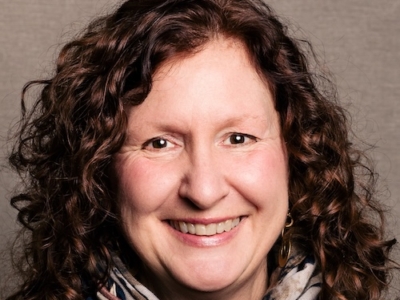
Authors Cathy Barr and Susanna Kislenko.
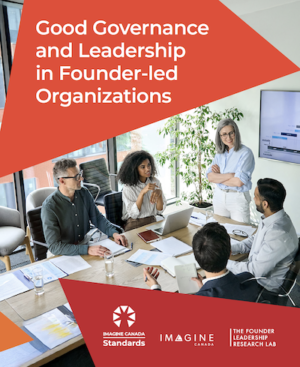
Cathy Barr (Senior Advisor of Research & Data at Imagine Canada) and Susanna Kislenko (Director of The Founder Leadership Research Lab at the University of Oxford, and Adjunct Professor at Carleton University) have published a guide, Good Governance and Leadership in Founder-led Organizations. The report (available in French as well) offers guidance for building effective boards, managing founder transitions and avoiding Founder’s Syndrome, which occurs when founders retain too much control over their organization. They interviewed 34 founders and board members of founder-led organizations, but both researchers have decades of experience working with many more founders around the world – and Susanna wrote her PhD dissertation about Founder’s Syndrome in both the for-profit and nonprofit sectors. The two spoke to PANL Perspectives about why the sector needs this guide now and what they hope to accomplish, given how difficult it is to discuss issues with many founders and boards of directors in Canada.
What inspired both of you to write the guide now?
 Susanna Kislenko: I was inspired to study how boards of directors could have a stronger effect on some of the negative consequences of Founder’s Syndrome. But if you really want to know how Cathy and I first started, it was right after the WE Charity scandal happened – and there were larger questions being asked. Cathy, what do you think?
Cathy Barr: Yes, totally. We didn’t even know each other before we came together to work on this project. We were connected by a mutual acquaintance on Imagine Canada’s board. With this guide, we want to look at how board members — in particular board chairs — can mitigate the impact of Founder’s Syndrome. Susanna is the expert on that. My background is more about governance and Imagine Canada’s Standards program. We got talking about how if everybody just followed the standards, then Founder’s Syndrome and possibly bigger scandals shouldn’t happen.
What do you hope people will get out of the 70-page guide?
Cathy Barr: We wrote the guide for both founders and board members to understand what good governance and leadership look like.
The guide isn’t in your face about Founder’s Syndrome. That’s on purpose, because a lot of people who have Founder’s Syndrome don’t know it, or wouldn’t necessarily seek out a guide for how to deal with it, so we focused on good governance, succession planning and things that, if you do them well, will mitigate the impact of Founder’s Syndrome. –Cathy Barr
Susanna Kislenko: The biggest finding from our study was that board members don’t know what their responsibilities actually are and what their role is supposed to be, or what they’re supposed to be doing in their role. But at the same time, founders without Founder’s Syndrome — so the founders who do want to set up good succession practices — also don’t know often. This might be their first organization they started, but even if it isn’t, there aren’t many places you can go to really understand how do you set it up? How do you set up your organization for long-term success from the governance perspective? There’s not that many places you can go. So, we’re, first of all, hoping people will feel less alone.
Second, we’re hoping that people will start conversations, will ask questions, about governance and succession policies that need to be put in place within their organizations.
Third, we want to empower board members. Many board members come into an organization because they’re passionate about the mission, or the founder, or both. But, at the end of the day, they might become disillusioned because they’re not supported in their roles. This guide tries to empower them. –Susanna Kislenko
Cathy Barr: ‘Empower’ is an important word. Sometimes, founders purposely try to make sure that board members don’t know what the board should be doing. The guide fills a knowledge gap about the real duties and responsibilities of board members, and also hopefully, gives them confidence to speak up, to challenge the founder, or to rein in a founder who’s behaving inappropriately – and ultimately to empower board members to do the right thing. For example, why didn’t the board exercise their power before the WE Charity scandal? More broadly, why are board chairs at some organizations afraid to discuss succession planning with 80-year-old founders? It’s ridiculous, but it’s common.
After the Hockey Canada fiasco and WE Charity scandal a few years ago, did you see major changes in leadership or governance in the nonprofit sector?

Read “The Hockey Canada Fiasco,” by Yves Savoie, for a review of the serious lessons learned about nonprofit governance and boards of directors, issues that are still relevant today: https://carleton.ca/panl/2022/the-hockey-canada-fiasco-governance-lessons-for-nonprofits-in-canada.
Cathy Barr: I don’t think much changed on a grand scale. There were specific organizations that made changes. Well, I know of at least one, and my guess is there have been others. Imagine Canada saw a bit of an upsurge in interest in the Standards program. I think, though, that part of the challenge was those events happened at a very challenging time in the sector, because of the COVID-19 pandemic. The scandals did create a lot of ripples in the short run, but I think those ripples dissipated fairly quickly.
My interpretation is that it’s the pressure of the urgent over the important. However, if leaders actually got their houses in order, they’d maybe be in a better position to deal with short-term challenges.
It takes a special leader to pull back and say, “No, we need to do this, because this is important.” Sometimes it’s a CEO. Sometimes it’s a board chair. There has to be a champion who believes in that sort of thing, who sees the value. –Cathy Barr
Susanna Kislenko: These sorts of questions should be weaved through all levels of education that’s about leadership in this sector. The whole reason we did this study, the whole reason we did this guide, was to say, you’re not powerless. Both as a founder and as a board member, you’re not powerless, and there’s a lot that can be done, but it has to be intentional, and it has to be consistent.
Cathy Barr: And it’s not easy. I mean, most board members are volunteers, and they didn’t join the board to get into a drag-it-out fight with the founder. A leader really has to believe in this stuff.
Susanna Kislenko and Cathy Barr are on LinkedIn. Read their article, “Avoiding founder’s syndrome through good governance,” in The Philanthropist Journal, in which they summarize their research and list common indicators of founder’s syndrome.
Monday, November 24, 2025 in For homepage, Leadership & Governance, News & Events, Private Foundations
Share: Twitter, Facebook