Research Study Identifies Strain in Foundation-Charity Relationships
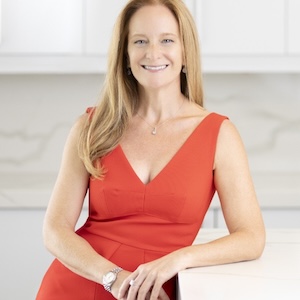
Dr. Sharilyn Hale, President of Watermark Philanthropic Counsel
A 2026 report about donor-advised funds (DAFs) offers the first research in Canada about the strained relationship between DAF foundations and operating charities – and what to do about it. “Growing Together: Informing a positive dialogue between charities and DAF foundations through knowledge, engagement and transparency” is by Dr. Sharilyn Hale and Keith Sjögren. The report builds on “Influence, Affluence and Opportunity,” from CAGP in 2023 and on “Impact Investing and Donor-Advised Funds,” their study from 2025.
Sharilyn is the Founder and Principal of Watermark Philanthropic Counsel. Her career spans the charitable sector, as does her research and work with generous people and families, and social purpose organizations. Keith is a Research Partner and brings expertise and rigour from the world of management consulting and wealth management.
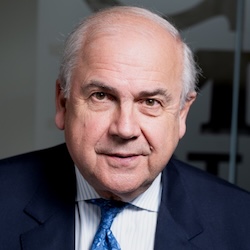
Keith Sjögren, former Managing Director at Investor Economics, a leading provider of research and advisory services to the financial services industry in Canada
Research is a core pillar for Watermark. “Growing Together” is based on 60 interviews with leaders at DAF foundations and operating charities in Canada, as well as data from a survey of 1,000 registered charities and data from tax filings with Canada Revenue Agency – and data and information from the US and six other countries.
Why are you releasing this report now?
Keith: This is the first piece of research on the topic in Canada. It’s timely because the relationship between DAF foundations and operating charities has been somewhat strained as the result of the rapid growth of donor-advised funds (DAFs) and the ability of charities to adapt to this new giving vehicle. Each year, an increasing number of charities receive gifts from DAFs, which are the fastest growing giving vehicle in North America and in other major economies, such as Australia and the UK. The friction between DAF foundations and receiving charities needs to be dealt with if the flow of capital is to be improved.
The report is essential reading for executives of both operating charities and foundations that provide DAFs. Up to 25,000 charities in Canada are benefiting each year from at least one gift from a donor-advised fund, and we expect that number to grow. So, if you’re in the fundraising business, and all operating charities are, it’s critical to understand this emerging source of funding.
Sharilyn: Given the continued growth of DAFs in Canada, I don’t think most charities have the luxury of ignoring them anymore.
One of the things that jumped out for me in the data, but also in the conversations, is that people were candid and also constructive about being able to work together more effectively, more collaboratively — for the benefit of philanthropy. The report provides critical information, as well as possible solutions, that will inform a dialogue aimed at resolving issues, for both DAF foundations and operating charities.
What are your sources of data?
 Sharilyn: We conducted about 40 interviews with leaders at operating charities and executives from DAF foundations, as well as other content experts. And a significant data source came from a partnership with the Charity Insights Canada Project (CICP), at Carleton University, which surveyed about 1,000 charities specifically about their experience with DAFs — charities that had never been surveyed before about DAFs.
Keith: Also, we looked at data from T3010 filings and aggregate personal tax data available through Canada Revenue Agency (CRA). We used data from those public databases to support points that came out in interviews and through the survey or to challenge assumptions that were made by both groups.
What are a few insights from the report?
Sharilyn: One of the most surprising things for me, and one of the key findings of the report, is how big the DAF-knowledge gap is within the charitable sector. DAFs are not new and have been around for quite some time. However, 30% of Canadian charities claim to have no knowledge of DAFs, and a similar number report not receiving funding from DAFs. Our position in the report is we can’t do better until we know better.
Keith: In addition, we found that within DAF foundations there was a lack of knowledge how charities work. If you’re a DAF foundation, you may be recruiting new employees who have no background in the charitable sector, or have no personal insights into how charities operate or what funding structures are in place. On top of that, you get a set of beliefs at some DAF foundations that don’t represent reality.
People said, “Oh, DAFs are a game changer, they’re transformational,” but if you look at total funding sources, the importance of DAFs is relatively low. Many DAF foundations see themselves as transforming funding for charities in Canada, and it’s simply not the case.
What are the issues related to donors being anonymous, an issue you analyze in the report?

“We think more nuanced conversations are needed with fund holders around, not only their options, but around the implications and opportunities of each of those options.” –Dr. Sharily Hale
Sharilyn: From a charity’s perspective, the disconnect between themselves and a donor who gives through a DAF foundation is significant, relative to what is understand to be professional fundraising practice. The inability to identify, cultivate, solicit or steward donors and potential donors is one of the biggest challenges that charities face as they work with DAFs. However, there’s a delta between sharing the name of a donor and full anonymity. There was a call from charities to fix that.
The DAF foundations point out that not all donors want a relationship with every charitable partner, and there are many reasons why a donor may want to be completely anonymous (such as concern around public recognition and receiving too many solicitations from charities). So, DAF foundations are often balancing the needs of charities and the interests of donors.
Your report dives into concerns about “idle capital” and DAFs. Can you summarize some of those concerns?
Keith: Charities are aware that there are billions of dollars being held in DAFs – that a lot of capital isn’t flowing at the rate that charities need. That’s a concern, and they blame DAF foundations for this “idle capital.” Charities note that taxpayers have subsidized donations to DAFs.
My estimate is that taxpayers subsidized DAF donations by $500 million in 2024, and that doesn’t include the capital gains exemptions that are associated with gifts of appreciated securities. The concern is that most of the capital is sitting in an investment account being managed for a DAF foundation and that most of the donations aren’t being put to use for charitable purposes.
That said, the distribution rate of DAFs, on average, is twice that of private foundations. The issue of “idle capital” isn’t only a DAF foundation matter but extends to all types of foundations.
Which DAF foundations are doing it right in terms of relationships?

For more reports about DAFs in our sector, see PANL Perspectives’ page, “Reports about Donor-Advised Funds”: https://carleton.ca/panl/2026/donor-advised-funds
Keith: DAF foundations vary widely. There are community foundations, such as Vancouver Foundation, and there are DAF foundations at mature institutions, such that at TD Bank. They each have more than a billion dollars in assets held in DAFs. Their ability to engage with charities is different than smaller, internet-based foundations that are more transactional. Some of the smaller foundations, like The Veritas Foundation and GiveWise Foundation, are taking deliberate steps to work with charities because they realize that their foundations are an intermediary and represent the interests of both the donor and the recipient charities.
There are definitely some foundations that are strongly biased towards the donor, and I think that’s part of the problem. They don’t see themselves as an essential intermediary serving the needs of both philanthropists and charities. They see themselves as an agent of the donor, with limited responsibilities to the operating charities. And that’s an irritant, to the charities.
Dr. Sharilyn Hale is on LinkedIn. Photos and courtesy of John McArthur and Unsplash.
Monday, August 31, 2026 in For homepage, Fundraising, News & Events
Share: Twitter, Facebook