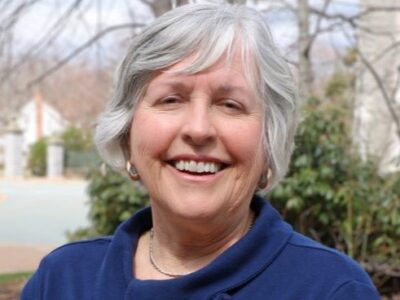
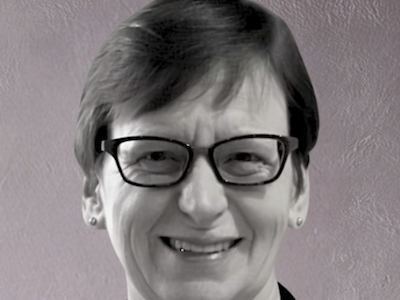
As part of our Making Canada Accessible series, Bill Adair and Gillian Lynne-Davies spoke to PANL Perspectives about successful collaborations and advocacy with and by disability communities. The two worked for the Federal Accessibility Legislation Alliance (FALA), which represented organizations and individuals who wanted to make the Accessible Canada Act (ACA) strong and effective.
In general, do disability communities in Canada collaborate much?
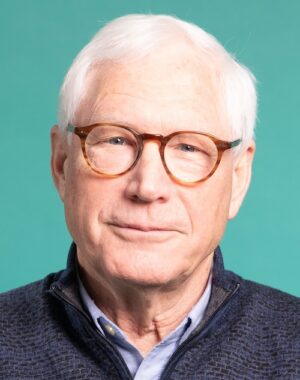
Bill Adair
Bill Adair: It’s heartbreaking that the disability community is 27% of Canada’s population and we don’t have a united front to represent our collective needs in a powerful way — to drive change. We did for a moment in time, creating the Accessible Canada Act (ACA) in 2019, but what’s stopping us now?
Question: How did nonprofit organizations successfully collaborate to create the ACA?
Bill Adair: About eight years ago, the Government of Canada, under the leadership of Minister Carla Qualtrough, funded eight organizations to identify barriers that people in their communities were facing. We kind of knew what the barriers were, but the initiative was a real effort to reach out to people who usually aren’t involved in consultations and don’t have a strong voice. The organizations each wrote a report and presented them to Minister Qualtrough. She wanted advice on what should be put into Bill C-81, which ended up being the ACA when it became law. After the government received the reports, it asked the same organizations to reach out across the country to get recommendations for the draft legislation.
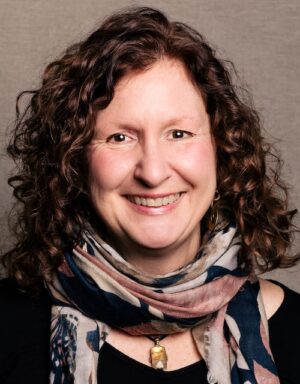
Gillian Lynne-Davies
Gillian Lynne-Davies: Not everybody with a disability is, or wants, to be part of an organization. And it’s difficult to bring disability organizations together, because in some cases, there are trust issues. Often organizations are competing for the same funding dollars. So, we felt that the only real way to collaborate was digitally. We set up Include Me, a website, so that no one organization was the main voice. Include Me provided a neutral voice. We made it a little more edgy than an organization could be, because no organization could talk smack to people the way Include Me could. We started with maybe 50 organizations, and by the time it ended, we were 11,000 organizations and individuals.
What were some of the eye-opening benefits of collaboration?
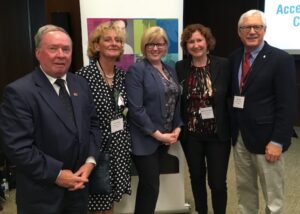
From left to right: Jim Munson (Senator at the time), Jane Arkell (FALA Project Director), Carla Qualtrough (Minister at the time), Gillian Lynne-Davies and Bill Adair.
Gillian Lynne-Davies: Include Me became an online community of people with disabilities who gave their advice and were active. For example, at one point, the Conservatives were filibustering in the House of Commons, because of other issues in the government at the time, and they were supposed to be passing the Bill C-81, the Act. The Include Me network told each other what was going on in real time, and shared emails of Conservative Party members. There was a big online push from our community to have the Conservative members change their behaviour in the House. It was massive. A Conservative member asked us, “Can you please make it stop?” The House ended up passing the legislation unanimously. It was fantastic.
And, through Include Me, we heard things that we’d never heard before. Individuals who were hard to reach were included. They told us about their experiences. Like, one woman said her kids had disabilities, and she was in an army family. Every time their family was transferred to a new location, they got put at the bottom of the waiting list for services. This information was new to us, and we took that issue and many others to the government. We worked in partnership with the government, and could directly feed suggestions to them, whereas that individual would never have had that opportunity.
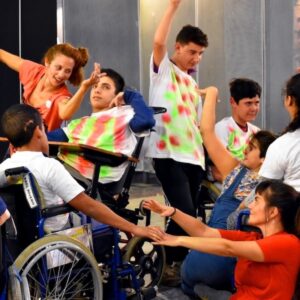
For all 10 stories in our “Making Canada Accessible” series, go to: https://carleton.ca/panl/accessibility.
For the series, Daryl Rock and Calum Carmichael invited a range of charitable and nonprofit organizations to outline their innovative work in reducing barriers and increasing accessibility.
Bill Adair: One story that I think exemplifies the power of the community coming together was when we asked the government to include requirements for the use of American Sign Language (ASL) and Langue des signes québécoise (LSQ) in the legislation. The Canadian Association of the Deaf and a few other organizations had been lobbying to include these languages, and the government had been saying, “No, no, no.” Working with our colleagues, we took the issue to the entire disability community, to the 11,000 contacts, and said, “We need your support. This isn’t relevant necessarily to your focused issues, but it’s relevant to our disability community.” People sent thousands and thousands of letters. And the government came through – they included ASL and LSQ — and not only that, but Indigenous Sign Language, ISL, as well. There were some disappointments in terms of follow-through after the legislation passed, but the fact that we all came together to get this done and said, “We all want this,” and the government said, “Okay,” was a really good thing.
What happened with Include Me, with that community of 11,000 people and organizations?
Gillian Lynne-Davies: It had amazing potential, and the community shut it down, and the government shut it down. Government staff said to Bill, “Once this grant is over, this is over.” I think they didn’t keep it going because, while it had the ability to work with government, it also had the ability to point out government’s failures. Maybe that’s why they refused to fund anything that had to do with Include Me.
And among the organizations, nobody had money to put into it, and maybe it was a turf thing. Include Me was under the direction of Spinal Cord Injury Canada, and people started saying, “Well, the site is proprietary. Do they really care about anything other than spinal cord injury?”
It’s not that people don’t collaborate, because since then, there has been collaboration, but it’s still a club in the nonprofit sector. It’s still, “Who will we let into the club?” Include Me ended, even though hundreds of people signed agreements saying they wanted to partner and continue. It’s unfortunate. Every time there’s a new issue, the disability community starts all over again, with a small little group. It’s sad. I think not using Include Me was a lost opportunity to join together and create real change.
What would you recommend to the organizations involved in cross-disability collaboration or community building?
Bill Adair: I recommend that the community looks at what’s worked in the past. How did we gain ground in disability rights and access and inclusion in general? What worked?
Gillian Lynne-Davies: And let’s look at the past calls-to-action, the digital resources, the hubs that worked. If you look historically, with National Access Awareness Week, for example, that started with transportation, housing, employment, recreation and education. Those were basic places to start, as far as the issues went, and they were good hubs for people to visit, give input, find resources and see what they could do. That created trust, provided feedback and generated cross-sector calls-to-action. A digital application makes input much easier across the country.
Sign up for PANL Perspectives, MPNL’s free newsletter.
Monday, March 23, 2026 in Accessibility, For homepage, News & Events
Share: Twitter, Facebook