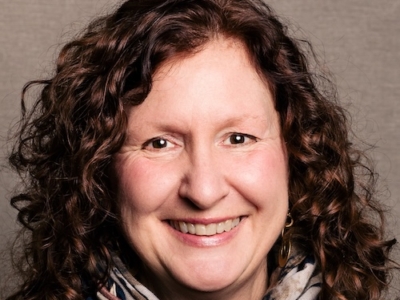
Dr. Susan L. Hardie.
Dr. Susan L. Hardie, PhD, is the Executive Director of Winnipeg-based Eviance, which has worked for more than three decades in the cross-disability and mental health fields. She has been instrumental in establishing Eviance as a national organization that models an intersectional, human rights–based and reflexive approach, champions meaningful engagement, and facilitates collaborations with persons with disabilities, disability communities and allies across diverse locations. This Q&A with Dr. Hardie is part of the PANL Perspectives “Making Canada Accessible” series.
Question: How does Eviance increase accessibility?
Susan Lynn Hardie: Our Vision at Eviance is to realize an inclusive, equitable and accessible society that’s sustainable for all – with accessibility being one of three high-level themes. We unpack accessibility discourses and make visible the historic and current roots of cross-disability movements – the roots of social exclusion and social, economic and political inequities and injustices, as well as collective systemic actions. Our Mission is to serve as a facilitator of knowledge-to-action, bringing people and knowledge together on cross-disability issues to affect behavioural and system-level change.
Our high-level themes that will increase inclusion, equity and accessibility (IEA) in all realms of society are: (1) community-based projects; (2) co-creating with diverse disability networks; and (3) knowledge-to-action activities. Permeating the themes is an intersectional, human rights and reflexive (IHRR) approach in everything we do. We’re an Organization of Persons with Disabilities, an organization of 80% staff and volunteers being persons with disabilities.
Question: How are the three themes related to accessibility?
Susan Lynn Hardie: With community-based projects, the first of our three high-level themes, we hope that organizations working with Eviance will increase capacity to develop and embed processes, policies and practices aligned with an intersectional, human rights and reflexive (IHRR) approach. Ultimately, our projects and programs aim to enhance inclusion, equity and accessibility in a sustainable way and to significantly influence policy in Canada.
With the second theme (co-creating with diverse disability networks), we work with allies, individuals and diverse disability communities to strengthen capacity development in IHRR. Essential skills include active listening, power analysis, systems thinking, consciousness raising, self-awareness and ethical leadership.
It’s our hope that the third theme, knowledge-to-action activities, will help individuals and diverse disability communities to build confidence in applying IHRR approaches in civil society. Ambitiously, we hope that individuals and diverse disability communities will increasingly inform ongoing work on the Sustainable Development Goals 2030 and implement and monitor the United Nations Convention on the Rights of Persons with Disabilities (UNCRPD) and other UN conventions and treaties. One of the greatest challenges we face is making the UNCRPD understandable as a strategic, system-change tool.
Eviance embraces, at minimum, the social model of disability, while continually aspiring to realize a human rights model whenever possible.
Question: What programs does Eviance run with youth with diverse disabilities?
Eviance’s program, “Canadian Disability & Climate Change Network and Strategy Project,” addresses the interaction between the SDGs and disability and climate change.
Susan Lynn Hardie: We operate Youth with Disabilities Strive to Accelerate Results (YStar). While working with youth with disabilities, we became aware of the daily isolation they experience while navigating complex social, health care, education and employment systems. We also learned about the initiatives youth were co-creating to address issues important to them (e.g., mutual aid, climate action, just care and other systemic injustices). Our hope is that the YStar Fellowship is in itself an intervention that counters youth isolation by providing opportunities and resources for Fellows to engage in Eviance’s learning opportunities and in self-directed activities that connect with individuals and initiatives in areas of interest – and thus, they’re not “alone.”
As a leader within the cross-disability movement, I commit to working to remove systemic and behavioural barriers that prevent youth from being meaningfully engaged in federal processes. It’s essential that we learn together how to respond effectively to ongoing requests for disability “representation” and “consultation” — whether local, provincial, territorial, federal or international — so that these efforts reflect collective, meaningful, intergenerational strategic action with a shared vision.
Another project is the “Canadian Disability & Climate Change Network and Strategy Project,” which addresses the complex interaction between climate action and disability, with a specific focus on six of the United Nations’ SDGs. Historically, people with disabilities have been excluded from climate action spaces, and our project is one means to address such exclusion. The project fosters knowledge exchange via a network, and supports ten disability and climate action initiatives — all with a vision of co-creating a “National Strategy on Disability and Climate Change.”
Question: Do you think people should disclose their disabilities to employers?
Susan Lynn Hardie: When I first became involved in grassroots organizing, drawing on my lived experiences of systemic violence, I was very naïve in seeing the short-term impact of sharing a personal narrative of justice, courage and hope in overcoming systemic violence. My colleague and I, who co-presented for the first time, had no idea of the impact that presentation would have on my life — particularly on my health, well-being and work opportunities. More than once, my colleague witnessed the escalation of discrimination and the limits placed on opportunities because of that sharing. As they moved on in their career, the last thing my colleague said to me was, “I am so sorry.”
My decision to disclose was what I now call a “constrained” choice. When people are surviving and getting on their feet, it’s not the time to invite them to share their personal narrative. If disclosure is invited, I argue that it’s ethically essential to support individuals through an informed, decision-making process that includes awareness of self, power analysis (fiscal or positional power, or lack thereof), and understanding the short- and long-term impacts of the choice.
From my personal and professional journey with disclosure, I’ve learned to emphasize the importance of being aware of one’s power. I explore with individuals the short- and long-term impacts of disclosure, and I’m honest with them: if they don’t have access to fiscal or positional power, I encourage them to seriously consider not disclosing until these realities change. This encouragement is contrary to current practices in the psychosocial disability sector (i.e., mental health sector), which often encourages disclosure.
“Reflexivity” is about connecting our personal biases and privilege with a larger picture, and taking actions that reflect the self-awareness and realizations. Eviance provides a video to explain the concept in more detail: https://www.eviance.ca/videos.
I do support the strategic “use of self” to affect systemic change — but only if individuals with diverse disabilities have been supported through a quality reflexive process that facilitates an informed choice. It is important to note that some people with visible disabilities may feel they have no choice. Yet, even then, I believe they can choose to disclose their lived experiences strategically to effect systemic change.
The cross-disability movement has always been about “informed choice” and “inclusion”, and these principles apply to disclosure and the sharing of one’s narrative.
Early in my career, I came across the saying: “A society will be judged by how it deals with its most vulnerable.” At Eviance, our hope is that through our IHRR approach — and our collective vision of realizing an accessible, equitable and inclusive society — we can help to build a future that’s sustainable for all.
Our vision is embraced within the cross-disability sector, yet I sense we still have work to do to ensure that all persons with disabilities, diversely-located and across lifespans, are valued and recognized as essential in society more broadly.
Eviance is on LinkedIn.
Sunday, January 4, 2026 in Accessibility, For homepage, News & Events
Share: Twitter, Facebook