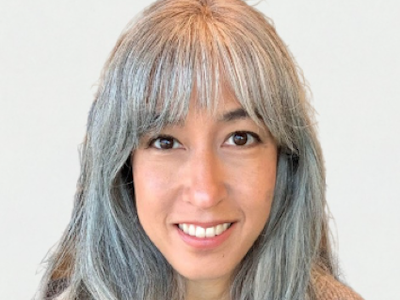
Lisa Trefzger Clarke, PostDoc Researcher leading the Women in Philanthropy initiative.
A thought piece that’s part of the PANL Perspectives series, Putting Empathy Into Action: Building a Broader, Stronger Culture of Philanthropy in Canada.
By Lisa Trefzger Clarke, Ph.D
Women worldwide are major beneficiaries of an intergenerational and unprecedented wealth shift happening right now. Through inheritance, changes in family status, and self-generated and entrepreneurial wealth, women in Canada now hold almost 50 percent of private wealth in Canada (The Turn Lab, 2025), and women are set to inherit an estimated $1 trillion by 2030 (TD Private Giving Foundation, 2023). At some point in their lifetime, 90 percent will be the sole financial decision-maker (Investment Planning Counsel, 2017). Women are a new driving force in philanthropy across Canada.
Women are central to Canada’s philanthropic sector

The pole of the Kwakwa̱ka̱ʼwakw Nations in front of Mungo Martin House (Wawadiťła), in Thunderbird Park, celebrated the return of the potlatch in BC. Canada has a long history of philanthropic culture, beginning with pre-colonial Indigenous gifting-and-sharing economies, such as those of the potlatch.
Canada has a long history of philanthropic culture, beginning with pre-colonial Indigenous gifting-and-sharing economies (consider the history of the Potlatch). A culture of gifting and sharing has long sustained communities, inspired newcomers, and co-built institutions. It has always taken place on this land, often led by women, informally and formally. And, over the years, women led social-reform movements, from temperance to the Bread and Roses March, and were a backbone of volunteering in its many forms.
Despite Canada-wide alarm bells about declining donations and volunteerism over the past decade, women philanthropists keep answering the call. In fact, women’s giving is projected to increase fourfold from 2011 to 2030 and accounts for 49 percent of charitable giving processed through Canada’s charitable tax credit (Statistics Canada, 2025; TD Private Giving Foundation, 2023). For instance, while the number of women making charitable donations remains the same, the median receipted tax credit has increased from $300 to $350 over the past five years (Statistics Canada, 2025). With greater wealth in the hands of women, greater engagement can be expected by them. However, little research in Canada has explored women’s philanthropic experiences and their motivations for giving back to their local communities, national charities, and international causes.
As women’s engagement in philanthropy evolves and deepens, we need to better understand the journeys that women take in their philanthropy. They don’t give or volunteer in isolation, but are part of a philanthropic ecosystem of spousal, family, peer and professional networks. High Net Worth (HNW) women often seek advice from wealth and other advisors, and are the subject of requests from fundraisers. Their engagement with philanthropy isn’t static but evolves as they reassess the personal meaning and impact of their efforts and as they learn over time.
Research from the Women in Philanthropy initiative

Carleton’s Women in Philanthropy research team interviewed 82 High Net Worth women across Canada to better understand why and how they give.
Last year, Carleton University’s Philanthropy and Nonprofit Leadership program launched its first three-year study about Women in Philanthropy in Canada. The first research of its kind in Canada, our first phase involved reaching out to women philanthropists to better understand why and how they give, what accounts for differences in their giving, and if their philanthropic journeys change over time.
Supported through a generous donation from a woman philanthropist, and informed by a growing roundtable of women philanthropists interested in sharing their wisdom and experiences, our research team interviewed 82 HNW women across Canada. We spoke to women spanning six decades in age; culturally, racially and financially diverse women; and women living in urban and rural centres. All of them dedicated significant time, talent and treasure to values-aligned causes over their lifetime, and were extremely passionate about addressing health, climate and inequity regionally and globally.
Our research team heard stories about lessons in reciprocity while homesteading in Northern Alberta, advocating for early childhood resources and quality care for families, stepping back from challenging board-of-directors dynamics, and planning a first major gift to a meaningful cause. These stories were deeply personal, incredibly meaningful, and powerful in their philanthropic impact. The philanthropists at the roundtables we hosted explained that women often see philanthropy as part of community stewardship, including front-line and leadership volunteering, investment in social change and community betterment, and connecting for community wellbeing and inclusion.
Women’s giving in the philanthropic ecosystem
 For the vast majority of our research participants, philanthropy is characterized as deeply personal, with identity- and community-rooted motivations, rather than transactional ones. It’s not only about responsibility as a wealth holder, but responsibility as a human in community. Aligning with decades of research from the United States (Women’s Philanthropy Institute, 2025), women in Canada describe their motivations intersecting with personal identities – including gender, race, culture, sexuality, age and life stage – and they describe nurturing a sense of belonging to a community. Giving isn’t something they do; it’s who they are.
Our research findings show that parents, grandparents and community members model childhood engagement in philanthropic culture, which intersects with expected factors such as family traditions and faith, as well as experiences of migration and local community need, and intersections of diversity.
Webs of relationships — family, friendship circles and professional networks — are also key in shaping women’s philanthropic journeys. According to our interviews and roundtables, women’s philanthropic culture thrives on trust over transaction by using due diligence, proximity to a cause and organization, and professional learning as guideposts. As women become involved with a charitable cause, often starting as volunteers and moving to board leadership, they integrate their philanthropy of time and talent, often before monetary giving.
Over their lifetime, women evolve in their philanthropic engagement: they begin with reactive or emotional giving that’s values-driven and reflexive; then move to more intentional, focused giving with a deliberate strategy; and in later stages, explore systems-level thinking and giving with more structural critique. Participants in our study expressed active, knowledgeable agency in their giving, as well as in decision-making within their families.
Life events often inform and steer women’s philanthropic journeys. Becoming a parent or grandparent might motivate giving and the transmission of values for causes. The loss of a parent or spouse might be a major reorientation point, where grief becomes generative, and autonomy deepens giving for new priorities. Family illness or loss may channel giving to specific causes. A wealth event, like an inheritance or business sale, may trigger reflexive giving that becomes intentional, such as building a philanthropic strategy or establishing a Donor-Advised Fund (DAF), with support from advisors or peers. Career or life-stage transitions may also shift influence in volunteering and giving from time-based to financial to legacy-oriented. Despite increases in financial giving, many study participants expressed a cultural reluctance to stand out and be recognized for their contributions. This may intersect with a civil culture that prefers humility and modesty.
Foregrounding women in philanthropy

For more stories in the PANL Perspectives series, “Putting Empathy Into Action: Building a Broader, Stronger Culture of Philanthropy in Canada,” visit carleton.ca/mpnl.
Although the significant global wealth transfer creates new opportunities for women in Canada, both roundtable and research participants expressed some caution:
- First, the wealth shift won’t be distributed to all women equally, and philanthropy is one part of a civil system tasked with building greater equity for all Canadians.
- Second, wealth is accumulating with women faster than institutional, advising and peer-learning systems are adapting. Women describe values-aligned advising that optimizes their wealth growth and philanthropic goals as transformational, but advisors must invest in women’s needs to avoid client attrition.
- Third, the sector must see women volunteers for their spectrum of skills and wealth of diverse experience, while respecting their personal and professional obligations. Investing in women’s skill-building and leadership potential builds internal capacity, creates reciprocal relationships, and nurtures long-term donations.
Our research shows that women see themselves as active, values-aligned volunteers and donors who seek reciprocal engagement with charitable causes and meaningful opportunities for participation, while being respected for their talents and time. Recognizing women’s skills and leadership potential, and building internal capacity to steward and maintain long-term relationships with them, are two foundational steps to unlocking a new culture where women are acknowledged as central to Canada’s philanthropic sector and culture.
Many women philanthropists in Canada may not be surprised by our early study results. Philanthropy is both an ancient tradition and, in the contemporary context, is defined by the people, places and environment surrounding an issue and cause. Women are an integral part of philanthropic and economic ecosystems, but they continue to face barriers to full participation in both professional and voluntary leadership. Although women donors in our research described discomfort with public recognition of their financial charitable contributions, they seek meaningful opportunities for engagement and skill-sharing as mission-driven volunteers and donors. Rather than interpreting their stewardship preferences as quiet giving, women philanthropists express interest in consulting, learning and growing with the causes they care deeply about. In our roundtables, participants described their preference for relationship-forward philanthropy that fosters healthy mentorship and addresses power imbalances in both third-sector organizations and civil society, innovating collective work and leveraging systems change. As one participant said: “We may have richer spaces if we all know how to talk to each other about giving.”
Lisa Trefzger Clarke is on LinkedIn. Photos of Wawadit’la (aka Mungo Martin House) and heraldic poles are courtesy of Ryan Bushby and Wiki Commons.
Tuesday, September 29, 2026 in General
Share: Twitter, Facebook