When Warnings Fall Short: Communication and Tsunami Evacuation
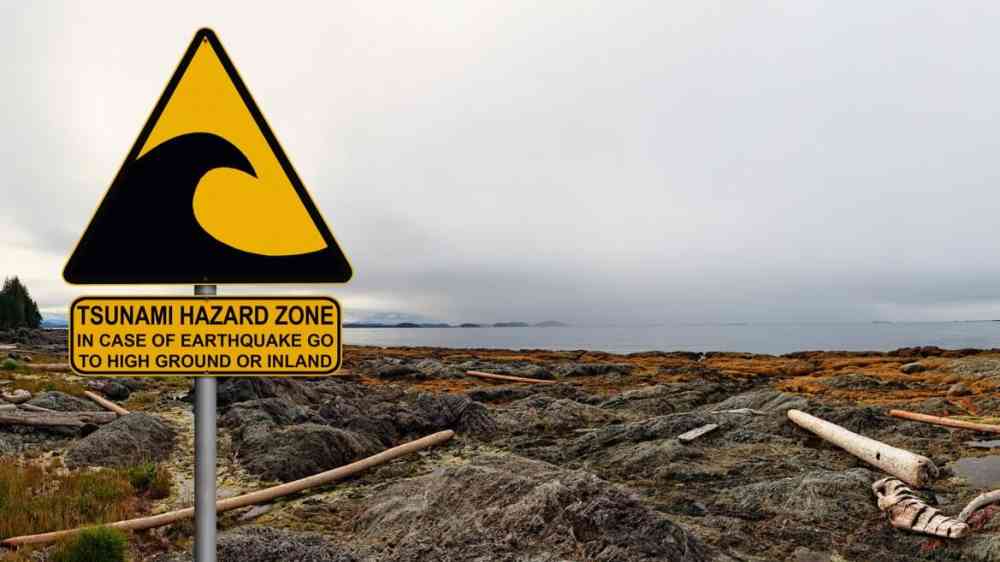
Imagine your GPS announcing, “Danger ahead,” without telling you where to turn, how far away the threat is, or whether you should stop or reroute. In disaster settings, warning messages can sometimes leave people with this kind of uncertainty at the very moment when decisions matter most. As discussed in our previous blog post, early warning systems play a critical role in detecting tsunami hazards and issuing warnings to at‑risk populations. However, the effectiveness of these systems ultimately depends on how warning information is communicated and understood
While alerts are designed to capture attention, warnings provide more detailed information about the nature of the threat and the actions that should be taken [2]. When this messaging is unclear, incomplete, or poorly communicated, it can delay decision‑making and increase risk, even when warnings are issued. Tsunami warnings are delivered through multiple channels, including radio, television, mobile alerts, and social media. Yet regardless of the platform used, the ability of these warnings to prompt evacuation depends on the clarity, content, and interpretation of the message itself. This blog post examines these communication challenges through the 2022 case of Tutukaka Marina in Aotearoa New Zealand, highlighting how the design and delivery of warning messages can influence evacuation behaviour.
Case Study of Mariners in Tutukaka, New Zealand
On January 15, 2022, the eruption of the Hunga Tonga–Hunga Haʻapai volcano generated tsunami waves that reached several parts of New Zealand. While officials did not initially identify a significant threat, a tsunami advisory was issued several hours later. Within approximately one hour of the advisory being issued, tsunami waves reached parts of New Zealand, including Tutukaka, a locality on the eastern coast of Northland, New Zealand. While vessels were damaged and others sunk, there were no reported injuries or fatalities. Yet, despite the absence of casualties, there were various communication challenges that affected evacuation decision making among mariners.
Mariners expected to receive clear alerts, such as sirens or mobile notifications, and expressed a need for definitive evacuation guidance. In a Radio New Zealand article, one boat owner described the sudden onset of the event, “They had no warning at all and…half of them [had] just gone to bed or were just going to bed, all of a sudden everything arrived literally with a huge crash” (Ferguson, cited in Radio New Zealand, 2022).
However, based on official assessments, authorities issued a tsunami advisory rather than a full warning. In New Zealand’s classification system, an advisory indicates a marine and coastal threat, advising people to stay away from the water, while a warning signals a land threat requiring evacuation. This distinction became problematic in practice. As tsunami waves arrived and caused damage within Tutukaka Marina, many mariners felt that the advisory did not reflect the level of risk they were experiencing. This reveals an important tension between official hazard classification and how risk is interpreted by those directly affected. Even when classifications are technically appropriate, they may not align with the population’s expectations of what constitutes a “serious” threat.
However, the issue extended beyond classification alone. The advisory message itself lacked critical information needed for decision‑making [2]. For example, it did not clearly communicate the expected arrival time of hazardous conditions, the likely duration of the event, or the potential impacts of strong currents and surges. As a result, mariners reported that they did not have sufficient information to assess their level of risk or determine the most appropriate course of action. A marina business owner similarly highlighted that a more authoritative warning message would have enabled faster decision-making:
‘‘Instead of intuitively going, ‘this is big?’ We would have known ‘this is big’ [emphasis added to indicate higher level of confidence]. And I think it also would have meant that I could authoritatively tell people really early on, ‘you need to move now. This is a tsunami'” (Interviewee, cited in Harrison et al., 2022).
This case demonstrates that even when advisories or warnings are issued in accordance with official protocols, unclear or incomplete messaging can undermine their effectiveness. Effective tsunami communication therefore requires warning messages that clearly convey risk, timing, impacts, and required actions in a way that supports rapid decision‑making.
The effectiveness of warning communication can be further reduced when multiple hazards occur simultaneously. In the case of New Zealand in 2022, attention was largely focused on the threat posed by tropical cyclone Cody, which was communicated as the more immediate hazard. As a result, tsunami risk received less emphasis across communication channels. Researchers note that such situations are relatively common, as forecasters may unintentionally prioritise one hazard over another [2]. However, this can significantly influence public perception of risk. In this case, many mariners did not perceive the tsunami as a serious threat until large waves were observed and evacuation orders were issued.
Existing research provides insights into what constitutes an effective warning message [3]. In essence, warning messages should clearly communicate:
- Information about the hazard
- Who is at risk
- Where impacts are expected
- What actions should be taken
- When those actions should be taken (for example, time left to evacuate)
- The source of the information/warning
Additionally, messages should be delivered in clear, accessible language and be understandable across a range of educational and literacy levels as well as tailored for specific communities such as mariners [2].
Conclusion
The case of Tutukaka Marina highlights that the effectiveness of tsunami warning systems depends not only on the detection, but also on the clarity, completeness, and prioritization of communication. Even when warnings are issues, unclear messaging, competing hazard communication, and insufficient detail can delay or complicate evacuation. Therefore, effective tsunami risk reduction requires not only timely warnings, but communication that is clear, consistent and actionable across a range of audiences and channels.
– Abraham Alexander
References
[1] Sutton, J., Hansard, B., & Hewett, P. (2011). Changing Channels: Communicating Tsunami Warning Information in Hawaii. https://www.researchgate.net/publication/268423742
[2] Harrison, S. E., Lawson, R. V., Kaiser, L., Potter, S. H., & Johnston, D. (2025). Understanding mariners’ tsunami information needs and decision-making contexts: A post-event case study of the 2022 Tonga eruption and tsunami. IScience, 28(2), 111801. https://doi.org/10.1016/j.isci.2025.111801
[3] Sutton, J., Vos, S. C., Wood, M. M., & Turner, M. (2018). Designing Effective Tsunami Messages: Examining the Role of Short Messages and Fear in Warning Response. Weather, Climate, and Society, 10(1), 75–87. https://doi.org/10.1175/wcas-d-17-0032.1