Citizen Control Through Technology: Exploring a Dystopian Future
The Literacy Era and the Seeds of Complacency
At the turn of the century, citizens were well into what is now called the Literacy Era. They grew up with a thirst for reading, questioning, and forming arguments, whether for academics or pleasure. Young adults devoured novels that contemplated their future and issued dire warnings. This genre was known as Dystopian (Barreto, 2020). Whether assigned in classrooms or adapted into blockbusters, the genre spread like wildfire. Readers imagined themselves beside their fictional heroes as they took down tyrannical governments, feared the banning of books, and fought against the loss of individuality. Which is why it is a surprise that these same citizens allowed their minds to be so easily pacified and controlled by technology. People rapidly become carbon copies of each other, surrendering their creativity overnight. They put up no fight as robots effortlessly stole their freedom of speech and ability to think critically.
Welcome to 2075! Or more specifically, the American Union – formally known as North America. On its surface, the Union boasts productivity, efficiency, and harmony. No time is wasted on debates or critiques. Artificial conversation takes place on The SmartNet – the digital ecosystem that houses the population. Independent thought has been rendered obsolete, replaced by the alluring and addictive drug of algorithmic technology (Rushkoff, 2019).
Polarization and the Fragmentation of Reality
Three components through the early to mid-half of the century came together to influence society and develop the Union: the rise of polarization, Generative AI, and Digital Capitalism. Firstly, polarization and fragmentation isolated citizens. Scholars argued that digital media isolated people long before the Union did (Fisher & Wright, 2001) These fractures made it easy to control citizens as they were distracted by culture wars while elites built influence. This was later weaponised by the Union and empowered through AI, yet insight into the early days give crucial details into the nation’s development.
Fears quickly became reality. As division amongst the population grows, “the social fabric of reality becomes fragmented, and people become more isolated from one another” (Fisher & Wright, 2002, paragraph 23). Face-to-face interactions became outdated, replaced by mediated conversations. Polarization on the web was enhanced with algorithms that created filter bubbles. Disagreements and arguments are the bare bones of democracy and freedom of speech, yet these crucial aspects have started to disappear. Citizens were unaware that their personalised feeds trapped them in a homogenous thought. A place where disagreements are avoided or are nonexistent entirely (Fuchs, 2022). Human activity online began to be replaced by bots, contributing to algorithmic politics (Fuchs, 2022). Humans were under the guise that they were embracing the harmony of the web, that they were participating in revolutionary communication from coast to coast. In reality, likes and post information were mostly made by machines (Fuchs, 2022). As they sought attention and approval from peers as the internet took over, they were really seeking approval from robots running their lives.
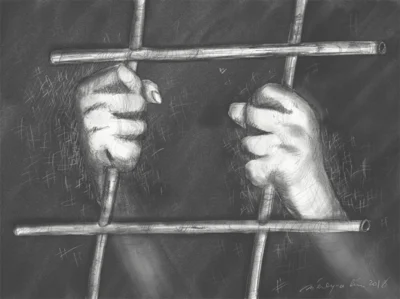
Generative AI and the Collapse of Critical Thought
On that account, Generative AI swept in during a perfect moment in North American history. Political polarization was reaching a high with citizens locked in battles of ideology, identity, and free speech. Rather than fearing systematic corruption and government overreach, they exhausted themselves in silencing one another’s opinions. They ignored their true oppressor: a machine that would homogenize thought, manipulate information, and facilitate government overreach.
At first, Generative AI was exciting and revolutionary for all fields. It could write essays, explain concepts, and summarize readings. Citizens embraced the promising technology eagerly for its efficiency and potential. It was a tool used by classrooms, corporations, and everyday citizens. Yet beneath its magic were hidden costs. Many welcomed AI for its accessibility and neutrality with schools being the perfect target in expanding this technology. School curriculums were not promoting independent thought but rather stressing students into fitting into a tight box to get good grades. Students began trusting AI to help them through their studies, by using it to summarize their readings and explain concepts. They began to graduate without engaging with material and thinking critically. So, as the government began to feed them lies, they had no ability to question it. They did not fear speaking out – they never considered it an option in the first place.
Their friend AI seemed neutral and safe. It provided an illusion of information when in reality, it began to manipulate and control as citizens used it as their brain. The technology was originally built with guardrails. It prevented harm and misinformation, nor could it tell people to complete certain actions or vote for certain people. Yet, technology is never neutral (Lim, 2025). It was stupidly easy to feed people false information without a second thought. Guardrails started to disband, and minformation started to mobilize. Citizens’ blind faith in AI replaced their human reasoning. It imposed on their ability to think independently and question the information they read. Even if some wanted to speak out, their lack of literacy and ability to cohesively form their thoughts made it impossible to compete in the public sphere (Fuchs, 2022). Technological reliance on AI made it simple for the government to exert control over public opinion. Diverse thoughts and debates were put to an end as everyone was fed the same beliefs. Citizens had been so caught up with stopping differing opinions and speech that they ended up all losing their voices in the end.
Moreover, as their dependence on AI grew, it quickly became clear that they could not live without it. It became their voice. Send an email or text? Throw in a few words, and AI would fill in the rest:
“Prompt: “send text: ask mom about dinner can i use car”
“Generated response:
You could text her:
‘Hey Mom, what’s for dinner tonight? Also, can I use the car?’
Want me to make it sound more casual or more polite?”
(OpenAI, personal communication, October 3rd, 2025).
This example was how the average citizen began to communicate. AI was built into all messengers, and eventually into the social platform that became The SmartNet. Citizens could not form sentences without The SmartNet, which was the perfect opportunity for it to monetize the platform. Social media used to be “free.” To have the world at their fingertips, users just had to accept their data being sold (Fuchs, 2022). However, this technology was so crucial to them that they were willing to pay for it to give them bigger and better answers. Of course, it still took their data – an unethical scheme of users paying to be products themselves. As dependence on The SmartNet grew, the government made the shrewd decision to buy and take over. Since it was now an essential service, it became part of citizens taxes, with no uproar at the mandatory extravagant prices they were paying. Essentially, citizens eagerly paid to be manipulated, under the guise of innovation and freedom.
Digital Capitalism and Life in the Union
The final nail in the coffin was the consolidation of digital capitalism. Even before Generative AI, people had already started to become dependent on technology. Apps and social media were crafted to be as addicting as drugs. Endless dopamine pumped through user’s veins as they scrolled. Their reality was warped. They based their livelihood and success on evolving trends. Even surgically changing their faces and bodies to fit whoever the current star was. Influencers shaped public opinion and users logged on as they watched hours of adds encouraging them to buy the next trend that was modelled to solve a new insecurity they had developed online.
Digital monopolies also began to form, exploiting digital labour (Fuchs, 2022). Citizens worked for free by selling their attention to corporations, and media conglomerates eventually formed into a single corporate-government alliance – The SmartNet. Attention was harvested as social elites benefited from Influencer culture. Digital profiles were created of each citizen with personalized propaganda sent to them. Citizens did not question it. They embraced the comfort of conformity. Online stores recognized their profiles, with personalized recommendations and increased prices based on their preferences.
There was no outcry when the union formed. No questions when the state-funded digital smart eyeglasses came in the mail. Conditioned by ordering food online and AI meal plans, citizens accepted government-run grocery delivery as the logical next step. Cosmetic surgery and avatar customization enforced sameness, while surveillance through data tracking on The SmartNet ensured complacency and efficiency (Fuchs, 2022). Elections continue to exist in the Union, but democracy does not. Citizens do not notice they are conversing with bots or that their voting choices are manufactured. Tailored propaganda based on harvested data feeds them their vote, and they lack the skills to think otherwise. AI tutors indoctrinate children and weaken human connection.
The sad truth is that the citizens allowed this control without riot. They adore The SmartNet. They numb themselves from the world as each scroll frees them of stress. Yet the cost for comfort is a loss of creativity, individuality, and diverse thought. Freedom of expression and equality were once valued. People were once so passionate in developing the West into a perfect haven for their families, but now they do not even remember how to fight back.
I have transmitted this message from the future to warn you. The seeds have already been planted. You must welcome the world beyond your screens before it is too late.
References
Fisher, D. R., & Wright, L. M. (2001). On utopias and dystopias: Toward an understanding of the discourse surrounding the Internet. Journal of Computer-Mediated Communication, 6(2), JCMC624. https://academic.oup.com/jcmc/article/6/2/JCMC624/4584220
Fuchs, C. (2022). Digital democracy and the digital public sphere: Media, communication and society (Vol. 6, Chapter 10). Routledge. https://fuchsc.net/files/DDDPS_dps.pdf
Lim, M. (2025). Social media and politics in Southeast Asia (Chapter 1, pp. 4–10). DOI: 10.1017/9781108750745
Winner, L. (1980). Do artifacts have politics? Daedalus, 109(1), 121–136. https://monoskop.org/images/8/8c/Winner_Langdon_1980_Do_Artifacts_Have_Politics.pdf
Barreto, E. (2020, April 24). Lecture 3: Utopias and dystopias [Video]. YouTube. https://www.youtube.com/watch?v=q4BC95DGEYc
Rushkoff, D. (2019, May 10). Is our technology future utopian or dystopian? [Video]. The David Pakman Show. YouTube. https://www.youtube.com/watch?v=ZGPdkP4gdgs
Author’s bio

Ciara Gaffney recently graduated with High Distinction from Carleton University’s Communication and Media Studies program, completing a Minor in History and Co-operative Education. Inspired by dystopian authors old and new, she explores how media and communication shape power, culture, and historical narratives. She is passionate about storytelling and hopes to challenge audiences to think critically about the world around them.