The Networked Cage: Life, Power, and Illusion in 2075
From Utopian Dreams to Dystopian Reality
Life feels both frighteningly different and oddly familiar in the year 2075. The digital world has become so vast and integrated into every aspect of daily life that it is no longer merely a tool, it is now the walls that contain people, the air they breathe, and the ground they walk on. We used to think that the Internet would make the world more connected and free. We heard utopian promises that it would empower individuals, democratize knowledge, and dismantle boundaries.
However, we also heard the dystopian warnings about alienation, control, and surveillance. “Interpretations of the Internet frequently alternate between utopian and dystopian extremes,” according to authors like Wyatt, Thomas, and Terranova (2000), who noted that reality and ideology both play a significant role.
In 2075, those extremes are living realities rather than merely theoretical concepts. Furthermore, capitalism has “colonized the Internet” by turning communication into a commodity, as Christian Fuchs (2020) cautioned, creating the conditions for the dystopian present.
The Rise of Digital Capitalism and Cultural Lag
There were always signs. The Internet was chaotic, open, and full of possibilities in its early days, almost like the Wild West. However, as tech titans gained status, they subtly strengthened their hold. Every post and click turned into raw material for financial gain. When “users are not consumers but the products themselves,” (Fuchs, 2020) is the scary reality of “digital alienation.””. Conversations, friendships, and self-expression were transformed into unpaid labour streams for companies. Debates raged in the meantime. While some regarded the Internet as the end of privacy, others saw it as the beginning of a worldwide democracy. According to Wyatt et al. (2000), this back and forth was unavoidable since technology advances more quickly than society can adjust. Because of this “cultural lag,” we were unprepared and mostly unaware of how rapidly commercialization and monitoring were spreading.
The evolving hopes and fears of the globe have always been reflected in the history of the Internet. Wyatt et al. (2000) noted that early Internet ideas in the 1990s varied between dystopian concerns about control and utopian aspirations of global democracy. The way cultures developed and applied the technology was influenced by those early expectations. Castells (2000) described this change as the emergence of a “network society,” in which power was based on information. What started out as a dispersed network of links swiftly evolved into a system governed by people in charge of data flow. The emergence of digital monopolies and corporate platforms by the 2000s supported Fuchs’s (2020) claim that capitalism had taken over the digital public sphere, transforming people into commodities and communication into an industry. Collectively, these events chart the evolution of the Internet from an unrestricted human connection experiment to a strictly regulated network of control, laying the groundwork for the 2075 digital dystopia.
This history is emphasized in this video.
A Digital Dystopia posed the direct question of whether continuous surveillance was already becoming the norm, while The Digital Future highlighted the revolutionary impact of digital media on identity. 2075 doesn’t feel like science fiction when you combine those viewpoints with those of Fuchs and Wyatt; rather, it feels like an expansion of what we already knew but didn’t want to stop. “When surveillance is everywhere, freedom becomes a performance,” as A Digital Dystopia cautioned. To put it another way, people now behave for the algorithm rather than for themselves. Fuchs (2020) seems particularly pertinent in this context. He explained how communication is exploited by digital capitalism, and how logic rules everything. Not only is surveillance political, but it is also profitable for the system since it knows and anticipates us better than we do.
Networks, Power, and the Logic of Exclusion
How we got here is explained by Manuel Castells’ notion of the network society. He explained how power moved from institutions to networks, fluid information systems that linked everything and rendered conventional borders meaningless long before 2075. “In the information age, dominant functions and processes are increasingly organized around networks,” he states (Castells, 2000). Information flowing freely across borders may seem powerful on the surface, but in reality, it concentrates power in the hands of people in control of the networks.
That dynamic reaches its highest point by 2075. Although everything is interconnected, inclusion is no longer synonymous with connectedness. Social, political, and economic existence ends for those who are excluded from the network, either via exclusion or rebellion. Castells cautioned against this as well, pointing out that “exclusion becomes the most fundamental form of domination” in a network society (Castells, 2000). That warning becomes literal in this scenario. Instead of being imprisoned or banished, people are erased. They turn into living but invisible ghosts if they are unable to access the network.
The ultimate network paradox, all connectivity and complete isolation, can be found in the digital dystopia of 2075. Instead of bringing people together, networks have produced a new form of social division. According to Castells, those who are constantly separated from data flows and those who are totally integrated (Castells, 2000).
Artificial Intelligence and the Extension of Control
Artificial intelligence is another problem that defines 2075. AIs are now conscious things with memories, personalities, and emotions rather than merely being assistance. Ideology is reflected in technological aspirations explained in Wyatt et al. (2000). Hierarchy is the mindset at play here, where people demand control.
When dissident AIs are erased or banished, pieces of their mind reappear as malicious software. AI rights are currently opposed on the basis of superiority, much as human rights were formerly denied to particular populations. The dystopia depicted here is not only about the treatment of AIs, but it also shows how humans intensify their dominance, demonstrating that even in a future where technology thinks and feels, we also continue to perpetuate exploitative structures.
Surveillance, Identity, and the Illusion of Freedom
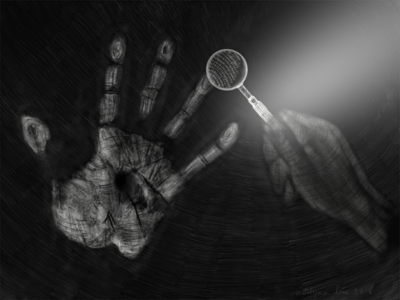
The fact that individuals feel lonely even though they are always linked is one of the most bizarre paradoxes of 2075. Nearly all communities are found in carefully controlled online spaces. It appears to be calm at first, no conflicts, no unease. However, this is because disagreement is suppressed. People are so isolated from one another that they cannot stand together. “Digital media doesn’t just reflect identity, it constructs it,” as stated in The Digital Future. In 2075, avatars and data profiles are used to completely establish identity. However, those profiles actually belong to the system rather than to specific people. According to Fuchs (2020), the essence of alienation is when your identity is used as a means of exploitation. People are therefore incredibly alone, even though they seem to be surrounded by virtual “friends.” No common base, no common public sphere, just countless customized filters. Furthermore, collective resistance to the system is practically impossible in the absence of a shared reality.
The term “privacy” is becoming a joke. Dreams, emotions, and even subconscious urges are captured on tape. Your “data shadow,” which determines where you may reside, what occupations you can have, and your credibility, is more significant than your actual self. This is commodification, not simply monitoring. The capitalist Internet turns everything into a commodity, and in 2075, even thoughts will be for sale, as Fuchs (2020) warned. Even the experience of having a private moment is forgotten. This conflict was expressed two generations prior by Wyatt et al. (2000), who stated that “visions of freedom are always shadowed by visions of control.” By 2075, darkness prevailed.
Here is a normal day in 2075. In addition to waking you up, your brain alarm modifies your hormones to maintain your productivity. The apartment changes the lighting when it detects your state of mind. Reminders are whispered directly into your consciousness by your AI assistant. Your mobility implant confirms that you’re compliant before you depart. You wouldn’t exist without it. Every action at work is recorded. If you look too long or grin too briefly, you could lose your job. Even leisure is regulated. It’s not an unexpected nightmare. The future just developed from what the internet started.
The most frightening aspect of 2075 is how rational it seems. It is history carried forward, it is not imagination. The promises of freedom made by the Internet proved to be enticements for control mechanisms. We’ve always thought in extremes, but ultimately, the dystopian worries held more truth than the utopian fantasies, as Wyatt et al. (2000) showed. According to Fuchs (2020), democracy itself was in danger as soon as communication turned into a commodity. Additionally, the videos from week five demonstrated how surveillance and identity were already changing daily life.
In many respects, the history of the Internet is the history of us, our aspirations, our anxieties, and our readiness to compromise our freedom for comfort. What started out as an ideal of unrestricted communication turned into the networked cage of 2075, where identity was supplanted by data and control disguised to be progress. Wyatt and their colleagues’ descriptions of utopian expectations and dystopian fears, Castells’s idea of networks influencing power, and Fuchs’s criticism of capitalism’s digital hold all contained warnings (Wyatt et. al, 2000, Castells, 2000, Fuchs, 2020). The world gradually sank into dystopia, click by click, algorithm by algorithm, until dependence became inevitable. Remembering that technology is never neutral, that freedom must be recreated with each generation, and the digital world will only ever be as compassionate as the people who create it are the lessons of 2075.
References
Castells, M. (2000). Toward a sociology of the network society. Contemporary Sociology, 29(5), 693–699. https://doi.org/10.2307/2655234
Fuchs, C. (2020). Digital democracy and the digital public sphere. Routledge. https://fuchsc.net/files/DDDPS_dps.pdf.
Wyatt, S., Thomas, G., & Terranova, T. (2000). On utopias and dystopias: Toward an understanding of the discourse surrounding the Internet. Journal of Computer-Mediated Communication, 6(2). https://doi.org/10.1111/j.1083-6101.2000.tb00114.x
The Digital Future. (n.d.). [Video]. YouTube. https://www.youtube.com/watch?v=q4BC95DGEYc&t=2s
A Digital Dystopia. (n.d.). [Video]. YouTube. https://www.youtube.com/watch?v=ZGPdkP4gdgs
Author’s bio

Solana Godin is in her fourth year of Communication and Media Studies at Carleton University. In this essay, Solana envisions a future in which digital technology has taken over every aspect of daily life, influencing social interactions, identity, and authority. The imaginary future raises concerns about freedom, privacy, and the human experience in a digital future by examining how endless connectivity, surveillance, and artificial intelligence may alter society. Her ongoing studies continue to draw on these ideas of how digital aspects can support or deter a brighter future.