Carleton’s ‘The New Ottawa Hospital’ Capstone Project Selected as Most Distinctive CEE Project
On February 5th, 2026, three groups of 4th year undergraduate Civil & Environmental Engineering students presented in an internal capstone competition to a panel of judges and their fellow classmates to find out which was the most distinctive project.
On the evening of February 5th, what would usually be the lecture session for the CIVE/ENVE/ACSE 4918 course was transformed into a capstone project presentation stage. Professor Shawn Kenny and two of his Teaching Assistants sat at the judges table with their rubrics ready to hear our students’ ideas. Each team was given a 30-minute slot in which they would present for 15 minutes and open the floor for for a Q&A for another 15 minutes.
By the end of the 90 minute session, the two representatives from each team joined their teammates in their seats, patiently waiting to hear the judges’ results.
After much anticipation, Professor Shawn Kenny came back into the room to announce that ‘The Ottawa Hospital’s New Campus’ project had been selected as the most distinctive capstone project within the Civil & Environmental Engineering Department.
Learn more about the three capstone projects presented by our CEE students that evening:
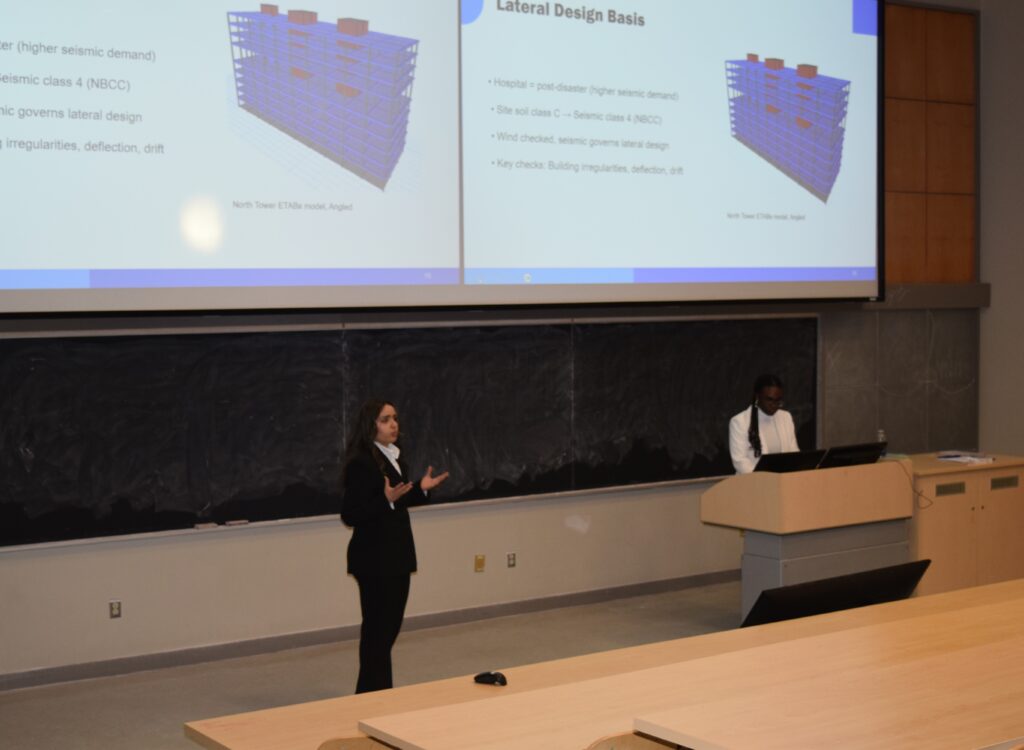
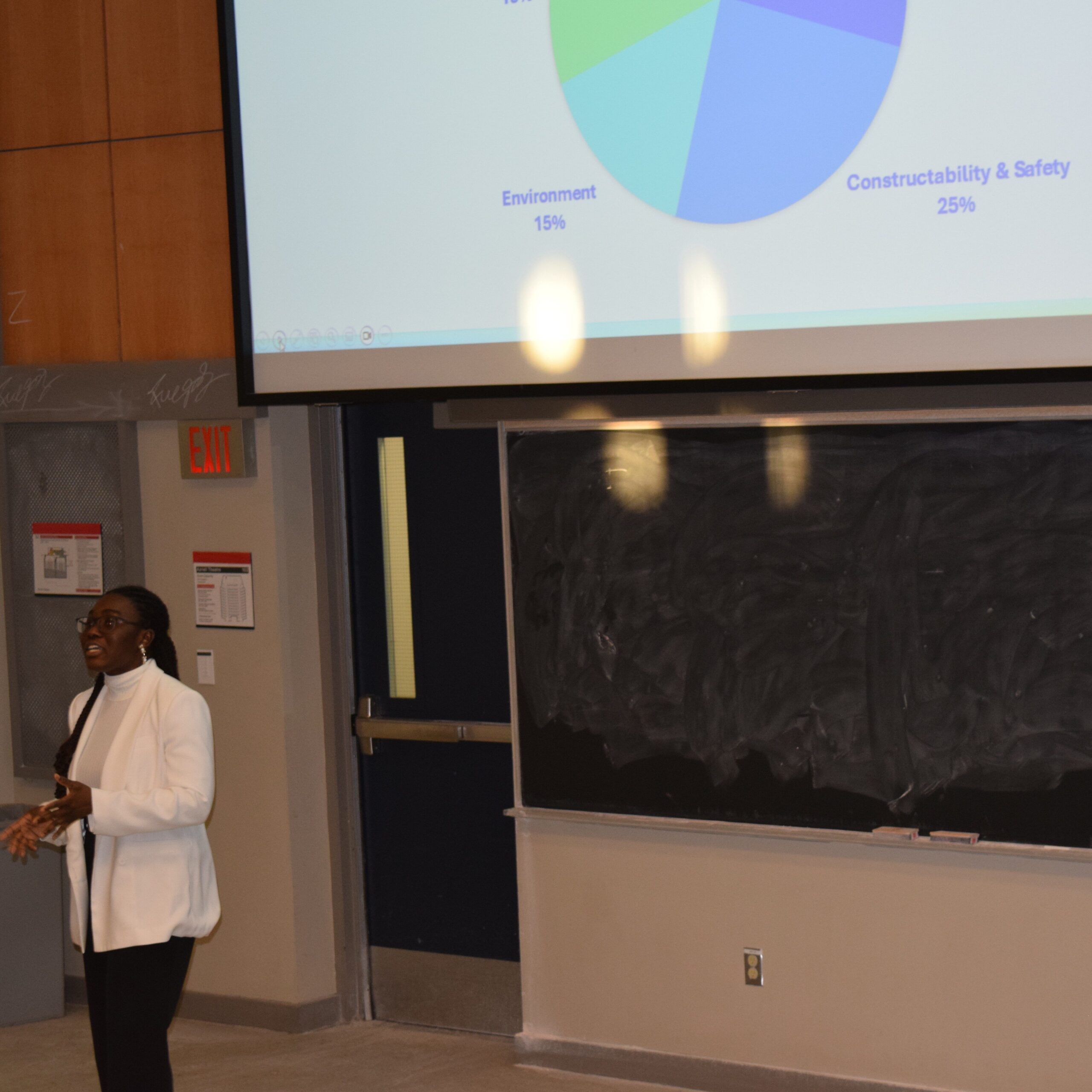
‘The Ottawa Hospital’s New Campus’ presented by Armita Ghannadbashi & Nimi Tella
Project Summary
A structural engineering design project for the new Ottawa Civic Hospital’s development. We aimed to emulate the role of a structural consultant by following architectural drawings for the hospital. The hospital presents many challenges in structural design, including high-performance requirements and unique building configurations.
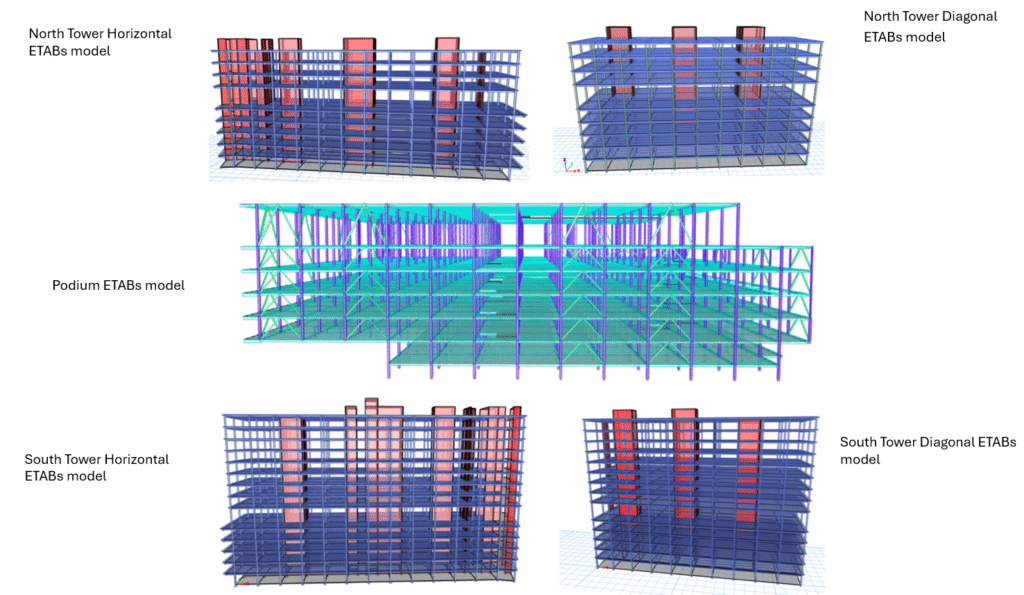
Figure showing the Structural breakdown of the New Ottawa Hospital using ETAB models
What was the highlight of your experience developing this capstone project as a team?
“The highlight was working on a real-world project where we could apply what we learned in class, with valuable guidance from our supervisor, Professor Ahmed Hassan, and industry mentor, Ian Fuller, throughout. It was also rewarding to collaborate as a team, taking on different tasks and bringing everything together toward one shared goal,” 4th year Civil Engineering student, Nimi Tella, shares in an email.
What has been the biggest challenge in the development of your capstone project thus far?
Tella tells us, “The biggest challenge so far has been the complexity that comes with managing a real-world project. This capstone project is large in scale, requiring each building to have its own design approach while addressing a wide range of considerations. This made coordination and decision-making more demanding. In addition, working with ETABS presented its own difficulties, particularly in ensuring that our software analysis results aligned closely with our hand calculations, which was essential for verification and confidence in the structural integrity of the model.”
Upon being selected as the most distinctive project, Tella notes “…we want to sincerely thank our professor, Dr. Ahmed Hassan, for his continuous support and dedication throughout this project, his guidance played a big role in helping us win this competition. We also want to thank our industry mentor, Ian Fuller, for his valuable feedback and steady support from start to finish.”
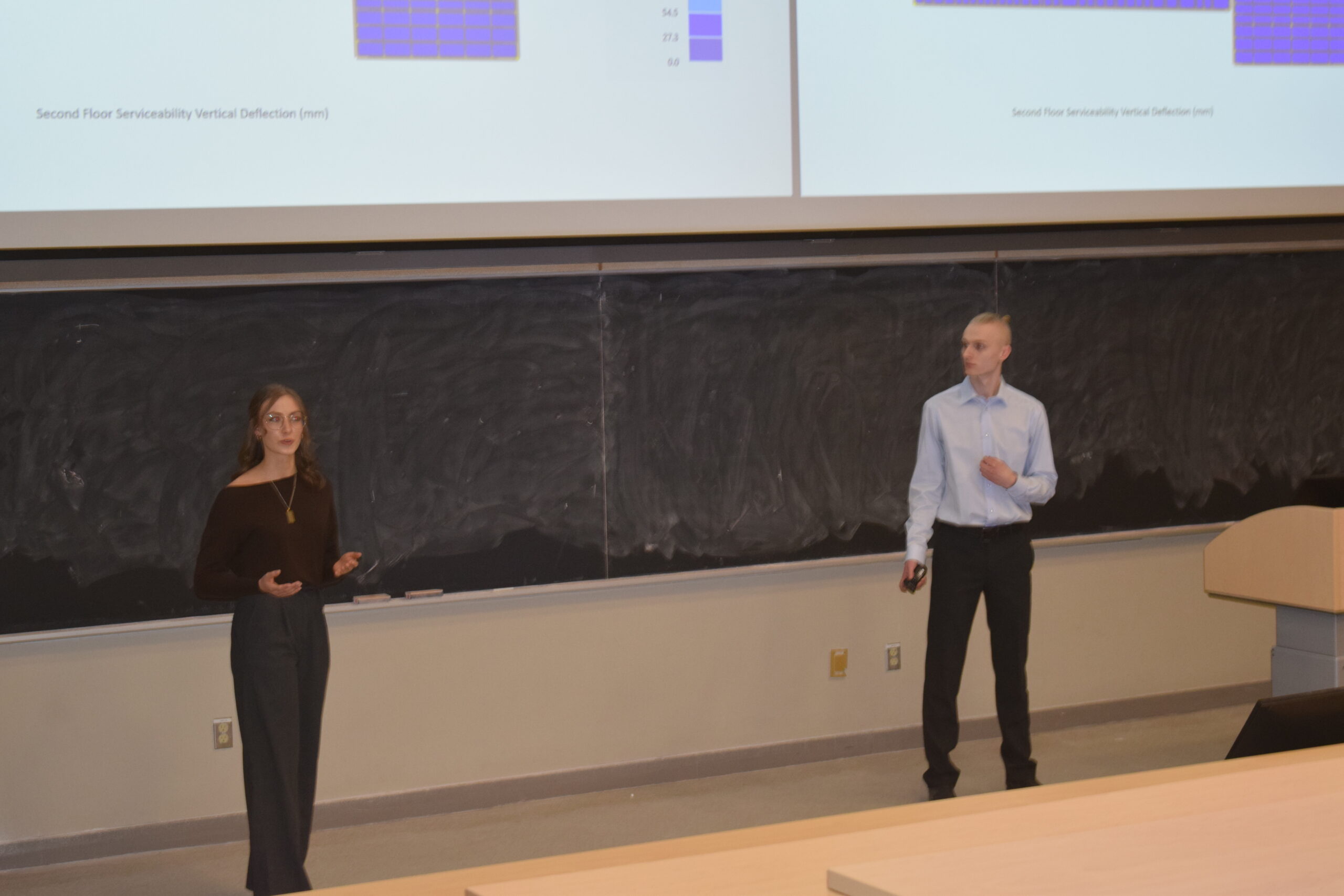
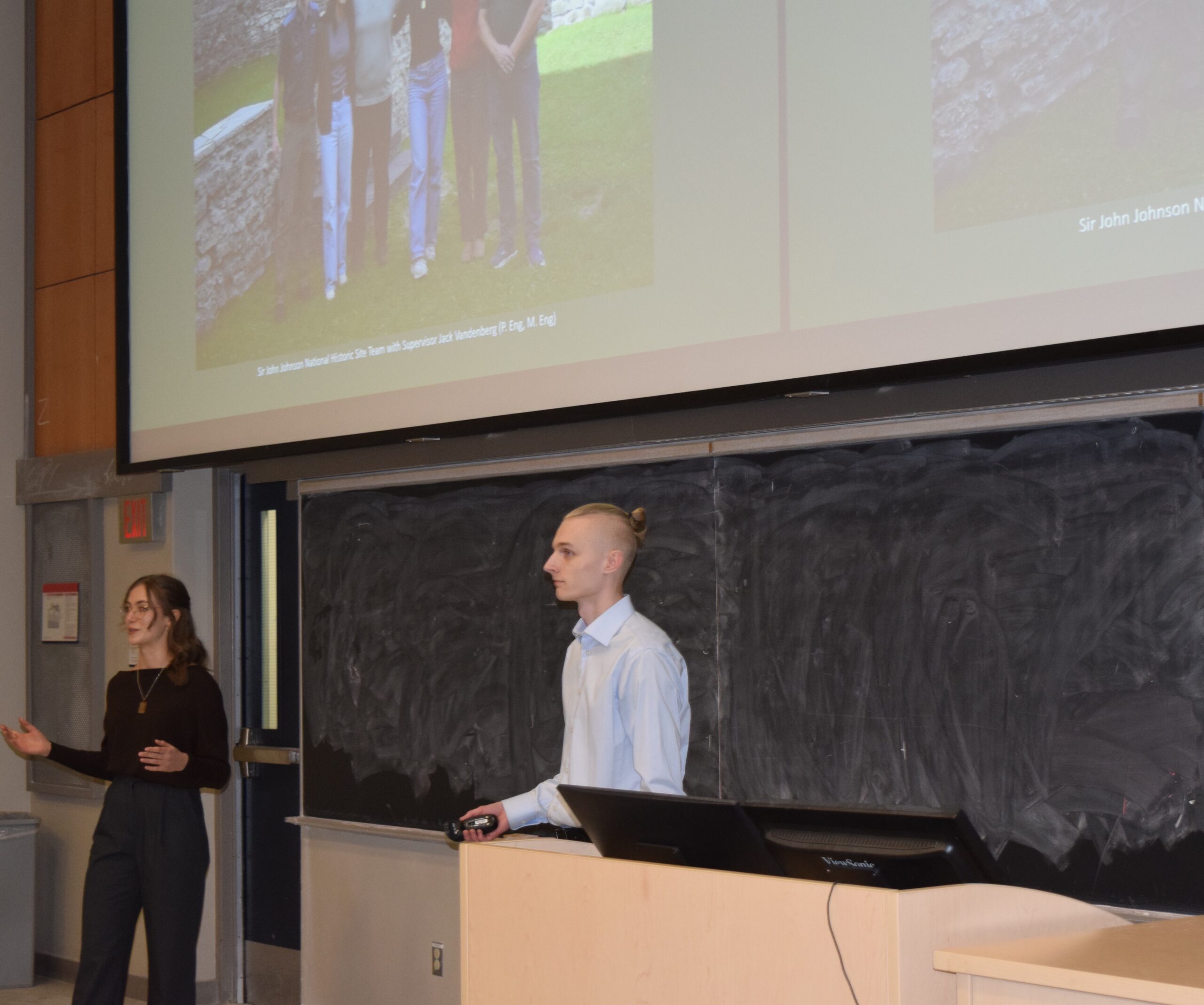
‘Sir John Johnson National Historic Site’ presented by Maclean Crowdis and Spencer Watson
Project Summary
The group tells us that their project, done on behalf of Parks Canada, focused on designing a thoughtful rehabilitation and maintenance strategy for four buildings on the Sir John Johnson House National Historic Site. The Manor House onsite is one of the oldest homes in Ontario and represents Canada’s unique settlement history with its pièce-sur-pièce construction method. Our detailed design solutions focused on balancing structural performance with client needs and preservation of heritage value, resulting in four complete designs to enhance the history and structural longevity of the site.
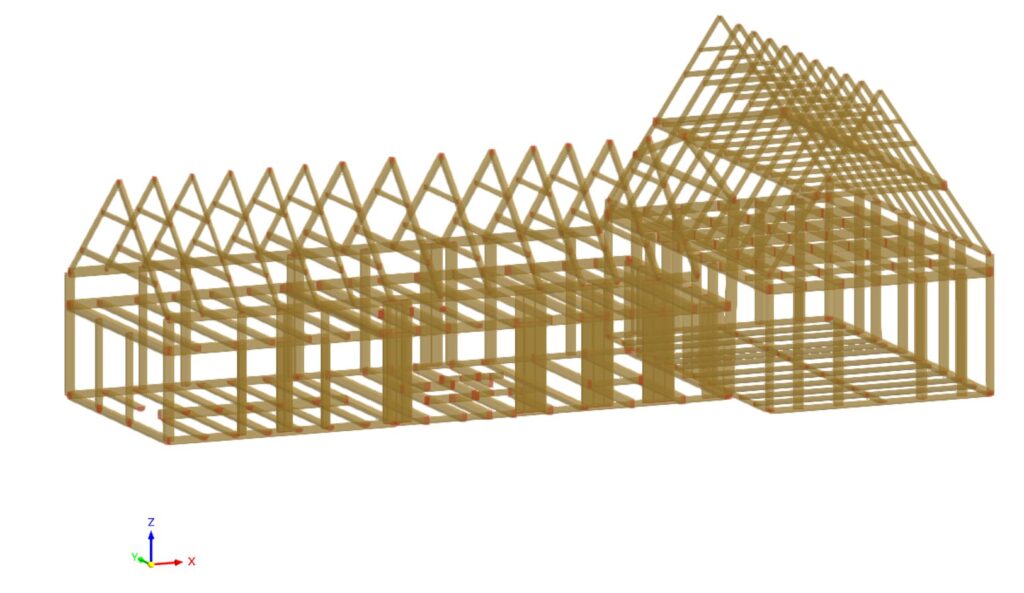
Dlubal Structural RFEM model of the Manor House
What would you like folks to takeaway from your capstone project?
“In our current climate of fast-paced global changes, it’s more important now than ever to maintain Canada’s heritage and history. With rehabilitation and adaptive reuse playing a growing role in our country’s built environment, our project aims to showcase how critical engineering judgement and integrated technical solutions are required to preserve nationally significant structures sustainably,” Maclean Crowdis, 4th year Architectural Conservation and Sustainability Engineering student, tells us in an email.
What has been the biggest challenge in the development of your capstone project thus far?
“There are many design challenges in heritage conservation work that are not present when dealing with a new build. Some of the main challenges we overcame were:
- The historic pièce-sur-pièce construction technique in the Manor House is no longer used, and thus is very challenging to model in commercial software. Accounting for the fact that each member was hand-hewn, with different sizes and spacings, made for a unique degree of intricacy in our structural models.
- We were dealing largely with unknown construction materials, which we solved by conducting extensive historical research, onsite inspection, wood species testing (with help from the Laurentian Forestry Centre), MQI tests, and using other methods of analysis.
- One of the buildings on-site was an unreinforced masonry structure experiencing differential settlement due to soil overloading; currently, there is no standard commercial software procedure for reliably modelling its behaviour under seismic loading. To solve this, we created our own linear-elastic MATLAB model using finite element methods.”
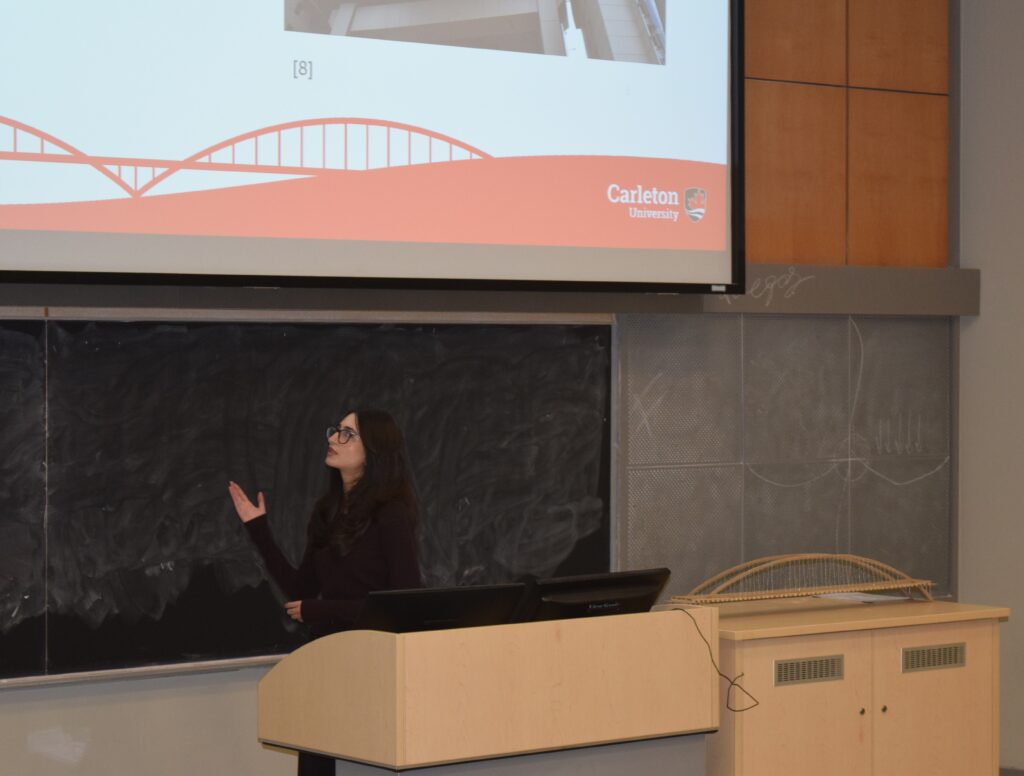
‘Alexandra Bridge Replacement Project’ presented by Hala Al Shawa & Sophie Cormier
Project Summary
Our project objective is to design a replacement for the Alexandra Bridge as the existing bridge is at the end of its lifespan. The project follows the NBCC guidelines as well as the public opinion to develop a design that preserves and honours the cultural, heritage, and environment. To achieve these goals, we have chosen to design an arch bridge which will be one of the longest span arch bridges in Canada.
What has been the most rewarding and challenging parts of this process?
“The most rewarding part was collaborating as a team and seeing our ideas come together in a complete design for the Alexandra Bridge. Presenting our final design and knowing how much work went into it was really satisfying. Since we hadn’t previously studied bridge design in depth, there was a steep learning curve especially within a limited timeframe to grasp advanced engineering concepts. However, working through these challenges as a team helped us develop new skills, and we’re really proud of how far the project has come,” said Al Shawa, a 4th year Architectural Conservation and Sustainability Engineering student.
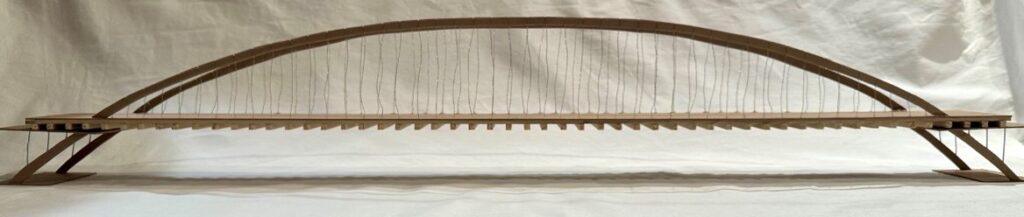
Fig 1. Arch Through Bridge Main Span Hand-constructed Model
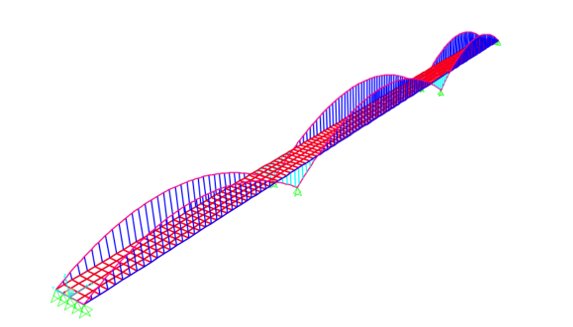
Fig 2. CSI Bridge Arch Through Bridge Model
What’s Next?
Stay tuned for the 4918 Capstone Design Project presentations, where all groups will be showcasing their projects at the Engineering Design Centre on March 9th at 9am! Join us to learn more about all the other group’s capstone projects and enjoy some light refreshments with us while doing so.