Graduate Programs in Building Engineering
Table of Contents
Building Engineering at Carleton offers advanced interdisciplinary training on building systems and concepts including mechanical and electrical systems, fire safety, energy and comfort performance, envelopes, controls and operations, structures, and heritage and existing building retrofit and rehabilitation.
Graduate degree programs leading to M.Eng. (coursework with a project option), M.A.Sc. (thesis-based), and Ph.D. in Building Engineering are offered in three different concentration areas:
- Building performance: This concentration area is focused on improving all states of the building life cycle (design, construction, operations, retrofit/demolition) with regards to energy, greenhouse gas emissions, and occupant comfort. Students will develop thorough understanding of both passive and active building systems, energy, comfort, building performance modelling and simulation, indoor environmental quality, advanced data analysis, and in-situ/field measurement approaches.
- Heritage conservation: This concentration area is focused on studying, measuring, analyzing existing and historic buildings – with the objective to conserve them through technical recommendations without compromising their authenticity and integrity. Key areas include advanced techniques for in-situ measurement (e.g., 3D scanning, photogrammetry, non-destructive techniques, material sampling and analysis), digital modelling of existing buildings, seismic assessment, structural health monitoring, advanced computational modeling of historic structures, and restoration/retrofit analysis.
- Fire safety engineering: This concentration area encompasses structural fire engineering, materials’ reaction to fire, combustion and fire dynamics, smoke management, fire modelling, fire detection and suppression, and behaviour of people in fires. Graduate students in this concentration area will employ both computer modelling and experimental approaches and require a strong background in heat transfer and fluid dynamics.
Admission
Application Process and Requirements
The requirements for admission for the MEng and MASc programs will be to hold an undergraduate degree from an engineering or related program (deemed acceptable by the Director and supervisor(s)) with at least a B+ average. The requirements for admission for the PhD program will be to hold a master’s degree from an engineering program with at least an A- average.
In the event that the Director deems applicants’ educational background inadequate, students may be admitted on the condition that they take one or more courses to complete their Building Engineering degree program. The following courses (or equivalents, as evaluated by the Director) are required for admission into any of the programs (example Carleton course codes provided):
- Calculus I
- Linear Algebra I
- Thermodynamics and/or heat transfer
- General or applied physics
- A course with a substantial technical computer and/or hand-drawing element
- A course with at least an element of basic computer programming or demonstration of programming skills
An exception to the general admission procedure for the PhD program will be the fast-tracking from MASc to PhD. Students enrolled in the MASc in Building Engineering program at Carleton University may be permitted to transfer into the PhD program without completing the master’s program provided they meet the following conditions:
- Completion of 2.5 credits of master’s courses with a minimum average of A-;
- Demonstration of exceptional research potential;
- Formal application for admission to the PhD program no later than the fourth semester of initial registration in the MASc program;
- Permission from the Director of the Building Engineering Programs.
Applicants for Master’s of Applied Science (M.A.Sc.) and Doctor of Philosophy (Ph.D.) in Building Engineering must have a thesis supervisor. Depending on concentration area and ongoing research projects, each professor may have different standards for admission. M.A.Sc. and Ph.D. applicants are recommended contacting professors that are most suitable to their research experience and interests before submitting a formal application.
Degree Requirements
Please review the Graduate Calendar to find the degree requirements for all Building Engineering programs.
Course Offerings
Course descriptions are available on the Carleton University Graduate Calendar.
Financial Support
M.A.Sc. and Ph.D. students are offered a competitive funding package upon admission. These funds are comprised of scholarships, teaching assistantships and research assistantships.
Applicants are encouraged to discuss the exact level and the details of their funding package with potential supervisors as early as possible during the application process. Note that the actual funding level can be higher than the above-mentioned minimum amount if the student receives external awards or a higher Research Assistantship.
International Ph.D. students also receive an International Doctoral Tuition Support, reducing their tuition to the amount paid by domestic Ph.D. students in the same program.
Aside from the funding package offered at admission, there are external awards including:
• NSERC Postgraduate Scholarships for M.A.Sc. students ($27,000 per year) and for Ph.D. students ($40,000 per year)
• Ontario Graduate Scholarship for M.A.Sc. and Ph.D. students $15,000 per year.
•Fonds Québécois de la Recherche sur la Nature et les Technologies for M.A.Sc. and Ph.D. students $15,000 per year (available for Québec residents only).
Applications for all these must be submitted in late September, and the scholarships are awarded in late March.
Faculty Members
Professors in Building Performance Engineering
Liam O’Brien

Scott Bucking

Burak Gunay

Elie Azar

Cara Lozinsky

Professors in Heritage Conservation Engineering
Mario Santana

Bora Pulatsu

Professors in Fire Safety
Mohamed Beshir
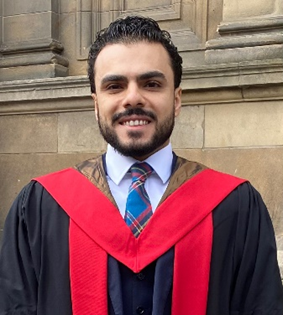
Hamzeh Hajiloo

Ehab Zalok

Facilities & Research Centres
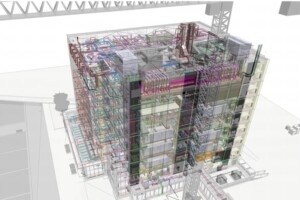
Building Performance Research Centre (BPRC)
BPRC seeks to advance the state of the art in building and community design and operations for low energy and greenhouse gas emissions, while improving comfort and usability.

Carleton Immersive Media Studio (CIMS)
CIMS is involved in four streams of inquiry: Digitization, Modelling, Digitally Assisted Fabrication, and Digitally Assisted Storytelling. These diverse research interests have cultivated a multi-disciplinary team.
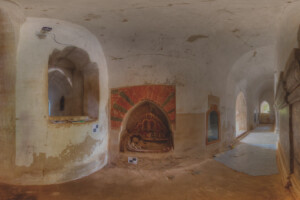
NSERC CREATE Heritage Engineering
The long-term objective of the NSERC CREATE Heritage Engineering program is to produce a cohort of trainees with technical and professional skills that are relevant to Canada’s built heritage industry.
International Students
Building Engineering Programs receive a large number of applications each year from well-qualified visa students for a limited number of positions. Only students with background from a relevant engineering degree with high honours in their country (alternatively defined as 80% or above from universities with a percentage system, 3.0 on a 4 GPA system, 15 out of 20 on the 20 point system) and a high ranking in their graduating class should consider applying. In view of the limited financial resources available at the Institute, preference will be given to applicants who have obtained a scholarship external to Carleton University, which would support their proposed degree program.
The academic year starts in September and students generally first register in the Fall semester. For registration in September, in most cases the student’s file should be complete by March 1st. Other applicants will be processed but will have little prospect of receiving financial support. The universities and the individual professors generally make their decisions concerning financial support/aid by April 15th.
International students studying in Ontario need to cover the combined cost of tuition fees and living expenses. While the cost of living varies from one person to another, our best estimate living expenses (excluding tuition fees) is CAD $20,000/year. Visit this page for more information about costs and fees.
International students admitted to the M.A.Sc. or Ph.D. program in Building Engineering may work as teaching and research assistants in addition to receiving additional scholarships. Your eligibility for teaching and research assistantships, and internally administered scholarships will be automatically assessed with application. International Ph.D. students also receive an International Doctoral Tuition Support, reducing their tuition to the amount paid by domestic Ph.D. students in the same program.
If you have further international admissions inquiries, please contact us at GradAdminEng@cunet.carleton.ca.