New Chair in Philanthropy Embracing Canada’s Building Moment
She’s only just arrived, but Jamie Levine Daniel can sense the atmosphere of momentum and excitement greeting her as the new Chair in Philanthropy in Carleton’s School of Public Policy and Administration (SPPA).
“I feel like I’m part of a building moment here. There’s a lot of excitement about the idea of philanthropy strengthening civic society, with research having a key role in that,” notes Levine Daniel, who has joined the Master of Philanthropy and Nonprofit Leadership (MPNL) program.
“There are a lot of questions right now about philanthropy, democracy, nonprofit organizations and the communities we’re serving that make this program, situated in Canada’s capital, the place to be at this moment.”
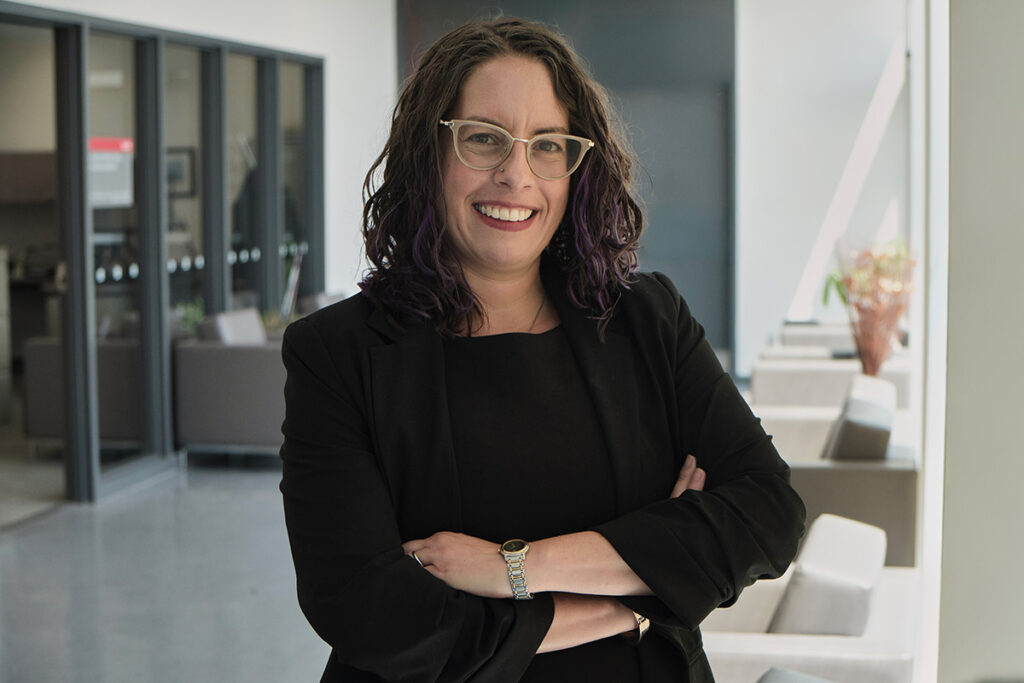
Funded by a collaborative group of donors from across the country, the Chair in Philanthropy is the first in Canada. It was created to leverage new resources and collaborate with sector stakeholders to generate and mobilize data that will support initiatives in the charitable and nonprofit sector. It is a key building block in establishing a world-class Centre for Philanthropy and Civil Society at Carleton University.
“This is an exciting time for Carleton University and the philanthropic community in Canada as we welcome Levine Daniel, a pre-eminent researcher who will be focusing on the unique characteristics and needs of philanthropy and nonprofits in Canada,” says Mary Francoli, Interim Dean of the Faculty of Public and Global Affairs.
“This reflects the leadership of Carleton and MPNL in the academic study of this important sector.”
A Safe Place for Research
In addition to joining Canada’s leading research program on nonprofits and philanthropy, Levine Daniel was also drawn to an institution, and a country, intentionally welcoming her research.
She studies justice philanthropy and specifically has been working with community foundations in the U.S. to address inherent racism in their historical practices through reflection on wealth and power.
Her other research focus is on cross-border philanthropy — specifically the flow of donations from U.S. NGOs to Israeli nonprofits — and how domestic actors can become international actors through these activities.
Both of these multi-year projects could be under threat due to changes in U.S. federal and state-level government policies.
“Starting last year, the U.S. government began reviewing research awards looking for certain keywords — things like equity, diversity, inclusion — and canceling funding. As a result, we paused our research and started talking about how to ethically conduct our work so we could protect the organizations we were working with,” Levine Daniel explains.
“We considered where our Zoom calls were hosted, how to communicate and how to store data.”
While Levine Daniel’s previous institution, New York University, supported her work, she had colleagues in other states who have had to remove any references to EDI, racism and justice from their projects. Now that she’s in Canada, she appreciates being in an environment where the work of nonprofits and civil society organizations is protected and valued.
“These organizations serve many purposes, including providing basic services that people need, such as food and housing, so that people can be fully functional members of society,” Levine Daniel explains.
“They also occupy a really interesting space as intermediaries between philanthropy, civil society and government. Sometimes these relationships are complementary, sometimes supplementary, and sometimes adversarial, but in a good way. We plan to look at all of these different aspects in our research.”
As the academic year begins, Levine Daniel is familiarizing herself with Canadian institutions and structures. Soon, she plans to reach out to Canadian organizations, seeking partners in future projects that may build on the work she has begun in U.S. Those projects will also increase understanding, and help strengthen, Canada’s burgeoning nonprofit and philanthropic sectors.