Carleton Student Eyes AI Health Solutions
By
Dan Rubinstein
Photo Credit:
Precious Kolawole
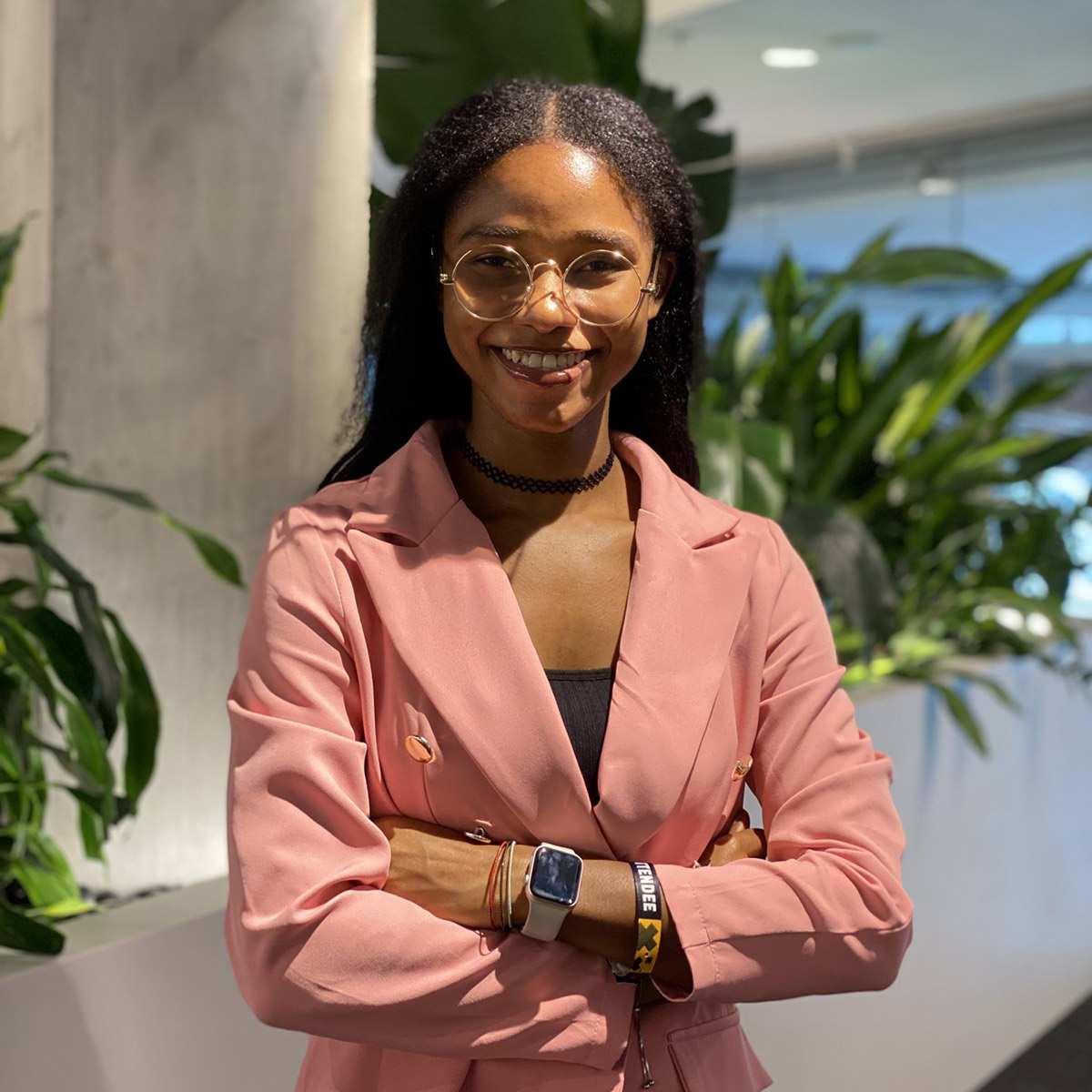
Growing up in Abeokuta, a mid-sized city in southwestern Nigeria, Precious Kolawole was certain of two things. She was going to attend university and, eventually, make a career for herself in healthcare.
Even though neither of Kolawole’s parents had much post-secondary education, it had been their dream before getting busy with work in construction and the church and raising a family. Her older siblings followed the university path, one studying engineering, the other finance, which left medicine — “the only other suitable role,” she smiles, “in a middle-class Nigerian household.”
Whenever anybody in the family was injured or sick, Precious jumped into action with bandages and ointments. Becoming a doctor seemed like her destiny.
But in 2020, her brother Steven saw a presentation by Nigerian ophthalmologist and tech entrepreneur Dr. Stephen Odaibo at a conference and excitedly told Precious what he heard.
Dr. Odaibo’s company, RETINA-AI, uses artificial intelligence to detect glaucoma, macular degeneration and other eye-related ailments. A lightbulb turned on above Kolawole’s head.
“That moment changed my life,” she says. “I realized you can apply AI technology to health issues and help solve problems that way.”
Although she had worked for three years after high school to afford classes at Nigeria’s Obafemi Awolowo University, Kolawole’s focus shifted from the medical rehabilitation program she was enrolled in to coding and data science.
She taught herself the programming language Python, joined organizations like She Code Africa and signed up for hackathons, including one in Tanzania that her team won by developing a machine learning model to help detect breast cancer from medical imaging.
Kolawole was still coding on her phone at the time because she didn’t have enough money to buy a computer. A local philanthropist heard about her success and sent a laptop.
By 2022, after winning Nigeria’s Ms. Algorithm Award as the country’s top female data scientist, Kolawole decided it was time to take another leap and applied to universities in Europe, the United States and Canada. That summer, she moved to Ottawa to begin her next chapter: a computer science degree at Carleton.
Ambition and Support
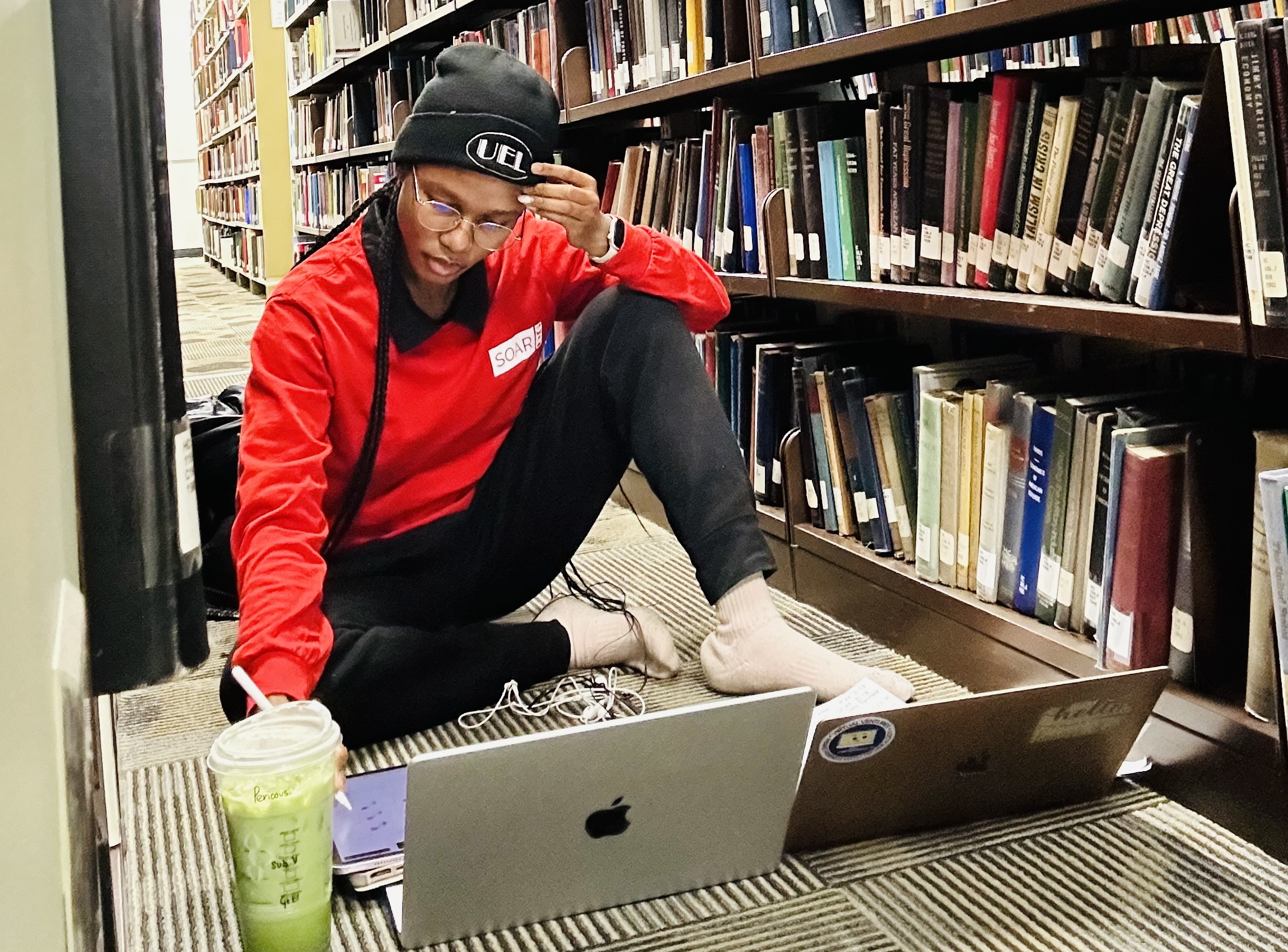
Already accustomed to balancing school and work, Kolawole seamlessly settled into a busy schedule of classes, studying, a paid internship as part of Carleton’s dev degree program and work as a teaching assistant. All of this while taking more than the standard course load each semester and summer classes so she can finish a four-year honours program in three years.
“I’m just really ambitious,” Kolawole says when asked how she manages this demanding workload, noting that Carleton’s welcoming community, plus additional support from Ottawa’s Nigerian community and a local church, helped her feel at home in Canada.
“I’m super energetic and I like to sit with problems until they’re solved. My brain doesn’t seem to get tired of that, like there’s some dopamine release when I’m trying to figure out coding or data challenges.”
In one of her biology classes, professor Jeff Dawson frequently told students that there were opportunities for undergraduates to get involved in research. She approached him one day and said she was majoring in computer science but aiming for medical school.
Dawson mentioned a project that one of his grad students, Katie Wiebe, was working on to improve diagnostic techniques for mild traumatic brain injuries, more commonly known as concussions.
One of the standard methods is to assess the eye movements of somebody who has received a knock on the head. People tend to have difficulty following a moving ball on a screen if they’re concussed.
Kolawole dove in. Her part of the project involves using hundreds of videos of eye movement to develop an algorithm that can determine whether an individual’s brain is injured — a summer gig that became her honours research.
“Precious’s software has helped us measure each patient’s eye movement and evaluate its usefulness as a classifier,” says Systems and Computer Engineering researcher Andy Adler, one of her supervisors.
“She’s able to rapidly transform examples and suggestions into working prototype machine learning software. Precious also has an amazing ability to handle lots of tasks at the same time.”
Refining Ultrasound Images
Heading toward the September 2025 completion of her degree, Kolawole is the recipient of a Black and Indigenous Summer Research Internship from Carleton’s Faculty of Science.
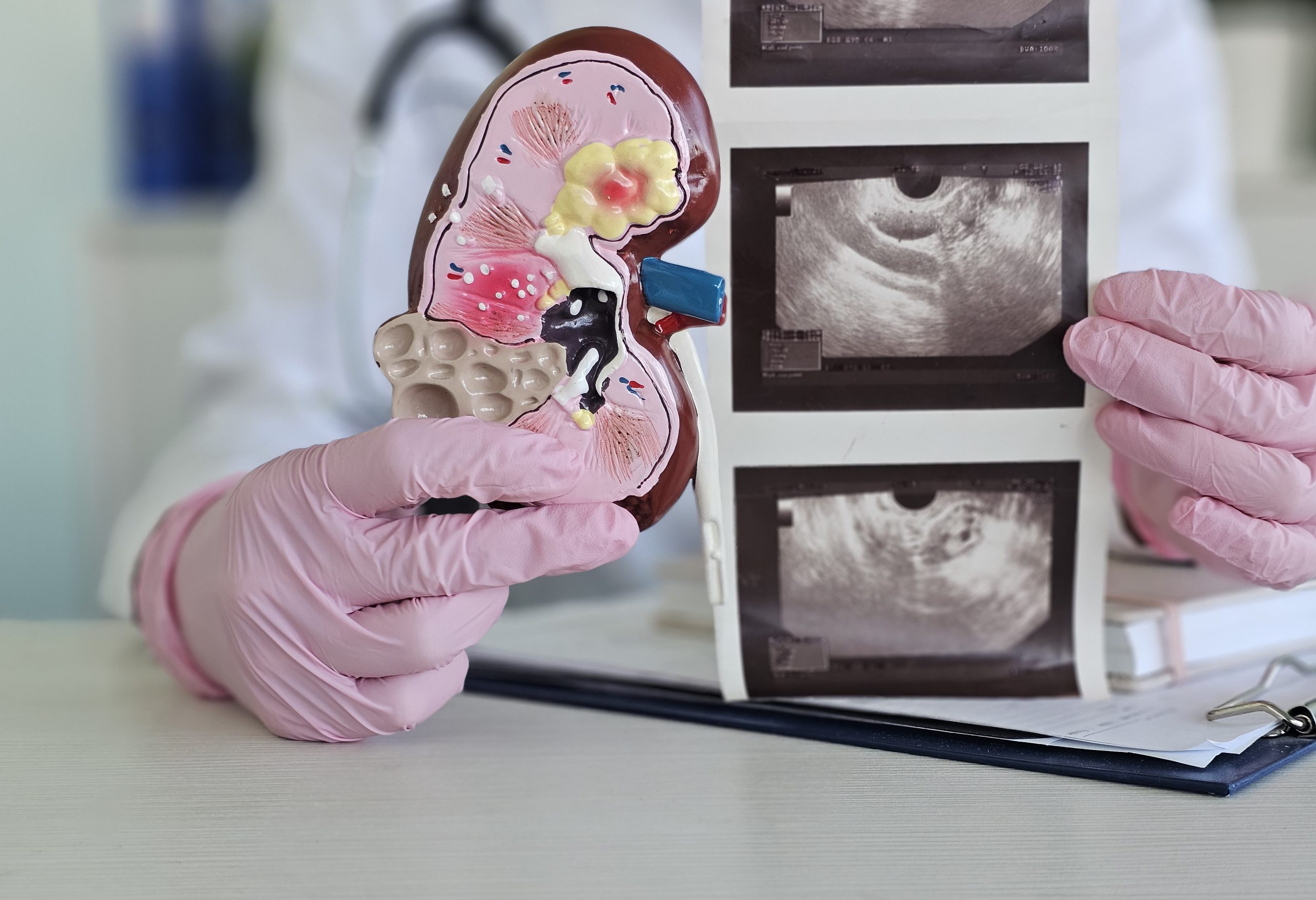
She’ll be working on yet another health-tech solution, using generative adversarial networks, a type of machine learning, to refine ultrasound images so they’re easier for doctors to interpret.
After graduating, Kolawole plans to continue working in software but is also looking toward future academic opportunities at the intersection of AI and medicine.
“When you aspire to do something and the dots aren’t connecting, you have to be persistent,” she says. “Use all of the resources the world has given you and dedicate your time and effort to what you want to achieve.”
Related Stories

Wildfires in Canada: Researchers Work to Protect Canadians from Wildfire Smoke
More than 6,000 wildfires burned across Canada in 2023, torching an area larger than England — the country’s most destructive fire season ever. In communities…
A Clearer Picture for Prostate Cancer Diagnosis
Every single day, an average of 14 men in Canada die of prostate cancer. This startling number has driven researchers to do something about it.…
Protecting People from Earthquakes
Earthquakes are among the most destructive natural disasters on the planet. They typically happen when the tectonic plates that form the Earth’s outer shell, which…