Art in Practice: Carleton Grad Grows Career to National Gallery Leadership
By
Ahmed Minhas
Photo Credit:
Brenna Mackay
For Catherine Sinclair, an arts education at Carleton University became the foundation for a career that would take her from local galleries to one of the country’s leading cultural institutions.
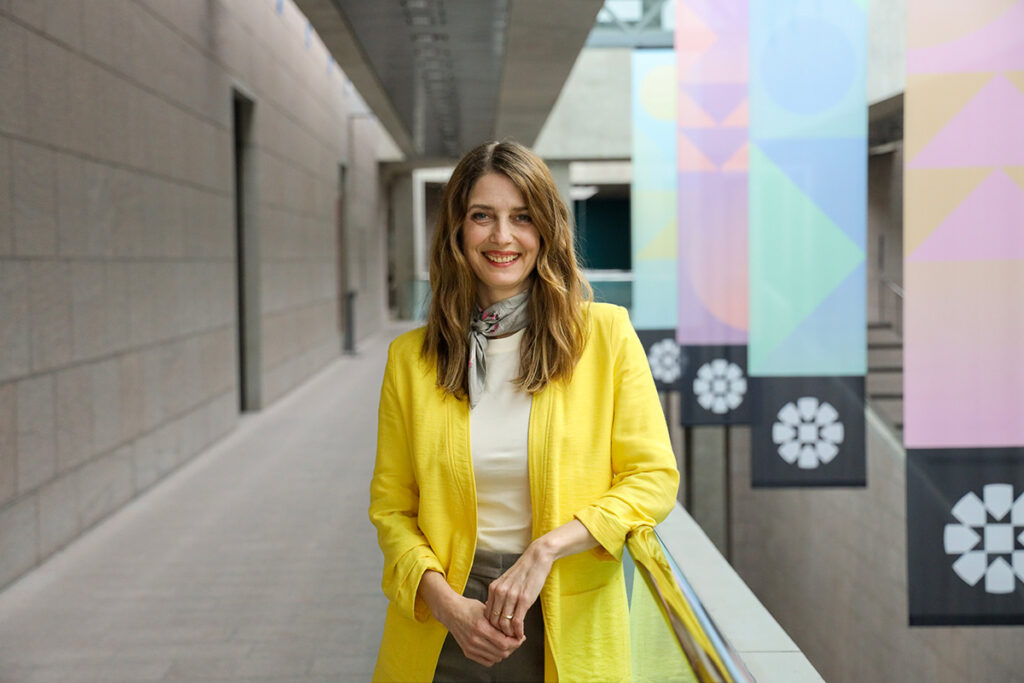
Today, as Director of Exhibitions, Conservation and Production at the National Gallery of Canada, she helps oversee the strategic planning and delivery of major exhibitions that reach audiences nationwide.
The skills that shaped her leadership role were built years earlier through Carleton’s humanities program.
Sinclair joined the program in its second year. The interdisciplinary degree emphasized philosophy, history, literature and art history, providing a broad academic base that shaped how she approaches ideas and storytelling.
“The degree was instrumental in building my foundation in knowing how to research, think critically, write, articulate, present and argue a point,” she says.
Those skills remain central to her work today, from assessing exhibition proposals to guiding teams through complex production timelines.

Carleton Skills Meet Real-World Experience
After completing her degree, Sinclair travelled and taught English in Japan before returning to Carleton to pursue a master’s in art history. That decision was shaped by the degree’s co-op component, which offered a bridge between academic study and professional experience.
“The reason I chose Carleton was because they had a co-op program and a really high quota of employed graduates,” says Sinclair.
“I was very much into the arts but also interested in having a job. Co-op helped me build connections that led directly into the field.”
Her placements included work with the City of Ottawa Public Art Program, the Saidye Bronfman Centre in Montréal and the Ottawa Art Gallery (OAG). Those experiences introduced her to gallery work, but it was a phone call near the end of her studies that set her career in motion. She was invited to curate an exhibition from the Firestone Collection of Canadian Art at the OAG.
Over the next 18 years, Sinclair moved from resident curator into senior leadership roles including Deputy Director, Chief Curator. It was a period of steady growth in which her Carleton education continued to pay dividends.
“Internships are so important and they lead directly to jobs,” she says. “It’s where you build relationships and understand how institutions function. That early experience can make all the difference.”
She credits professors Angela Carr, Carol Payne and Ruth Phillips with shaping her perspective.
Phillips helped Sinclair think carefully about curatorial responsibility and how to approach her work with humility.
“By sharing her own experience, she helped me understand what it is to be a white curator who’s coming into the field wanting to contribute and show a variety of work, including Indigenous art, in a sensitive and consultative way,” says Sinclair.
An emphasis on consultation and ongoing learning became central to her professional ethos.
Behind the Scenes of National Exhibitions
In 2023, Sinclair moved to the National Gallery of Canada. The transition marked a shift from curating exhibitions herself to overseeing the many elements required to bring them to life.
“I compare it to someone being a music producer,” explains Sinclair.
“I’m not writing every label or building each show myself. I support the right people working together to make sure everything falls into place.”
As major exhibitions can take years to develop, her work includes long-range planning, conservation priorities, loan negotiations, design coordination and institutional partnerships.
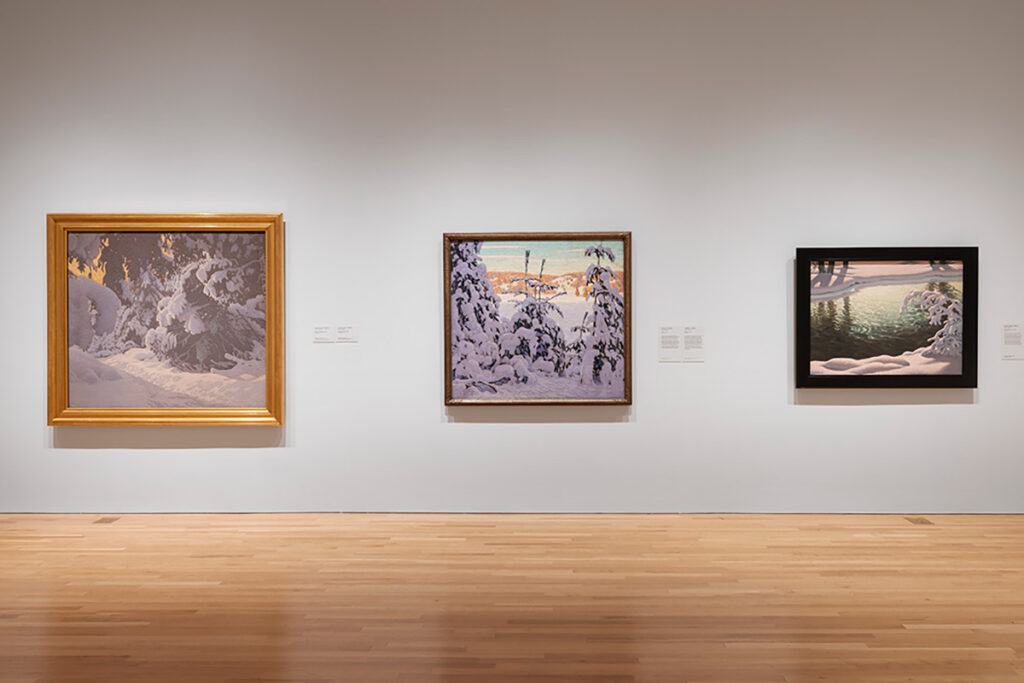
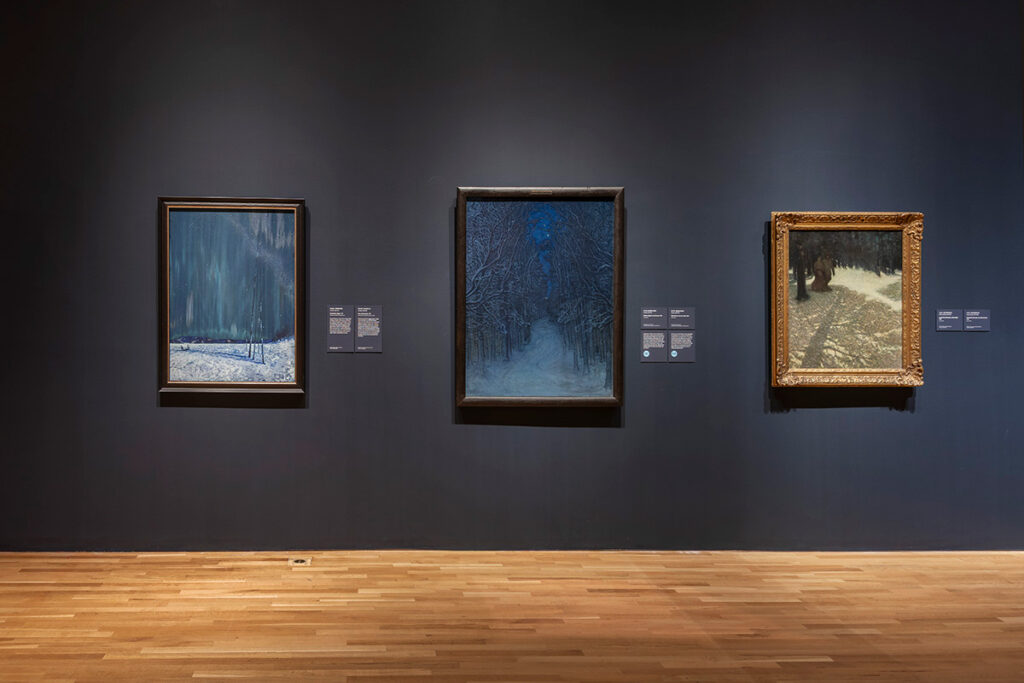
The Gallery’s recent exhibition, Winter Count: Embracing the Cold, illustrated that scale. The exhibition explored Indigenous, Canadian and European perspectives on winter across more than 150 works, woven into a series of thematic narratives.
Sinclair points to collaboration as central to exhibition work. She recalls a retrospective she curated for Ottawa artist Norman Takeuchi that brought together community advocates, curators and volunteers.
One visitor, who did not share the artist’s cultural background, told her the exhibition reflected their own journey of identity and belonging. It was a reminder of the power of storytelling.
“That was a really rewarding moment for me,” says Sinclair.
“Understanding the impact that art can have when you put a good story around it.”
Sinclair encourages students to stay open to different pathways into the cultural sector. While curatorial roles are often the most visible, galleries also depend on professionals in other roles to support work behind the scenes.
Someone in accounting with a passion for the arts can manage exhibition budgets and valuations, while a marketing graduate with an understanding of art history can guide how exhibitions reach and resonate with audiences.
From a pioneering humanities program at Carleton to a leadership role at the National Gallery of Canada, Sinclair’s path shows how a broad education grounded in critical thought and real-world experience can lead to a meaningful career.
Related Stories

Carleton Classroom Assignment Launches International Business
Growing up in Lagos, Nigeria — a fast-paced city that’s now home to more than 20 million people — taught Chika Oguh how to be adaptable and…

Once Ravens, Now Olympians: Chasing Gold at the 2026 Winter Olympics
Former Ravens will hit the ice and the slopes in Milan and Cortina d’Ampezzo, as elite athletes from around the world gather in northern Italy…

Destination Dreaming: Carleton Grad Turns Love of Travel into Career
A seasoned public relations professional specializing in tourism and hospitality, Mandy Sinclair knows how to tell her clients’ stories — tapping into audiences’ emotions and…