From Blocks to Blueprints: How a Carleton Engineering Grad is Shaping Cities with Minecraft
By
Ahmed Minhas
Photo Credit:
Matt Holmes / Alpine Builds
Matt Holmes isn’t your typical engineering grad. After earning a degree from Carleton University’s Architectural Conservation and Sustainability Engineering program, he became an airport planner at Vancouver International Airport and a YouTube sensation.
Through his channel, Alpine Builds, Holmes has built a global following teaching realistic city design using Minecraft — inspiring future architects and engineers one block at a time.
Holmes credits Carleton for giving him the tools to turn a childhood curiosity into a thriving creative career. The university’s distinctive engineering program — and the opportunities it offered — gave him the knowledge, experience and confidence to transform his interest in building virtual cities into real-world impact.

And it all started with a friend playing Minecraft in his middle-school library.
“I remember seeing my friend playing Minecraft on a library computer, building whatever he wanted and exploring this endless, open world,” recalls Holmes.
“Within 20 minutes, I knew I had to try this game.”
Holmes saved money refereeing youth soccer, bought an iPod touch and downloaded Minecraft as soon as he could. The first thing he did was build a treehouse, then realized he could build entire cities and airports. Those early builds sparked curiosity about real-world architecture, steering him towards engineering.
“I started wondering how real buildings worked, how they’re structured, what’s inside, how they stand up,” Holmes explains.
“Minecraft might be the only reason I pursued architectural engineering.”
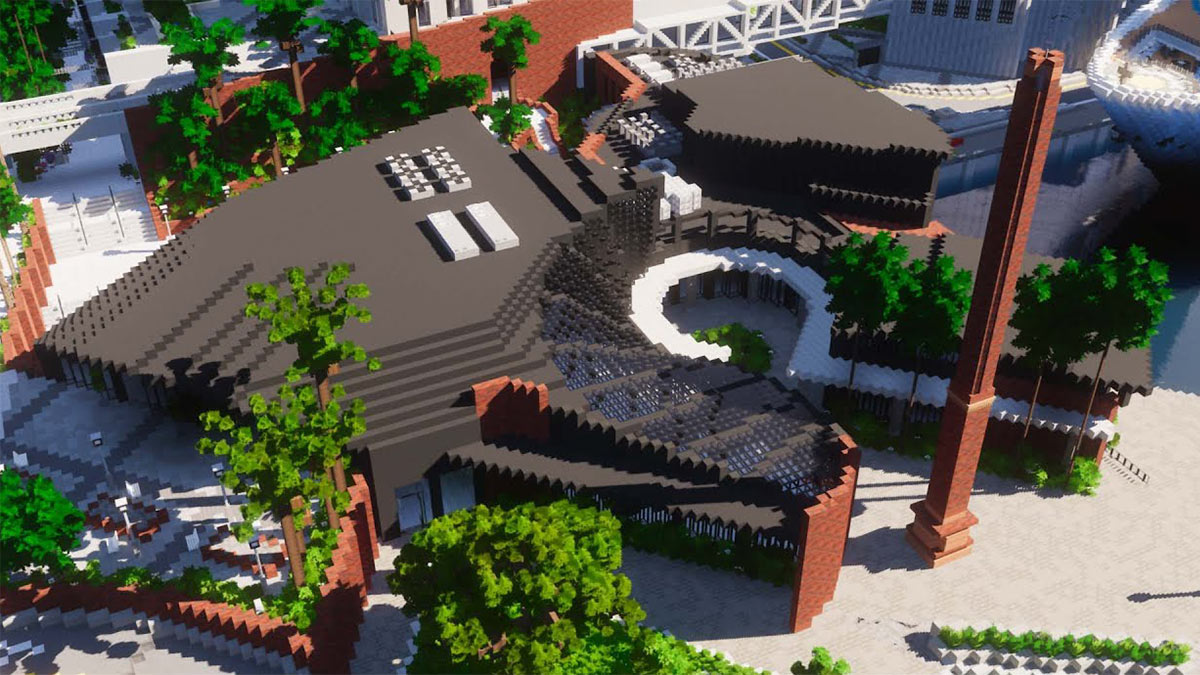
Minecraft Meets Real-World Design
When Holmes began researching university programs, Carleton’s Architectural Conservation and Sustainability Engineering program stood out. It offered exactly what he was looking for — a combination of technical engineering and architectural design that mirrored the kinds of questions he was asking through Minecraft. The program’s interdisciplinary approach encouraged students to think about buildings not only structurally, but historically, socially and environmentally.
“It wasn’t just technical,” he says.
“We were encouraged to think about buildings in context. That mindset really shaped how I look at both real and virtual cities.”
Courses like Architectural Technology I, taught by professor Scott Bucking, helped him understand structural framing, internal systems and sustainable design — knowledge that influenced his Minecraft builds.
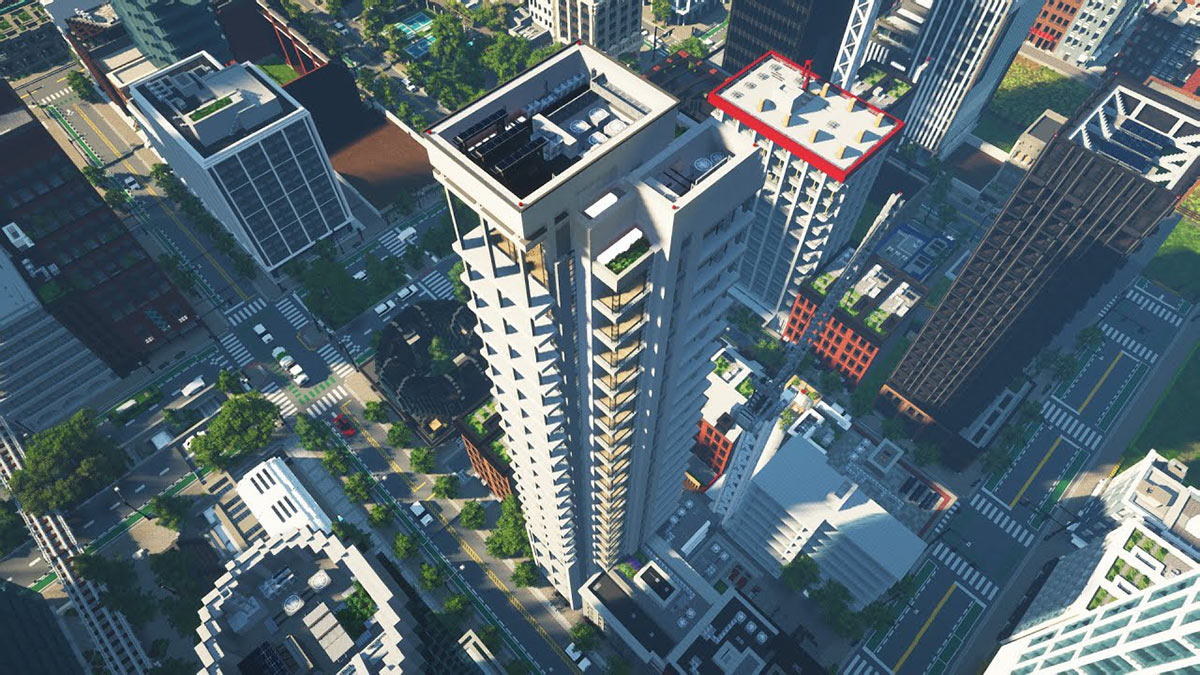
Holmes says that before Carleton, his Minecraft builds looked good on the surface but lacked realism. After gaining engineering knowledge, his designs began to reflect structural insight, elevating them into architectural masterpieces.
“By the end of the degree, you really understand everything that’s in a building — where your columns go, elevators, stairs, mechanical systems, electrical, plumbing — and how to design sustainably,” says Holmes. “This knowledge influences how I design and build in Minecraft.”
From the Classroom to Content Creation
Outside the classroom, Holmes explored entrepreneurship through Carleton’s Innovation Hub. Initially stumbling into Hatch, the hub’s entrepreneurial cohort, he learned fundamental business skills that ultimately inspired Alpine Builds.
“It started as a way to answer questions younger Minecraft builders were asking me,” Holmes explains.
“Instead of typing answers every time, I figured making a YouTube video would be more efficient.”
Those videos took off and Alpine Builds grew into an educational platform with a global reach. He often hears from young viewers who were inspired to pursue architecture or engineering after watching his videos.
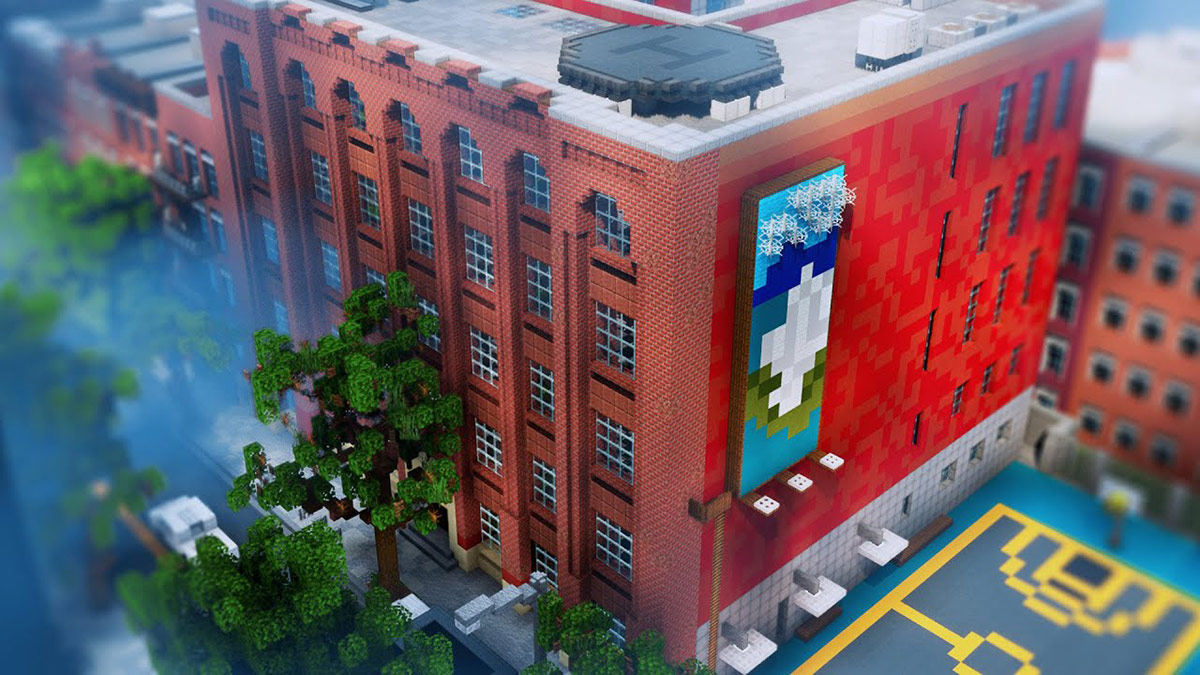
“There’s someone studying architectural engineering at Carleton who previously messaged me saying they applied because of my videos,” Holmes shares proudly. “That makes me very happy.”
Today, Holmes balances his job as an airport planner where he leverages his engineering experience with his work as a content creator. His latest project, a Minecraft city called Sequoia, blends Vancouver’s terrain with realistic urban design, supported by real-world research and GIS data.
He’s also working on an online course, City Design 101, to help aspiring creators plan and build realistic virtual cities. His goal is to simplify complex ideas so anyone can build something great in Minecraft.
Looking back, Holmes says Minecraft sparked his curiosity and creativity, but Carleton gave him the tools, opportunities and confidence to turn that spark into a career.
His advice to aspiring engineers at Carleton is straightforward: “Outside of your engineering degree, take advantage of the opportunities that Carleton and Ottawa offer.”
Related Stories

Once Ravens, Now Olympians: Chasing Gold at the 2026 Winter Olympics
Former Ravens will hit the ice and the slopes in Milan and Cortina d’Ampezzo, as elite athletes from around the world gather in northern Italy…
Carleton University’s Top 10 Stories of 2025
As the 2025 season comes to a close, we reflect on the groundbreaking research, innovative leadership and inspiring community achievements that defined 2025 for Carleton…
Destination Dreaming: Carleton Grad Turns Love of Travel into Career
A seasoned public relations professional specializing in tourism and hospitality, Mandy Sinclair knows how to tell her clients’ stories — tapping into audiences’ emotions and…