The In-Between World of Faisa Omer
By
Dan Rubinstein
Photo Credit:
Terence Ho
After completing her master’s degree in neuroscience at Carleton University, Faisa Omer enrolled in a college photography program in Ottawa without telling her parents.
It was a bold decision. As a first-generation Somali-Canadian and the oldest of seven children, she was expected to get a good job to help her family move out of their crowded social housing unit.
But Omer loved photography and after seven consecutive years of intense studying, including an undergraduate degree in neuroscience, she wanted to do something for herself.
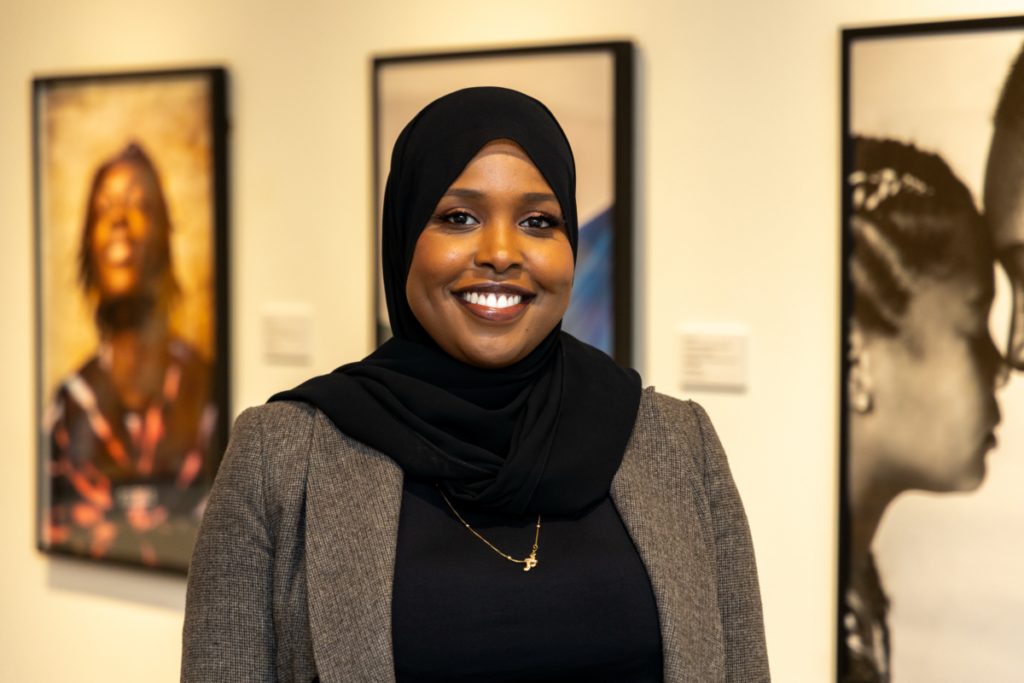
Her parents found out and when she explained to her father that “learning how to take pictures” made her happy, he didn’t understand. Emigrating to Canada for new opportunities and to escape conflict in Somalia, he was focused on survival.
Omer’s father applied for jobs on her behalf, landing an interview for a position as a mental health counsellor for at-risk Somali youth in Edmonton. Even though she tried to sabotage the process, she was offered the job.
“I had to make a choice,” she recalls, “and I did what my parents wanted. Somali culture is collectivist. It was my responsibility to help support our family.”
But before leaving Ottawa, Omer went to a beach close to home and walked out onto a jetty overlooking the water. She prayed and asked if photography could come back to her life in a different way.
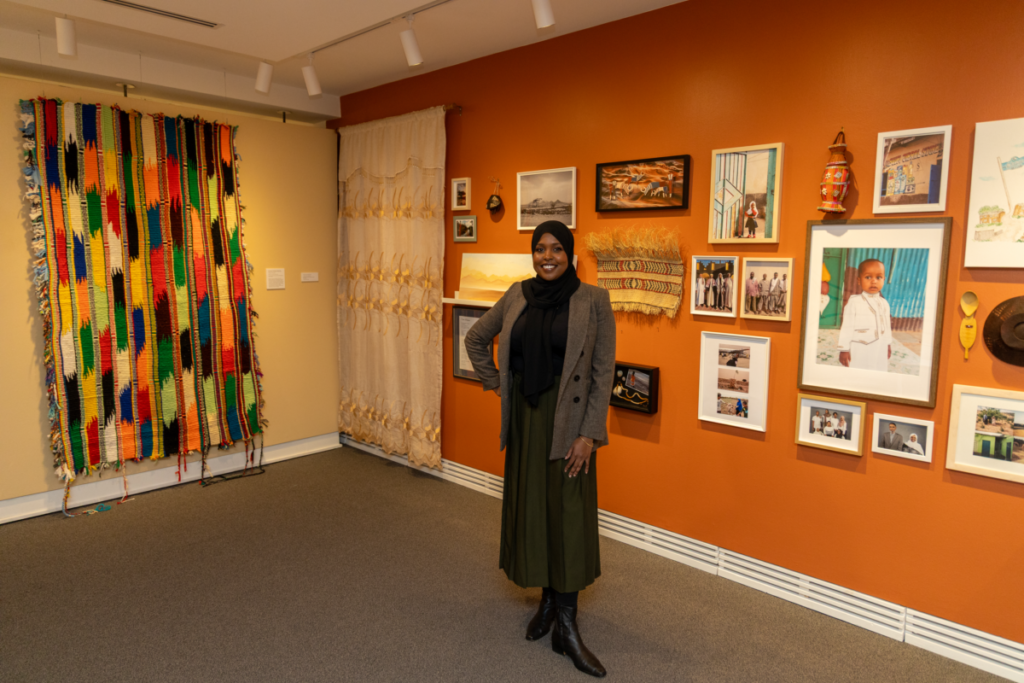
Eight years later, Omer’s first solo art exhibition, “Threading Roots,” an exploration of Somali identity across memory, place and generations, has opened at the Carleton University Art Gallery (CUAG).
Now working as a counsellor for racialized students who live in residence at Carleton, Omer has never stopped taking pictures.
“Art is my self-care,” she says. “It’s a safe haven in which I can be myself and express myself.”
The Complexity of Diasporic Life
“Threading Roots,” which includes family photos, studio portraits, textiles, paintings and poetry, extends across the upper floor of CUAG.
Curated by Reyhab Mohmed Patel, a PhD student in sociology at Carleton, the exhibition challenges “dominant representations of Somali identity while affirming the richness and complexity of diasporic life.”
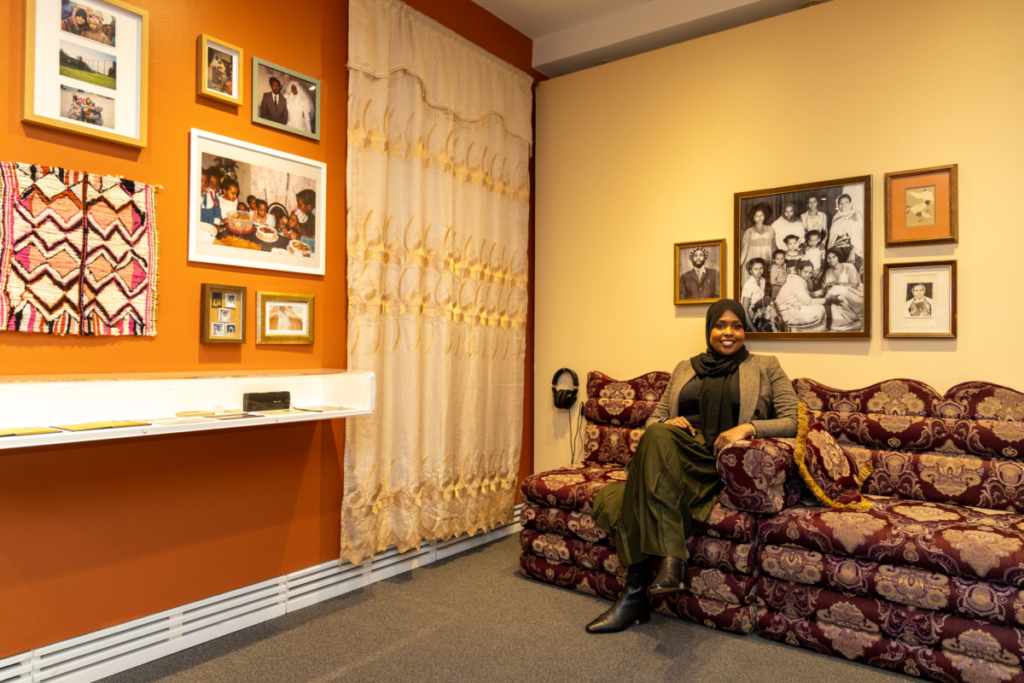
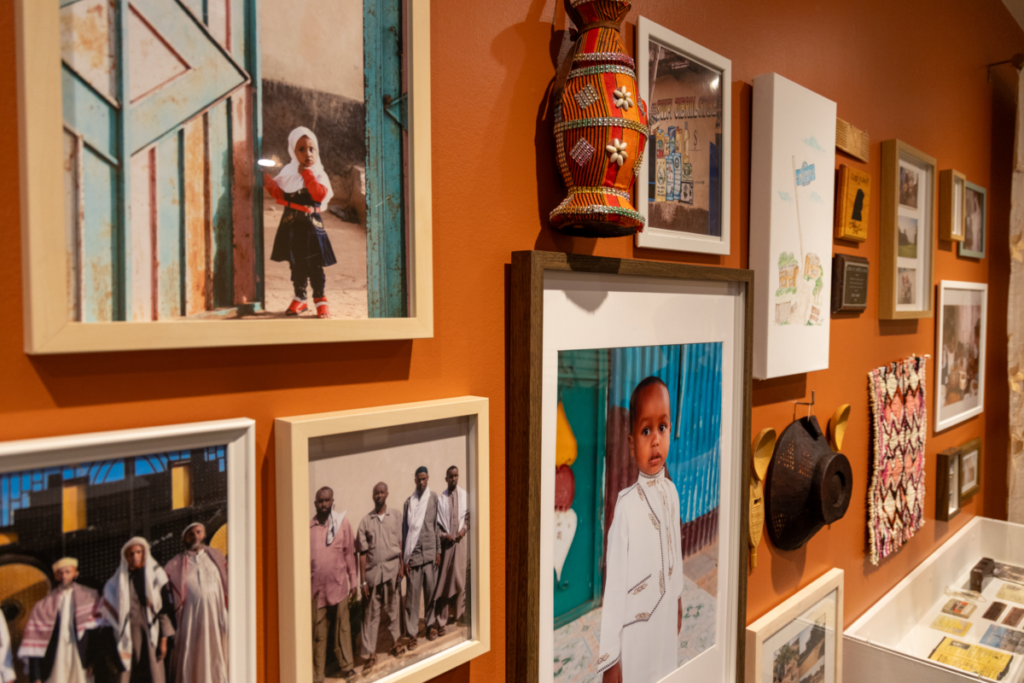
The opening space features an intricate tapestry made by one of Omer’s sisters and a striking portrait of one of her friends, while the second bay is set up like a Somali living room with a traditional couch, pictures of her parents’ families, pictures of Omer and her siblings growing up, pictures Omer took during three trips to Somalia and objects that hold meaning for her family.
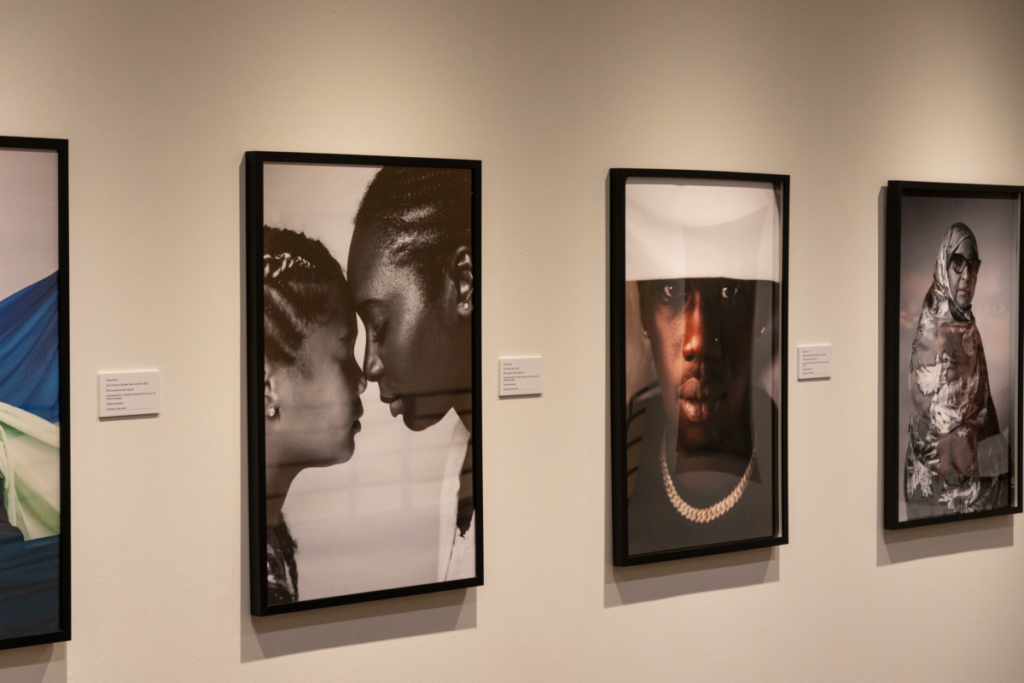
A series of large-scale portraits are displayed in the third and fourth bays. In the former, most of the photos are of Black youth who have encountered systemic racism, including several from Omer’s “Reclaiming Ritchie” project. The tone gradually shifts from dark to colourful if one looks at the portraits in sequence.
“I call this ‘the struggle,’” says Omer. “This is where the healing starts to happen.”
The final bay, a series of portraits hung atop traditional fabrics and modern fashions, showcases Black beauty, specifically Somali beauty.
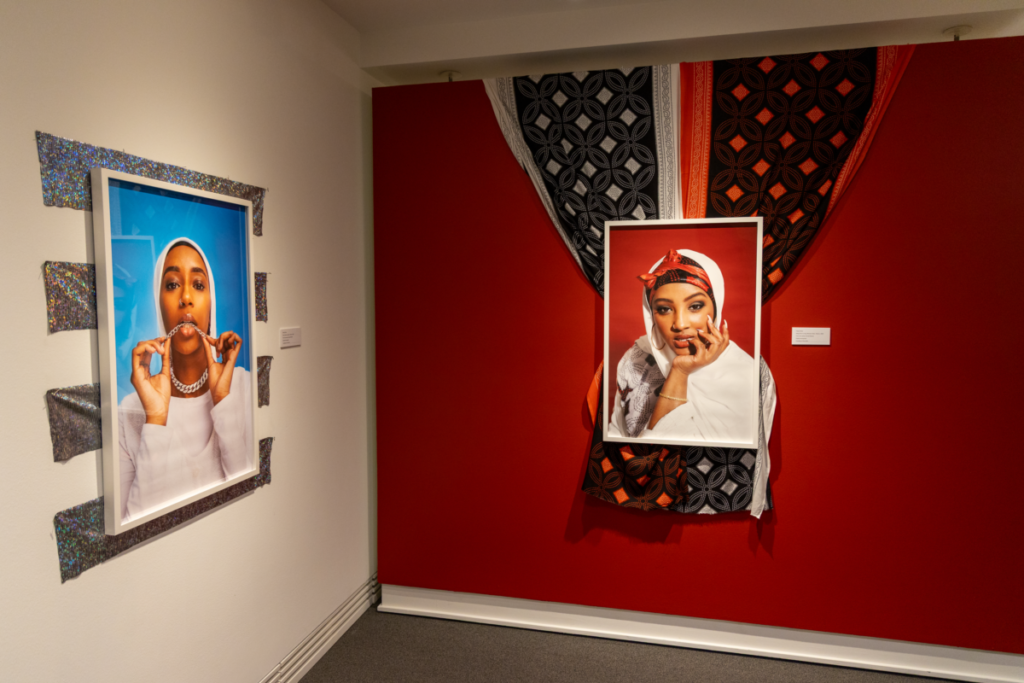
“Generally, the idea of this exhibition is Maslow’s hierarchy of needs,” says Omer, “starting with survival and getting to self-actualization at the end. It can also help people understand the in-between world of the Somali diaspora and what it means for us to be Canadian as well.”
Puzzling Together the Pieces of Her Life
Since first picking up a disposable camera in grade seven, Omer has been using art and education to figure out how the pieces of her life fit together.
Those trips to visit relatives in Somalia showed her how steeped in traditional culture her family is despite living thousands of kilometres away.
Her master’s research looked into which parts of the brain people use to memorize texts such as the Qur’an in a language they don’t speak.
Her work as a mental health counsellor provides insights into the experiences of racialized young people that inform her art, which has been shown at the Ottawa Art Gallery and the Art Gallery of Alberta, among other locations.
The launch party for “Threading Roots” and “ᑳᐃᓯᓈᑿᐦᑭ ᐃᑘᐏᓇ kā-isinākwahki itwēwina: The Shape of Words,” by nēhiyaw (Plains Cree) artist Joi T. Arcand, took place on Oct. 4. Omer’s parents and several of her siblings were there.
“I would say they’ve reached their own self-actualization,” Omer says about her parents. “Between their kids, there are like five university degrees and six college diplomas. So, they’re really proud.
“My success is due to them,” she continues. “When I look back and think about my dad applying for jobs online for me, I wouldn’t change a thing because my prayer was answered. Now I live in both worlds.”