How a Carleton Grad’s AI Experiment Opened New Doors
By Ahmed Minhas
When Joe (Beiqiao) Hu arrived at Carleton University in 2024, he wasn’t just pursuing a graduate degree, he had three goals in mind: improve his English, establish himself in Canada and build something meaningful.
Less than two years later, the Technology Innovation Management (TIM) graduate launched Joe Speaking, an AI-powered language-learning platform offering real-time conversation practice, personalized feedback and assessment. It serves more than 1,600 users, including more than 100 paying users and has secured an enterprise customer.
The idea was inspired by Hu’s experience learning English and quickly evolved into something bigger.

Hu came to Carleton from China, where he worked as a product manager in Beijing’s technology sector. Growing up in a small community, he learned English through grammar, reading and writing. Speaking and listening were weaknesses he believed prevented him from studying or working abroad.
“I never thought I could go abroad because of my English,” Hu explains.
“After I graduated university, I tried to learn English but failed. During COVID, I told myself, ‘Joe, you need to learn English.'”
After nine months of preparation, Hu earned the IELTS score needed to apply to Carleton, but he still lacked confidence in his speaking ability.

Finding Confidence Through Carleton’s TIM Program
Carleton’s TIM program offered the combination of technology, business and entrepreneurship Hu wanted. It gave him confidence to utilize AI as a tool to support his learning and research process while leaving room to experiment.
“Once I joined the TIM program, I realized the strength of its community,” says Hu.
“It’s not only about what you can accomplish on your own; it’s about the community helping you.”
The late Sprott School of Business professor and TIM director, Tony Bailetti, recognized Hu’s expertise and encouraged him to lead workshops introducing students to emerging AI tools. Bailetti’s encouragement increased his confidence and changed what he believed he could build.
Although Hu practiced English with classmates and at networking events, his IELTS score barely changed. Existing tools didn’t offer the natural conversation, repetition or detailed feedback he wanted.
So, he decided to build his own.
“I wanted to build a product that matched my niche,” says Hu.
“Even though I didn’t know how to code, I could use coding agents. When I didn’t know how to do something, I asked AI to help me do it.”
The process wasn’t simply “vibe coding,” a term describing software generated through conversational prompts without close oversight of the output.
Hu’s approach was closer to “vibe engineering,” using AI as a collaborator while applying human judgment to define the problem, decide which features mattered, evaluate the output and repeatedly refine the product.
AI could generate code, but Hu had to determine whether the product solved his problem, ultimately shaping Joe Speaking.
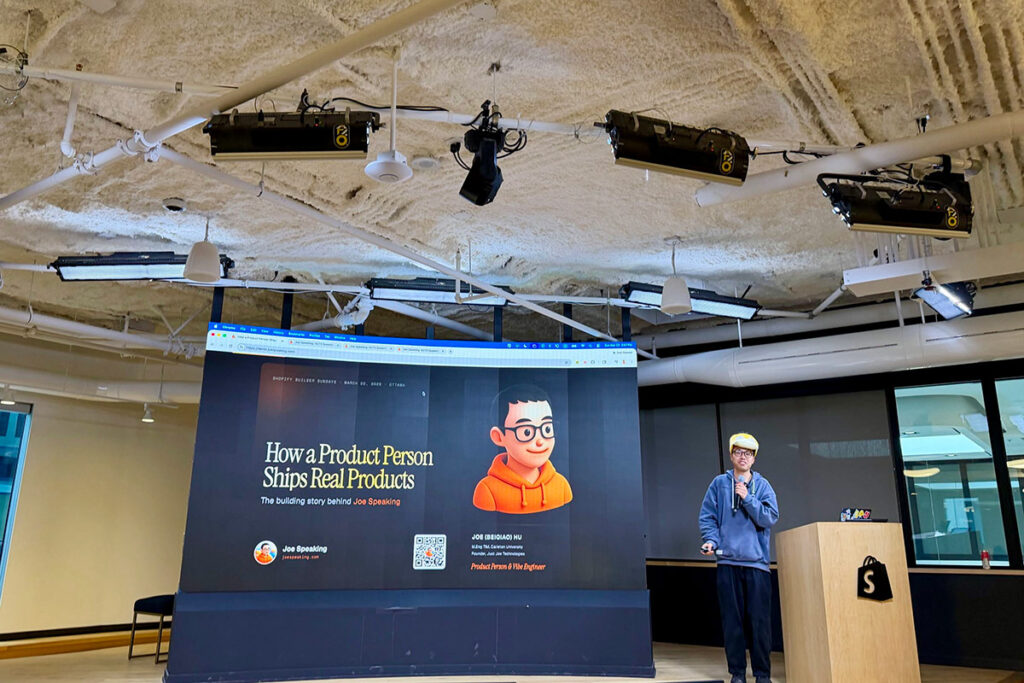
Building Joe Speaking Through Vibe Engineering
His first IELTS speaking simulator reached 100,000 conversations, showing market demand for a more complete product.
The turning point came through his TIM project, choosing to further develop his prototype into a standalone platform backed by peer-reviewed research on language learning and assessment.
“I thought I could turn my prototype into a real product,” he says.
“At first, I was only trying to complete my project. The more I built, the more invested I became and realized, ‘I can do this. I can turn this into something people will use.'”
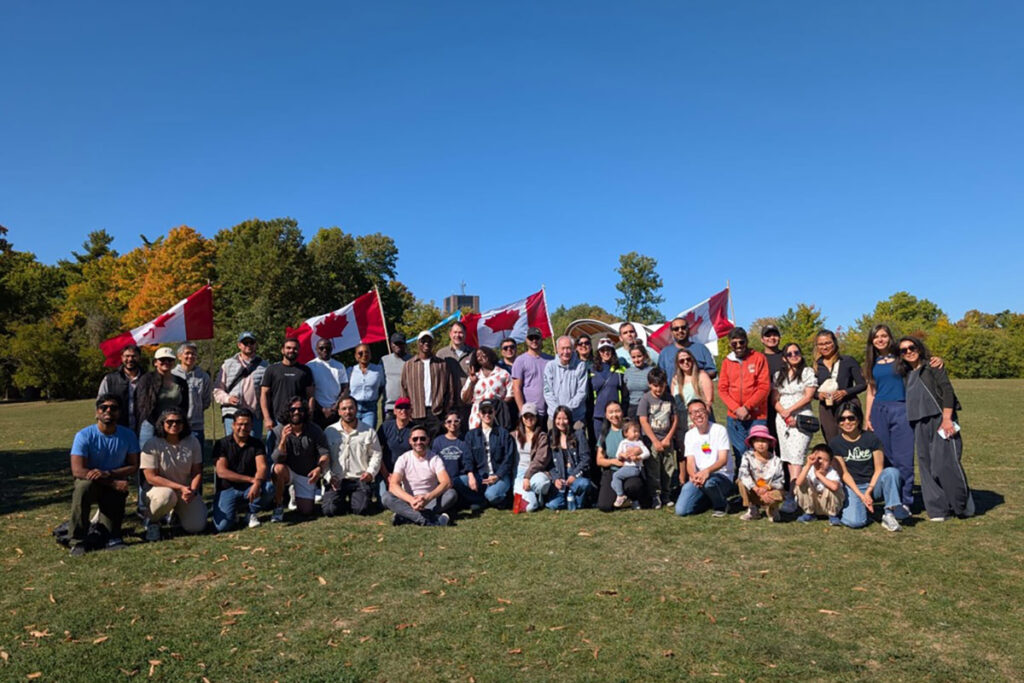
He researched the idea last summer, completed a literature review in the fall and started building in November 2025. Using AI coding agents, he developed the application, tested its features and spent two months stabilizing its real-time conversation system.
“The core feature of Joe Speaking is that you can talk with an AI examiner naturally and repeat the same topic,” Hu explains.
“What I genuinely wanted to build is a fully personalized tutor that understands the user’s level and gives specific feedback.”
Even before the platform had a landing page, it attracted paid users from Japan and Australia. His professors supported his work, connecting him with industry opportunities and helping secure funding to develop Joe Speaking.
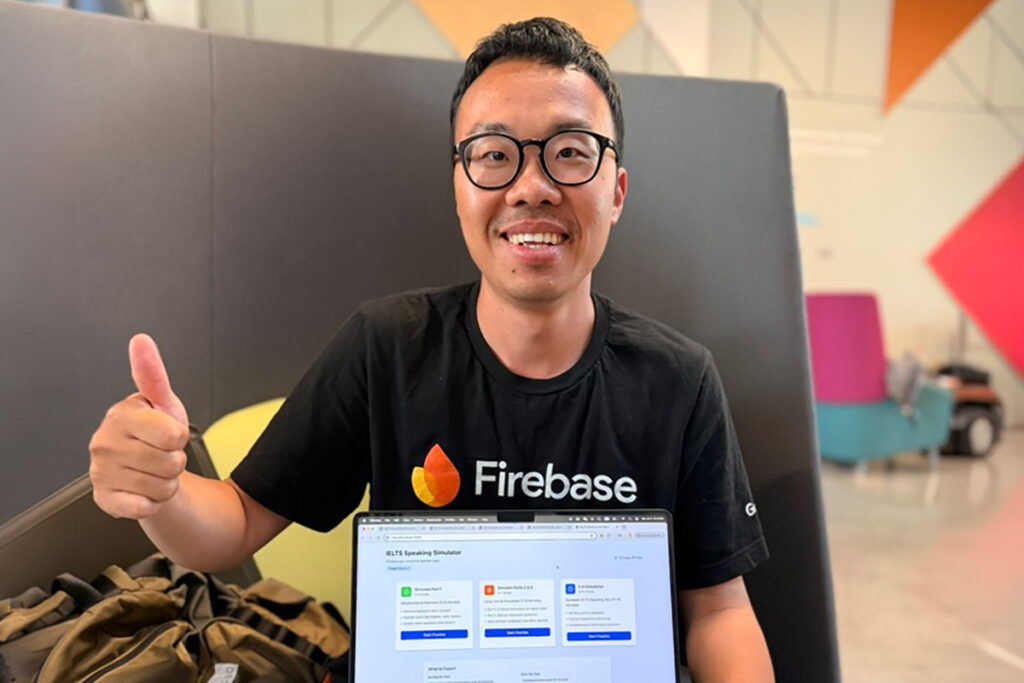
As validation of his work, Hu was selected to attend Y Combinator’s Startup School in San Francisco in July.
While the users, paying customers and industry interest validated the idea, Hu says the most valuable outcomes have been the experience, confidence and opportunities gained by identifying a personal problem and taking action to solve it.
Hu believes AI’s value doesn’t come from generating something blindly. It comes from combining technology with curiosity, subject knowledge and the judgment required to build something meaningful.
He hopes his experience encourages other students to take initiative, pursue ambitious ideas and experiment.
“My advice to students is not about AI or a tool,” he says.
“It’s about your motivation, your interest and your agency — if you want to do something, you can just do it.”