Carleton Researchers Target the Moon’s Hidden Supply of Oxygen
Video by studiodav / iStock
By Ahmed Minhas
Could the Moon’s surface become an unexpected source of oxygen that could one day help astronauts breathe and fuel journeys to explore the final frontier of deep space?
Carleton researchers Alex Ellery and Katherine Marczenko believe that is a real possibility — and one they’re working towards.
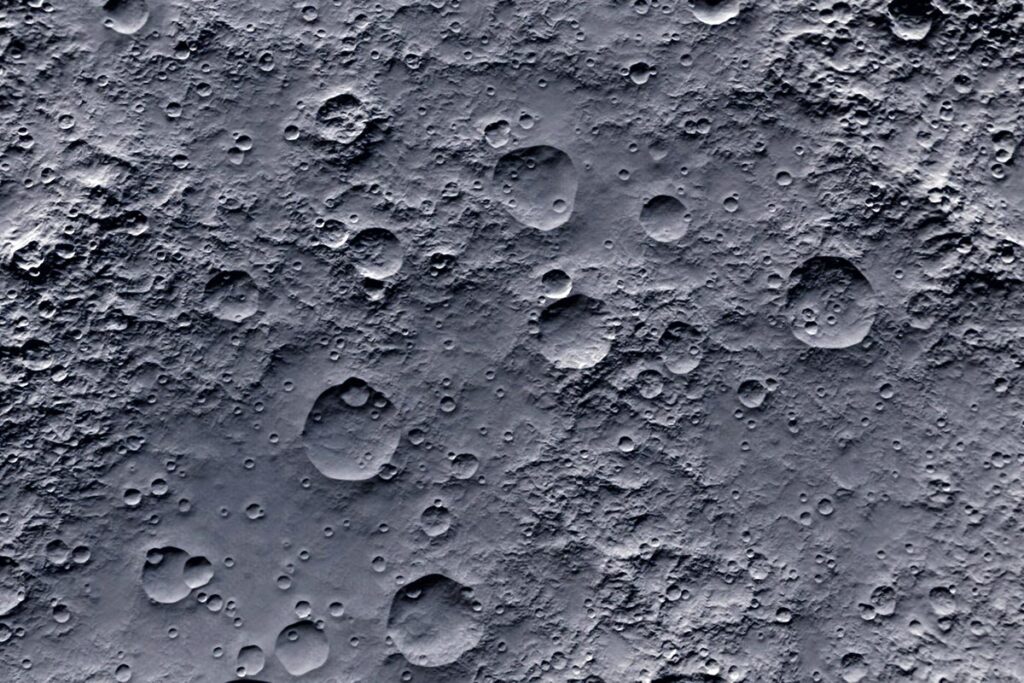
“If you do an elemental analysis of the Moon as a whole, you’ll find that the entire lunar crust is about 40 per cent oxygen bound into minerals,” says Ellery, a mechanical and aerospace engineering researcher.
The challenge is freeing that oxygen from the lunar minerals that contain it.

Ellery and Marczenko, a chemistry researcher, are developing a reactor that uses salt, heat and electricity to extract that oxygen using simulated lunar material. They’re measuring how much oxygen they can remove to develop a future system that could supply oxygen for astronauts and spacecraft.
Together, they’re testing their extraction process at Carleton to help inform the design of equipment intended for the Moon.
Their work contributes to OXYGEN, an international project supported by the UK Space Agency’s International Bilateral Fund with AVS-UK, the University of Glasgow and Intuitive Machines among its partners.
Combining Engineering and Chemistry Expertise at Carleton
Oxygen in lunar minerals is chemically bound to other elements; freeing it requires a process that can break those bonds. That challenge brought Ellery and Marczenko together.
Ellery’s work in space robotics took him from developing machines that collect lunar material to asking how astronauts could use that material.
Marczenko, a 2026 John Charles Polanyi Prize winner who studies the structure of solid materials, had the chemistry expertise to help answer that question.
“When we think of oxygen, we usually think of the gas we breathe,” explains Marczenko.
“But oxygen is also part of many solid materials. In lunar soil, oxygen atoms are strongly bound to atoms like silicon and aluminium.”

To break those bonds, the team developed a specialized reactor that uses, salt, heat and electricity. Inside the reactor, salt is heated to approximately 700 to 800 degrees Celsius until it melts. The molten salt conducts electricity, allowing an electrical current to drive reactions that remove oxygen from the simulated lunar material. The process is called molten salt electrolysis.
“The streamlined process makes a lot of sense but it’s by no means an easy thing to do. Working with high temperatures was the biggest challenge,” says Marczenko.
The team also had to create a controlled atmosphere for testing. To achieve this, they ran the experiments under argon — an inert gas — to limit unwanted reactions with air.
In these experiments, oxygen removed from the simulated lunar material reacts with carbon from a graphite electrode, a carbon-based conductor inside the reactor, to form carbon monoxide and carbon dioxide.
To measure how much oxygen was removed from the lunar material, Marczenko developed a method that converts carbon monoxide into carbon dioxide for analysis. This method helps the team compare how much oxygen is removed under different operating conditions and informs the design of equipment for a future lunar test.
“What we hope eventually is that this will be built into a payload which will be sent to the Moon,” says Ellery.
“That is our ultimate goal.”
Supplying a Vital Resource for Deep Space Exploration
The potential payoff extends beyond breathing. Oxygen accounts for most of the weight of rocket propellant. Producing it on the Moon could help refuel spacecraft travelling into deep space while reducing the supplies missions need to carry from Earth.
“Oxygen is the lion’s share of the mass you need to take to burn hydrogen,” explains Ellery. “By producing oxygen on the Moon, you’re creating that material locally. You don’t have to bring it with you.”
These techniques could also help recover other useful materials. In a separate project using some of the same processes, Ellery’s team recovered aluminium from simulated lunar material to 3D print a miniature fuel tank.
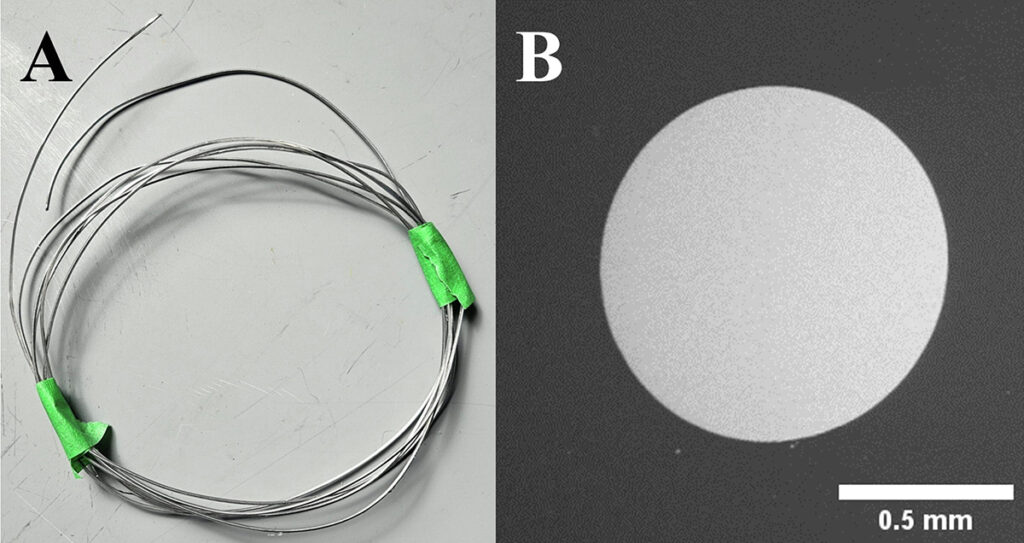
That demonstration points towards a future in which astronauts could make some of what they need from materials around them.
“It’s taking this type of technology and pushing the limits with it and seeing what other building blocks we can get,” says Marczenko.
Although OXYGEN’s initial funded phase has concluded, experiments continue. Marczenko describes the project as a success and says the team has been included in another funding proposal.
“I can’t stress how revolutionary this would be, because nobody’s ever tried to do any experiments like this on the Moon before,” says Ellery. “If we can successfully extract oxygen on the Moon, it’ll open up the floodgates because it will show we can utilize lunar resources to support industrial and human activities.”