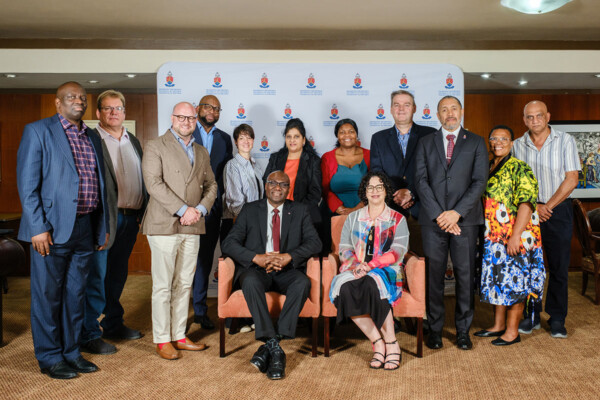
Carleton Hosts High-Level South African Delegation
By
Dan Rubinstein
Photo Credit:
Brenna Mackay
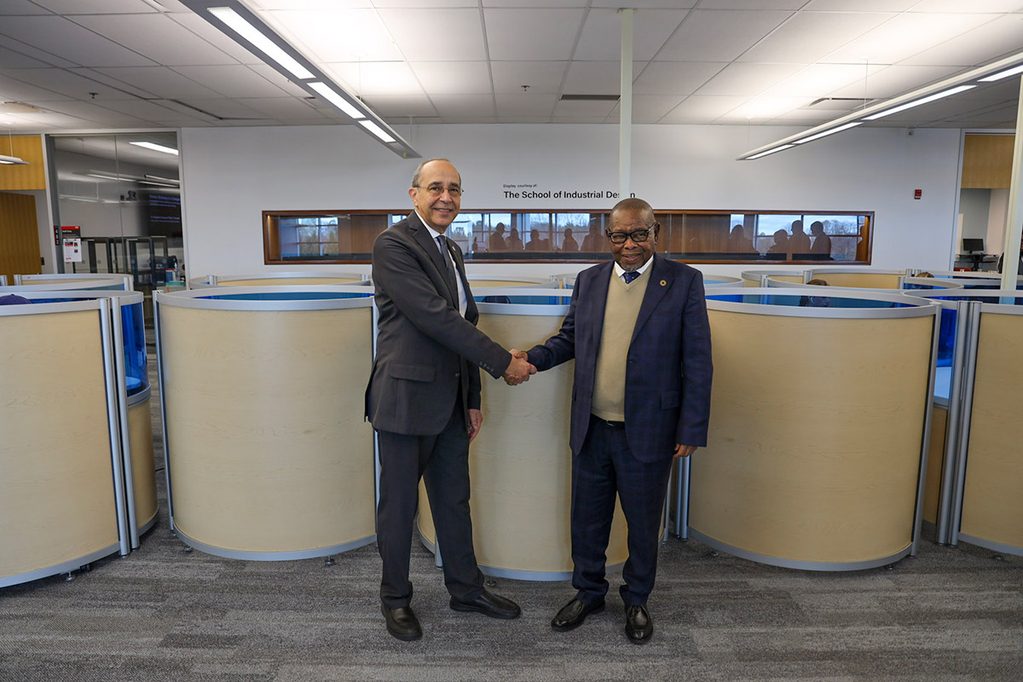
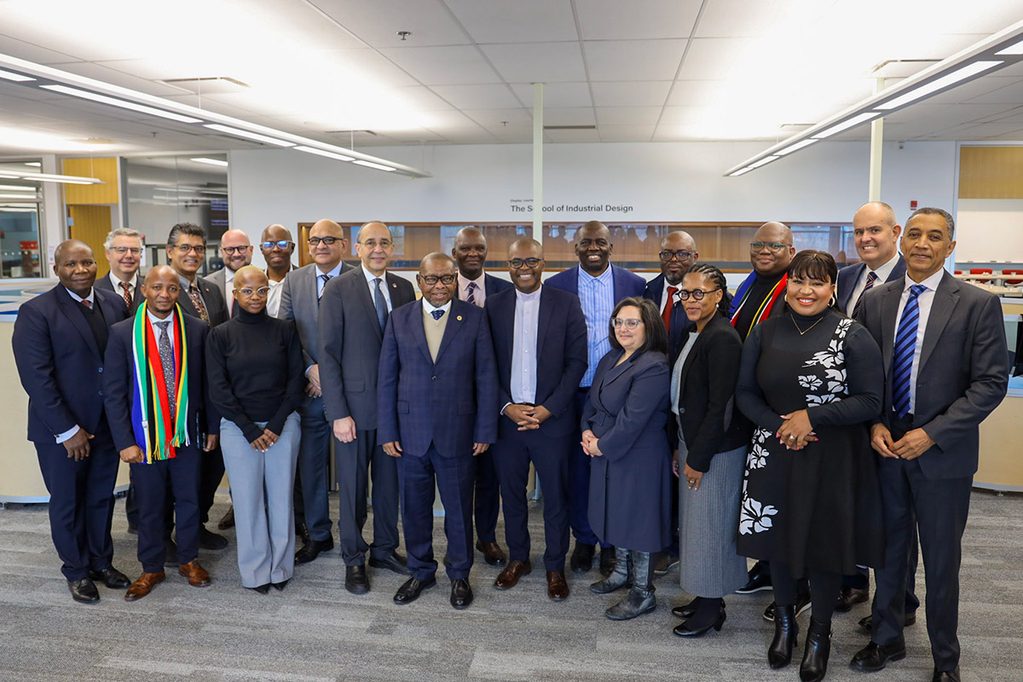
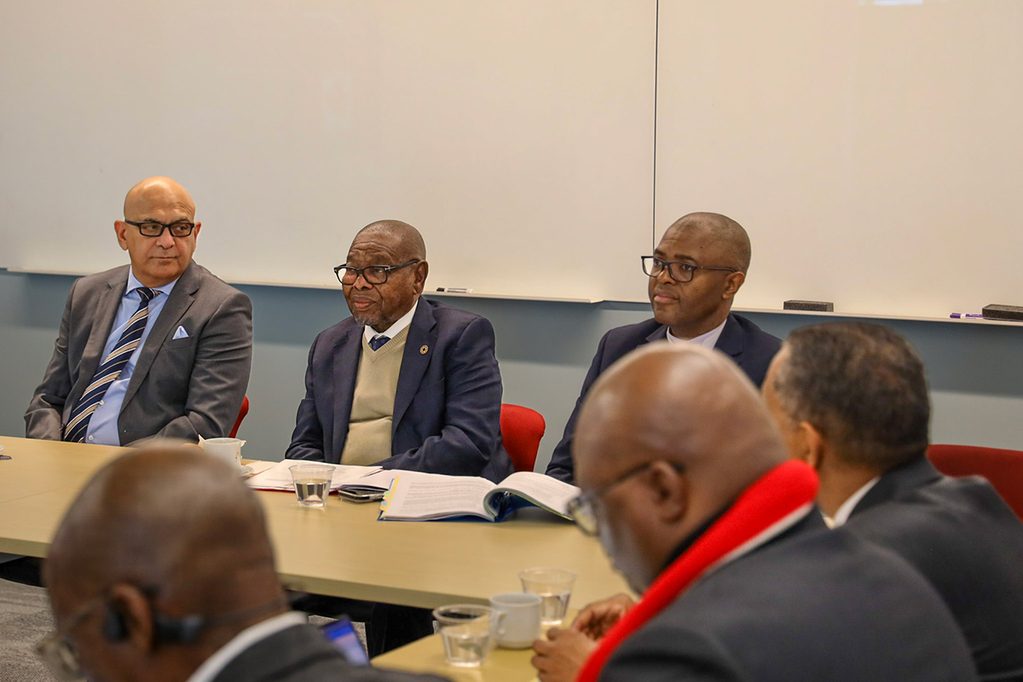
Carleton University continued its focused efforts to strengthen partnerships in South Africa on Nov. 23 when senior leaders discussed research collaborations and shared priorities with Bonginkosi Emmanuel “Blade” Nzimande, South Africa’s Minister of Science, Technology and Innovation, and a visiting delegation that included Rieaz Shaik, the South African High Commissioner to Canada.
“Canada played a very crucial role in the struggle against apartheid and our transition to democracy — you never wavered in supporting us, and we were ultimately able to establish our own scientific systems,” Minister Nzimande said during a meeting in MacOdrum Library’s Future Learning Lab.
“We had identified the Canadian science system as one of the most resilient in the world. Now we need to take the relationship between Canada and South Africa to the next level. We would like to do all we can, on our side, to strengthen this relationship.”
The meeting on campus took place less than two months after a Carleton delegation’s highly productive visit to South Africa, during which the university signed memoranda of understanding with the University of South Africa and the University of Venda and identified opportunities for partnerships in areas such as critical minerals, Indigenous knowledge systems, artificial intelligence, traditional medicine, antimicrobial resistance, physics and quantum sensing.
“What impressed us most was not simply the number of possibilities, but also the readiness of our South African colleagues to move toward concrete collaboration,” said Rafik Goubran, Carleton’s Vice-President (Research, Innovation and International), speaking on behalf of President Wisdom Tettey.
“Our challenge now is to ensure that this momentum results in action.”
Carleton and its South African collaborators plan to continue their conversation in early 2027. Next steps include selecting one or two priority initiatives, identifying potential funding and institutional partners, and developing an implementation plan.
Collaboration Anchored by Carleton
One of the main mechanisms for advancing these bilateral partnerships is the South Africa-Canada Universities Network (SACUN), which is anchored by Carleton and brings together universities, researchers, educators and students in Canada and South Africa to support research collaboration, scholarly exchange, innovation and the development of emerging researchers.
SACUN provides a framework for translating ideas into tangible outcomes. Its first grant recipients, with funding from South Africa’s National Research Foundation and Canada’s Social Sciences and Humanities Research Council, will be announced soon. These grants will allow researchers to test theories, establish working relationships and produce the preliminary results needed to pursue more substantial research projects.
Carleton is also the home of the Africa Indigenous Knowledge Research Network (AIKRN), which is advancing pan-African research and positioning Indigenous knowledge as a driver for innovation, entrepreneurship and sustainable development.
“Through collaborative research, knowledge exchange and policy engagement, the network seeks to connect Indigenous knowledge with contemporary approaches to addressing challenges such as food security, climate change, biodiversity, agriculture, natural resource management, health and entrepreneurship,” said AIKRN founder and principal investigator Samuel Ojo Oloruntoba from Carleton’s Institute of African Studies.
“Ultimately, AIKRN aims to ensure that Indigenous communities and knowledge holders play a meaningful role in shaping research priorities, informing public policy and advancing sustainable and inclusive development across Africa.”
Africa Charter for Transformative Research Collaborations
During Carleton’s visit to South Africa in September, President Tettey signed the Africa Charter for Transformative Research Collaborations. The charter challenges universities and research funders to address longstanding imbalances in international partnerships, including the distribution of funding, intellectual leadership, authorship and institutional benefit.
“For Carleton, this means that our partnerships must be co-designed and reciprocal,” said Goubran.
“African institutions and researchers must exercise intellectual leadership. Indigenous knowledge must be respected and protected. Students and early-career researchers must have meaningful opportunities. The benefits of collaboration must flow in both directions.”
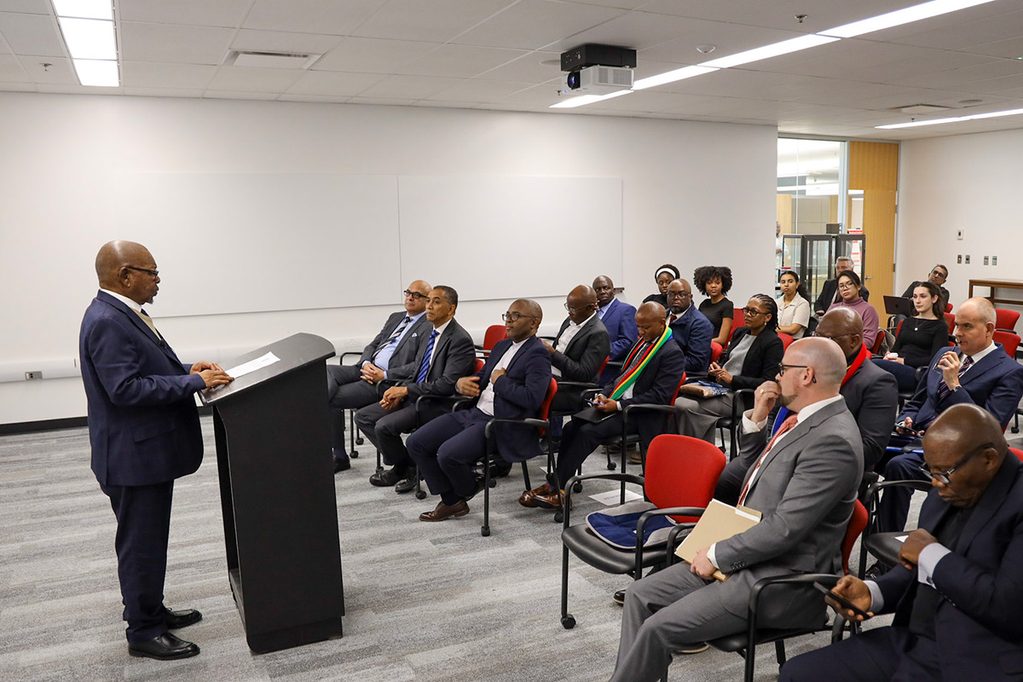
The South African delegation was in Ottawa for this week’s Canadian Science and Innovation Policy Conference, which brings together the science and innovation communities to discuss emerging issues and how science, innovation and public policy can play a role in the path towards sustainability.
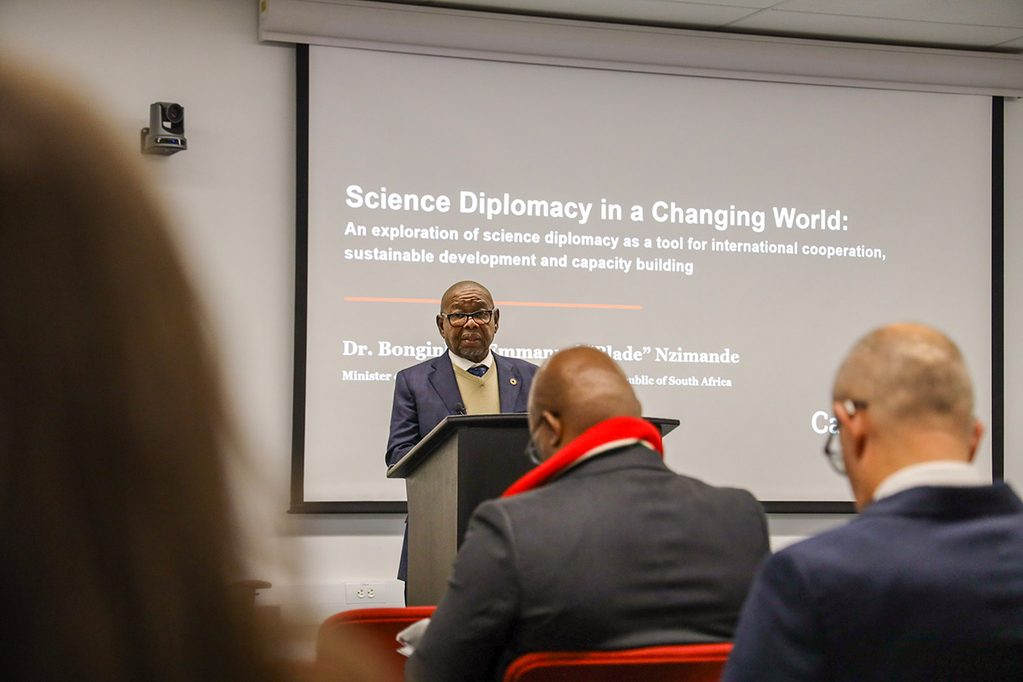
After the meeting with Carleton leaders, Minister Nzimande delivered a lecture to graduate students about science diplomacy in a changing world and its efficacy as a tool for international cooperation, sustainable development and capacity building.
“We must leverage the norms of science to help resolve disputes between states and non-state actors,” he said. “The global scientific community cannot remain silent when science is weaponized. That’s why the partnership between our two countries must become a platform for the type of science we want to see. It’s part of the transition to a better world, as our Nelson Mandela would have said.
“This is a call to action to the students in this room,” Minister Nzimande said in conclusion.
“It’s very important to act consciously — to democratize knowledge, defend science as a public good and collaborate as equals. Science diplomacy is about safeguarding the dignity of every individual, regardless of their socioeconomic status or which part of the world they live in.”