Carleton PhD Student Developing Transdiagnostic Tool for Neurodevelopmental Conditions
Lead image by KatarzynaBialasiewicz / iStock
By
Dan Rubinstein
Photo Credit:
Christina Tsetsos
If parents think their child might be on the autism spectrum, they will typically take them to a clinic for an assessment. A specialist will observe the child’s behaviour, gauging their cognitive abilities and how they communicate, and often must consult with other health care professionals to determine what kind of developmental support is needed.
This approach to diagnosis, which is used for many neurodevelopmental conditions, is labour intensive, time consuming and costly. It can require families to travel significant distances if they live in small communities without such services.
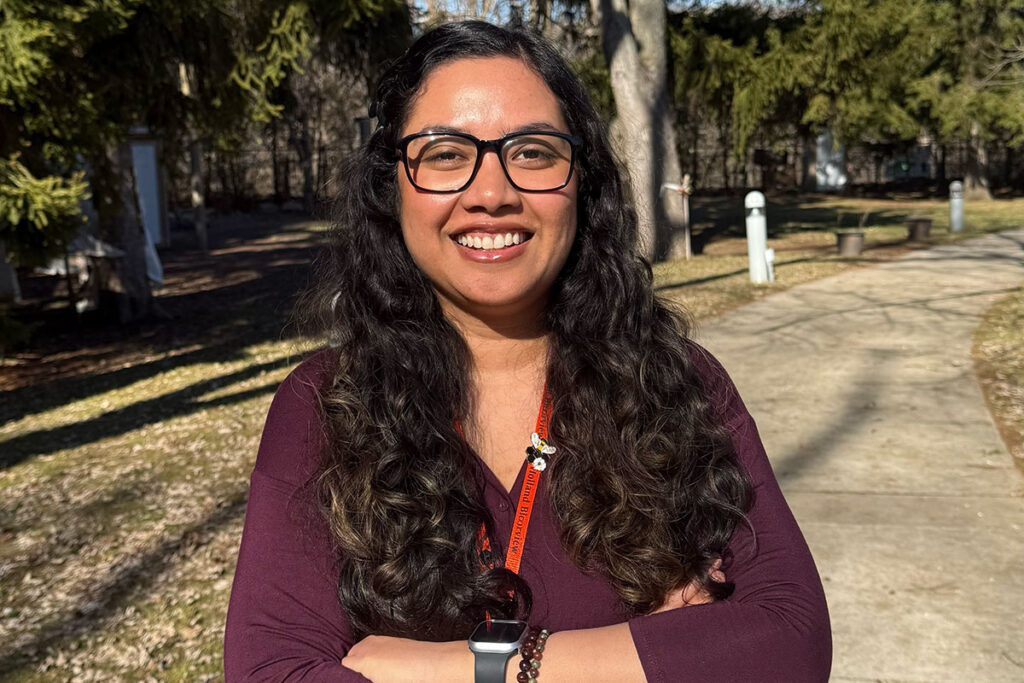
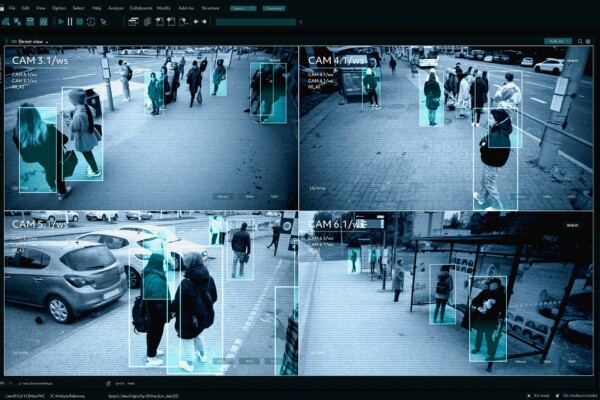
These barriers have motivated Carleton University’s Fatima Karim to develop a transdiagnostic tool that uses computer vision to analyze how children move and play with their toys. By reading motor patterns — the foundation of all behaviour — the aim is to create a tool can predict a child’s adaptive strengths and challenges and point families toward beneficial interventions.
“We’re hoping to fast-track the steps to effective services,” says Karim, a PhD student in neuroscience.
“I used to think of access to health care as a dichotomy — either you have it or you don’t. Now I see access as a spectrum. It depends on your geographical location, financial resources, race, ethnicity and other sociodemographic factors.
“As health researchers and innovators, we have equal responsibility to everybody who needs our support, no matter who they are or where they live.”
Decoding Human Behaviour
Karim studied clinical psychology as an undergraduate and went on to a master’s in epidemiology and biostatistics, earning both degrees in her native country, Pakistan. “I’ve always been really intrigued by how people behave and what’s happening in their heads,” she says. “I wanted to try to decode that.”
Early in her career, while working on a digital evaluation tool for autism, Karim saw the limits of the conventional diagnostic process.
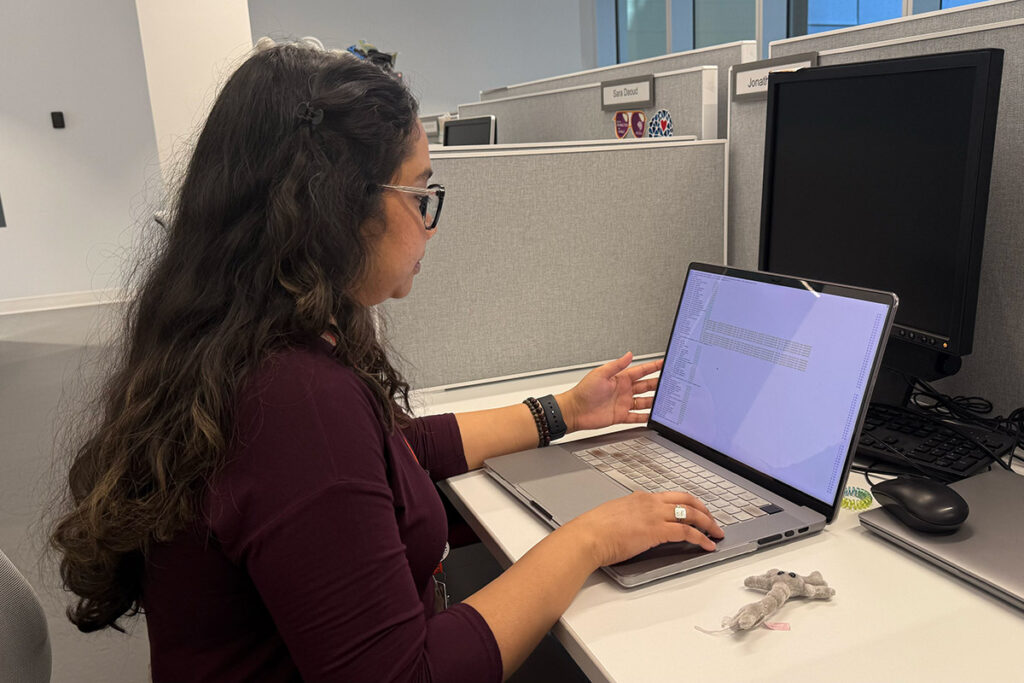
“What’s the purpose of giving labels to the people if we don’t provide services to back that up?” she asks.
“We’re just adding more stress if you tell somebody they have a condition but you don’t have a solution to support them.”
Karim also worked with a telehealth startup, bringing health care to underserved communities. “That’s where I connected the dots and realized we can make health care more equitable by leveraging technology,” she says, “even in remote places.”
After completing an Acumen Fellowship in social entrepreneurship, Karim combined her clinical training and research experience to pursue a PhD at Carleton, where she could build the transdiagnostic tool she had envisioned.
A ‘Transdiagnostic’ Tool
Karim is doing her PhD research at the Holland Bloorview Kids Rehabilitation Hospital in Toronto, under the guidance of Dr. Evdokia Anagnostou and funded by the Canadian Institutes of Health Research. Her other supervisor is Zul Merali, an adjunct researcher with Carleton’s neuroscience department who is also the founding director of Aga Khan University’s Brain and Mind Institute.
“Fatima is a fiercely independent thinker and doer,” says Merali.
“The project she’s working on will eventually allow ‘non-professionals’ to identify people with [neurodevelopmental] disorders and assess their potential functional capabilities.”
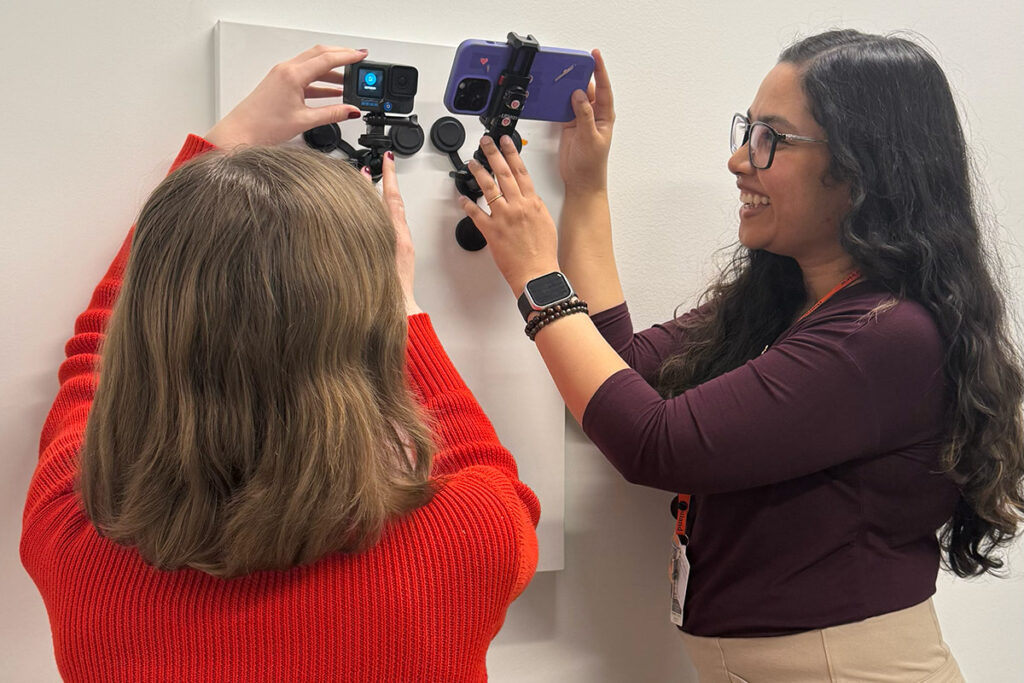
The focus for now is on children up to age 13, with 60 families supplying videos in the proof-of-concept phase. Karim is testing with both a sophisticated lab camera and an iPhone — a deliberate choice, because the iPhone version could eventually be deployed in communities far from clinics. A larger sample from across Canada will be necessary to make the technology more robust.
By tracking patterns such as hand-eye coordination, object manipulation and body movement during natural play, the tool maps a child’s adaptive functioning, revealing strengths and challenges that would guide a referral to an occupational therapist, speech-language pathologist or other health-care providers.
“We are bringing multiple features together,” says Karim, “and moving the conversation away from diagnosis to focus on an individual’s needs, irrespective of what their diagnosis is.”
Adaptive Function, Not Labels
Her goal is to develop a transdiagnostic tool that can help people with any neurodevelopmental condition. The science supports this: these conditions rarely have clean biological boundaries and children often present with overlapping traits. By focusing on adaptive function rather than labels, the tool meets children where they are. And because the videos can be recorded at home, that naturalistic setting provides a more authentic picture of a child’s abilities.
Karim plans to continue this work after her PhD, planning to build an academic career in Canada at the intersection of AI and global health. By designing solutions for children in rural and underserved communities, she believes the same technology can ultimately be exported to marginalized peoples around the world.
“I call this approach global design rather than global health, building tools from the ground up instead of delivering aid from the top down,” she says.
“I’ve seen what happens when children wait years for support they need now. No family should have to fight that hard just because of where they live. Every child deserves a fair shot at reaching their potential, and I believe we can build the tools to make that real.”