Asynchronous Learning Lessons
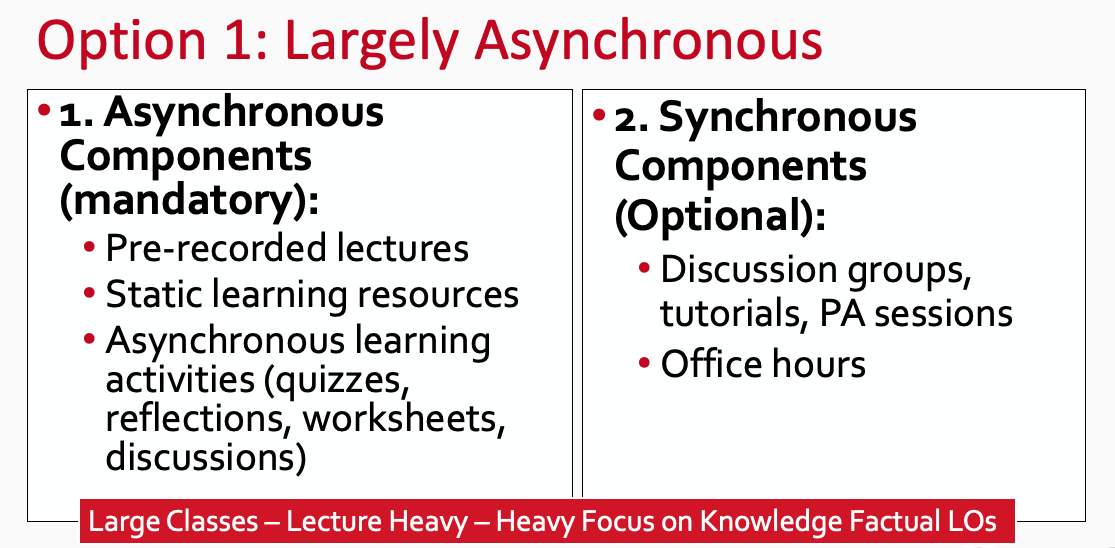
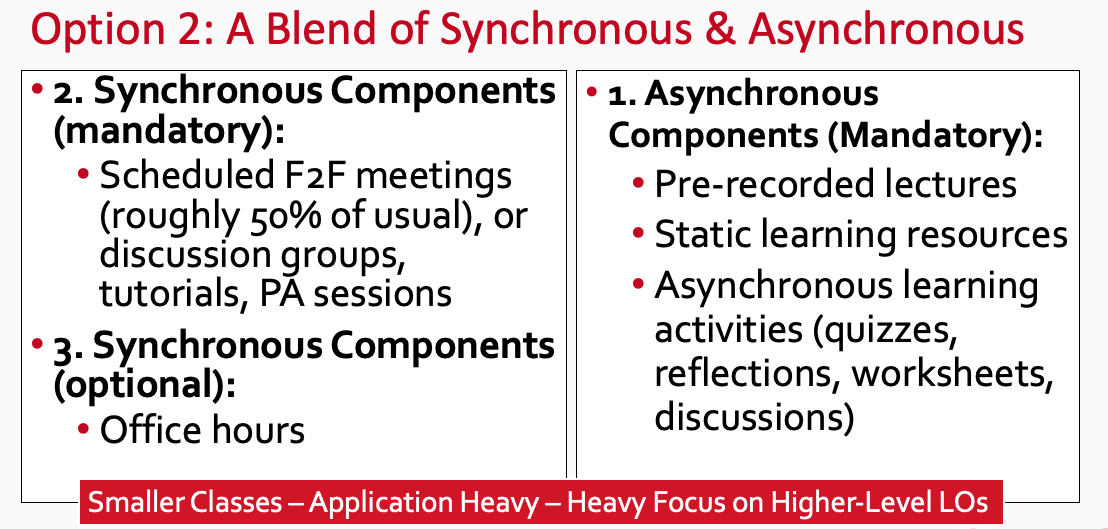
In addition to a synchronous approach to online teaching, you can consider leveraging asynchronous options. Courses with an asynchronous component can be:
- Fully asynchronous – i.e., all mandatory course components are asynchronous; any synchronous components are optional, such as office hours.
- Blended or mixed modality – i.e., some mandatory course components are asynchronous, and some are synchronous.
To use asynchronous teaching and learning to your best advantage, consider:
- available conceptual models
- available Brightspace tools
For tips on synchronous learning tools, check out this webpage.
Conceptual Models for Asynchronous & Blended Learning
One model to help you design any learning experience, online or not, is the “CLAASS” lesson planning model. Essentially, the model provides a 6-step process for constructing a learning experience, as follows:
- Capture their attention
- Lead through to the learning outcomes
- Assess previous knowledge
- Activate new knowledge
- Solidify with assessment
- Summarize
While not every lesson we create will necessarily require each element, the CLAASS model prompts us to think about when and how we are doing things such as informing our students about our agenda and learning outcomes for the lesson, pre-assessing our students prior understanding of a topic, and/or checking their understanding of new content that you’ve introduced. As you build your online lesson, try to incorporate such elements into the asynchronous online experience.
Using the elements of the CLAASS model as our guide, we can sketch out a rough model for conceptualizing the online lesson experience, where (A) indicates an asynchronous element and (S) indicates a synchronous element:
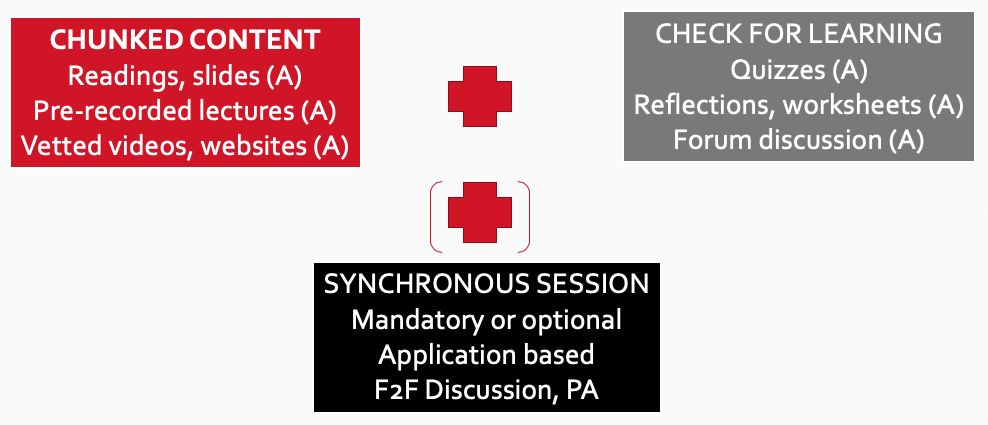
We can further break that down to models that are either entirely asynchronous or blended: