Navigating the youth mental health crisis: The impact of physical activity and screen time on well-being
By Katherine Griffiths & Shannon Smith
The conversation surrounding mental health has gained significant traction in research and the media in recent years. With approximately 10-20% of children and adolescents diagnosed with mental disorders (World Health Organization, 2024), and an assumed association between sedentary screen time and poorer psychological wellbeing (Mougharbel & Goldfield, 2020), the need for effective interventions that address these concerns has never been clearer.
Dr. Katie Gunnell is an associate professor in the Department of Psychology at Carleton University who is investigating the relationship between screen time, physical activity, and mental health in adolescents and young adults. She received her Bachelor of Kinesiology and Master’s in Applied Health Sciences from Brock University followed by her PhD at the University of British Columbia. She then began working as a Junior Researcher and Scientist with the Healthy Active Living and Obesity Research Group at CHEO Research Institute. Dr. Gunnell now conducts research in the area of exercise and health psychology at Carleton University.
Dr. Gunnell’s research addresses some growing concerns in today’s society. Recent trends show increasing rates of mental illnesses such as anxiety and depression among young people (Wiens et al., 2020). Further, declines in overall well-being have been exacerbated by the COVID-19 pandemic and lifestyle changes (e.g., increased sedentary behaviours and screen time, and decreased physical activity) (Gabet et al., 2023). Blame is often placed on screen time: headlines about the negative impacts of social media and other forms of device use on mental health are ever-present in the media. Despite this, the relationship between screen time and mental health outcomes is not cut-and-dry.
The impact of screen time on mental health is highly debated and inconsistent (Gunnell et al., 2016b). Dr. Gunnell is particularly interested in the role that quality, as opposed to quantity, of screen time plays in this relationship. This avenue of research is particularly promising given the constant evolution of technology and variations in types of screen use. Currently, most research in the field focuses on the quantity of screen time, which may not tell the whole story.
There is a concerning trend towards decreasing physical activity and increasing screen time (Gallant et al., 2020), two lifestyle variables linked to adverse health outcomes in youth. Canadian 24-hour movement guidelines have been established, which suggest healthy goals for physical activity and screen time for children and adolescents. This guideline suggests 1 hour of moderate-to-vigorous intensity physical activity, and less than 2 hours of screen time per day (Tremblay et al., 2016). However, in a longitudinal study of Canadian children, only 5% met all three guidelines at any point over an 8-year period (Gallant et al., 2020).
Physical activity is one lifestyle variable which has a well-known and consistent correlation with better brain health and well-being (Gunnell et al., 2019). Since the pandemic in Canada, overall sedentary activity has increased. By spending more time behind a screen, we inherently spend less time being physically active. While the quantity of screen time may be influential, physical activity likely mediates the relationship between screen time and mental health. Physical activity is an important behavioural target that can be modified to enhance well-being.
To understand how to better optimize the benefits of physical activity, we are required to delve into the three fundamental psychological needs within the Self-Determination Theory (Deci & Ryan, 2002): competence, autonomy, and relatedness. The satisfaction of these needs is thought to directly predict psychological well-being and behavioural outcomes and, in turn, play a significant role in how young people engage with physical activity (Deci & Ryan, 2000; Gunnell et al., 2016a). The feeling of competence arises when individuals believe they can successfully tackle tasks, such as mastering a new sport or achieving fitness goals. Activities that are optimally challenging—neither too easy nor overwhelmingly difficult—are most beneficial, as success in these activities fosters self-efficacy and improved mental health. Autonomy refers to the sense of control and choice over one’s actions. Involvement in physical activities that youth genuinely choose for themselves, rather than those imposed by parents or institutions, enhances their motivation and engagement. Finally, relatedness encompasses the need to feel connected to others who you feel are important. Social interactions during physical activities create a sense of belonging and support, whether through team sports, group exercises, or simply playing with friends.
A longitudinal study in New Brunswick, part of the Monitoring Activities of Teenagers to Comprehend their Habits (MATCH) project followed 842 participants aged 10 to 11, tracking their measures of psychological need satisfaction and moderate-to-vigorous physical activity every four months for three years. The findings of this study revealed that those who experienced higher satisfaction of their psychological needs engaged in more physical exercise, leading to better health-related quality of life (Gunnell et al., 2016a). Therefore, as we seek to address the mental health crisis among young people, promoting physical activity that fulfills these three needs can be a vital strategy.
Increasing outdoor time not only boosts physical activity but also enhances mental well-being (Bélanger et al., 2019). Additionally, incorporating active transportation, like walking or biking, supports independent mobility and exploration and significantly reduces mental distress in children (Larouche et al., 2024). Families also play an essential role in this by modelling active lifestyles and prioritizing outdoor activities together. Engaging in physical activities as a family can help to strengthen bonds and fulfill the need for relatedness.
Ultimately, prioritizing physical activity and addressing these fundamental psychological needs can have a significant impact on improving mental health outcomes for young people in today’s challenging environment.
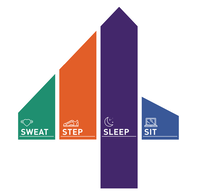
Source: Canadian Society for Exercise Physiology, Canadian 24-Hour Movement Guidelines for the Children and Youth (5-17 years)
This blog is a part of a series exploring how physical activity builds resilience against stress-related brain changes and mental health disorders.
References:
- Bélanger, M., Gallant, F., Doré, I., O’Loughlin, J. L., Sylvestre, M.-P., Abi Nader, P., Larouche, R., Gunnell, K., & Sabiston, C. M. (2019). Physical activity mediates the relationship between outdoor time and mental health. Preventive Medicine Reports, 16, 101006-. https://doi.org/10.1016/j.pmedr.2019.101006
- Deci, E. L., & Ryan, R. M. (2002). Handbook of self-determination research. University of Rochester Press.
- Deci, E. L., & Ryan, R. M. (2000). The “What” and “Why” of Goal Pursuits: Human Needs and the Self-Determination of Behavior. Psychological Inquiry, 11(4), 227–268. https://doi.org/10.1207/S15327965PLI1104_01
- Gabet, S., Thierry, B., Wasfi, R., Simonelli, G., Hudon, C., Lessard, L., … & Moullec, G. (2023). How is the COVID-19 pandemic impacting our life, mental health, and well-being? Design and preliminary findings of the pan-Canadian longitudinal COHESION study. BMC Public Health, 23(1), 2401.
- Gallant, F., Thibault, V., Hebert, J., Gunnell, K. E., & Bélanger, M. (2020). One size does not fit all: identifying clusters of physical activity, screen time, and sleep behaviour co-development from childhood to adolescence. International Journal of Behavioral Nutrition and Physical Activity, 17, 1-14.
- Gunnell, K. E., Bélanger, M., & Brunet, J. (2016a). A tale of two models: Changes in psychological need satisfaction and physical activity over 3 years. Health Psychology, 35(2), 167.
- Gunnell, K. E., Flament, M. F., Buchholz, A., Henderson, K. A., Obeid, N., Schubert, N., & Goldfield, G. S. (2016b). Examining the bidirectional relationship between physical activity, screen time, and symptoms of anxiety and depression over time during adolescence. Preventive Medicine, 88, 147–152. https://doi.org/10.1016/j.ypmed.2016.04.002
- Gunnell, K. E., Poitras, V. J., LeBlanc, A., Schibli, K., Barbeau, K., Hedayati, N., … & Tremblay, M. S. (2019). Physical activity and brain structure, brain function, and cognition in children and youth: A systematic review of randomized controlled trials. Mental health and physical activity, 16, 105-127.
- Larouche, R., Faulkner, G., Bélanger, M., Brussoni, M., Gunnell, K., & Tremblay, M. S. (2024). “Out and about”: relationships between children’s independent mobility and mental health in a national longitudinal study. Children’s Geographies, 1–11. https://doi.org/10.1080/14733285.2024.2397734
- Mougharbel, F., & Goldfield, G. S. (2020). Psychological Correlates of Sedentary Screen Time Behaviour Among Children and Adolescents: a Narrative Review. Current Obesity Reports, 9(4), 493–511. https://doi.org/10.1007/s13679-020-00401-1
- Tremblay, M. S., Carson, V., Chaput, J.-P., Connor Gorber, S., Dinh, T., Duggan, M., Faulkner, G., Gray, C. E., Gruber, R., Janson, K., Janssen, I., Katzmarzyk, P. T., Kho, M. E., Latimer-Cheung, A. E., LeBlanc, C., Okely, A. D., Olds, T., Pate, R. R., Phillips, A., … Zehr, L. (2016). Canadian 24-Hour Movement Guidelines for Children and Youth: An Integration of Physical Activity, Sedentary Behaviour, and Sleep. Applied Physiology, Nutrition, and Metabolism, 41(6 Suppl 3), S311–S327. https://doi.org/10.1139/apnm-2016-0151
- Wiens, K., Bhattarai, A., Pedram, P., Dores, A., Williams, J., Bulloch, A., & Patten, S. (2020). A growing need for youth mental health services in Canada: examining trends in youth mental health from 2011 to 2018. Epidemiology and psychiatric sciences, 29, e115.
- World Health Organization. (2024, October 10). Mental health of adolescents. https://www.who.int/news-room/fact-sheets/detail/adolescent-mental-health