Carleton Students Pitch Solutions to Pet Ownership Barriers
This story was originally published on Carleton Newsroom on November 26, 2019.
By Joseph Mathieu
It is widely accepted, especially by pet owners, that pet ownership can make you feel better.
On top of anecdotal evidence, there is scientific research demonstrating that companion pets can reduce stress and anxiety, and lower your heart rate and blood pressure, offering physical, mental and social health benefits.
Studies also show the benefits are mutual: pets of all kinds—from dogs and cats to birds and small beasts—can also feel a sense of comfort and security from their companion human.
However, it can be a challenge for people who are elderly, disabled, homeless or victims of domestic abuse to care for a pet, especially in an inner-city environment – the very people who could benefit the most from companion pets.
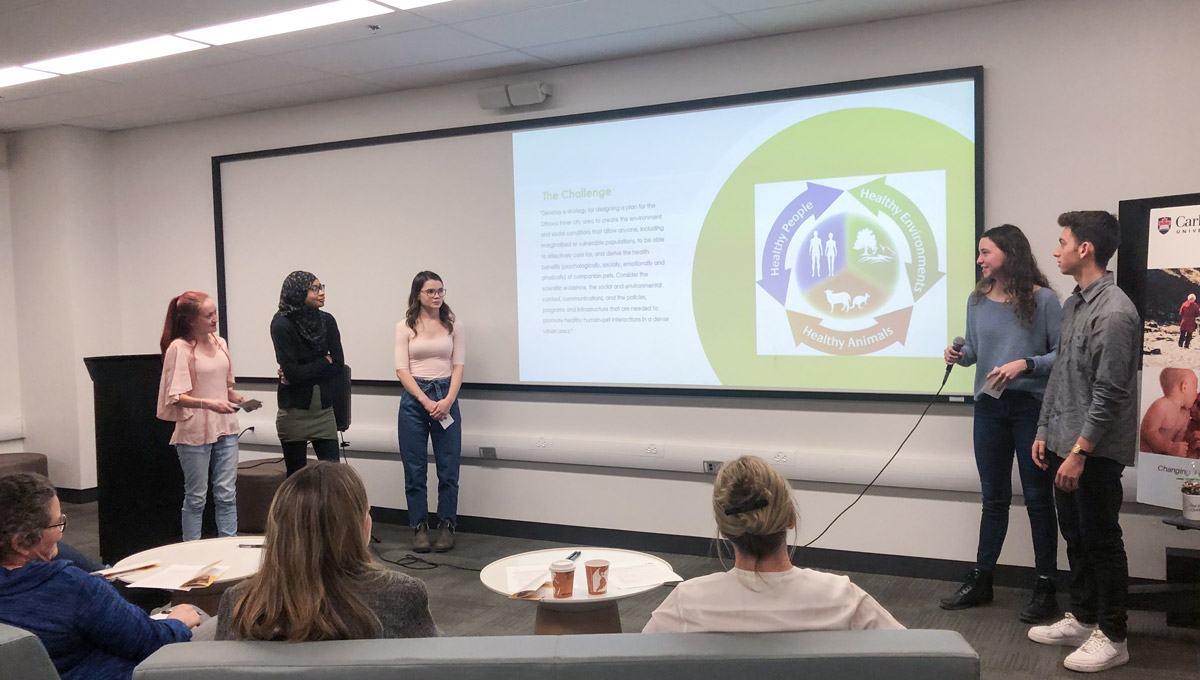
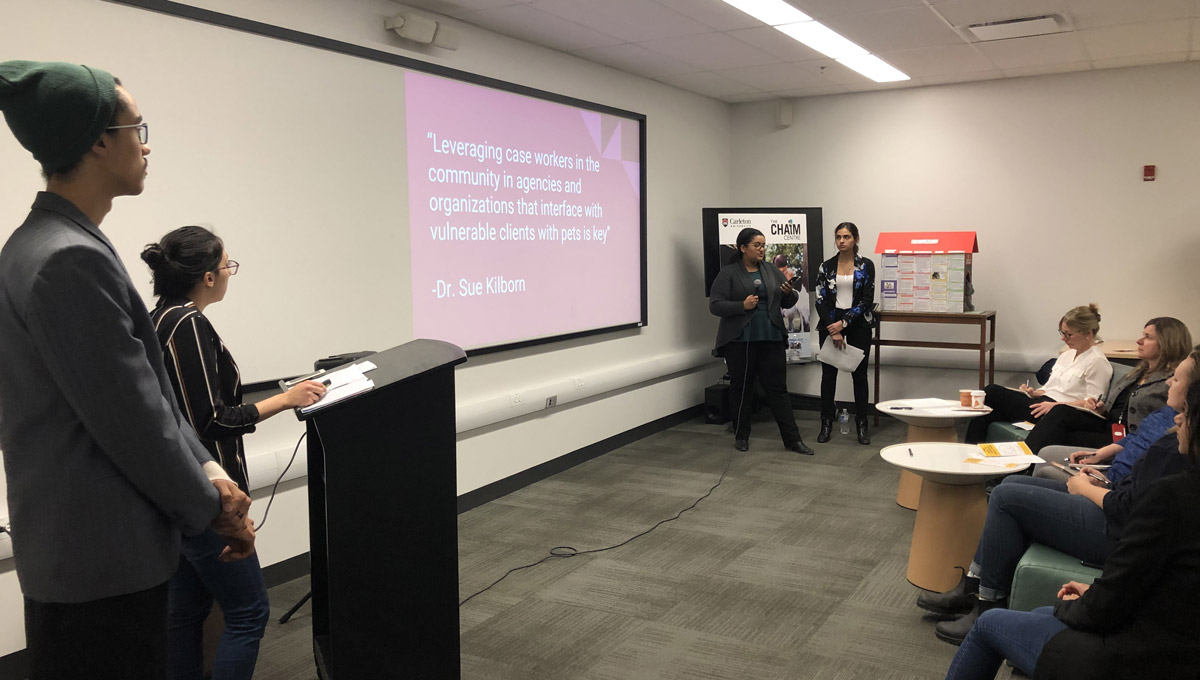
On Nov. 22, 2019, six teams of four to six Carleton University undergraduate students tackled the complex issue for the third annual One HEALtH (Human Environment Animal Links to Health) Student Challenge. They presented interdisciplinary strategies developed over six weeks to a panel of judges in the MacOdrum Library’s Discovery Centre.
Acknowledging the Benefits of Pet Ownership for Marginalized Communities
Organized by Carleton’s Canadian Health Adaptations, Innovations and Mobilization (CHAIM), the challenge brought together students from a wide variety of disciplines. By consulting with local experts, students considered how to plan for socially marginalized groups to benefit from companion pets in the inner city.
“The relationship between people and their pets is an important one to Canadians,” said Prof. Kim Matheson, director of the CHAIM Centre and Department of Neuroscience. “They play a vital role as companions and sources of connection.”